Experimental Report 3: Inductor & Free Oscillation in RLC Circuit môn Vật lý đại cương 2 | Học viện Công Nghệ Bưu Chính Viễn Thông
Explain: Once the core is inserted into the coil, the coil's inductancerises dramatically from 7.72mH to 41.3mH . Tài liệu giúp bạn tham khảo, ôn tập và đạt kết quả cao. Mời đọc đón xem!
Môn: Vật lý đại cương 2 298 tài liệu
Trường: Học viện Công Nghệ Bưu Chính Viễn Thông 1.7 K tài liệu
Tác giả:




Preview text:
Experimental Report 3
INDUCTOR AND FREE OSCILLATION IN RLC CIRCUIT
Verification of the instructors Group: 04
Name: Nguyễn Nhật Minh Student ID: 20224347 I. Experiment Motivations
-Understanding the current across an inductor-resistor and RLC circuit.
-Calculating the energy of the oscillation RLC circuit. II. Experimental result
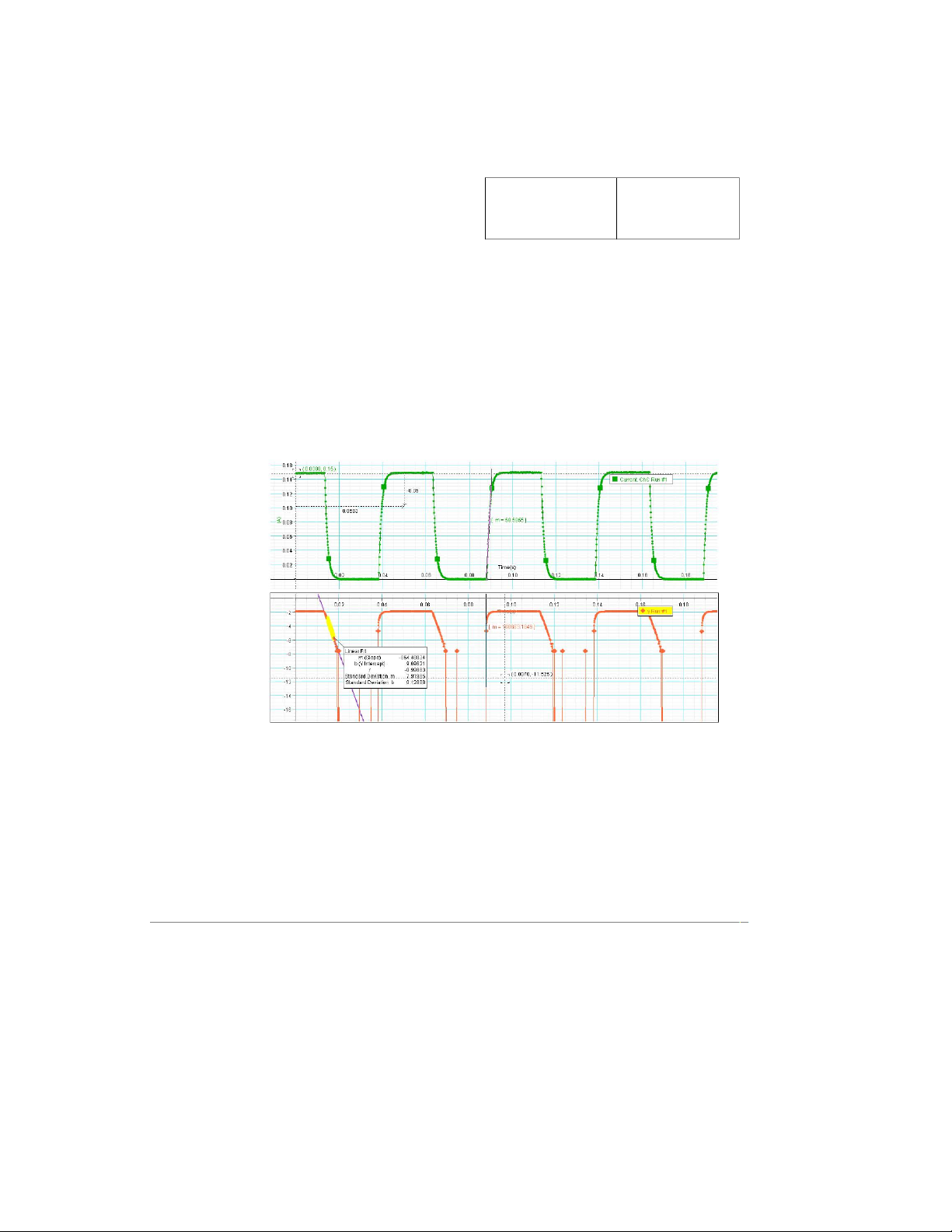
Part 1: Resistance and Inductance of the coil a. Without core VS=1(V) I0 = 0.15 (A) Slope S = -864.48834
The resistance of the coil:
RL=VS =10.15 ≈6.67(Ω) IO Coil inductance :
LW/O=VSIO×S=1 0.15×864=7.72×10⁻³(H) b. With core VS=1(V) I0 = 0.14 (A) Slope S = -173,20136
The resistance of the coil:
RL=VS =10.14 ≈7.14(Ω) IO Coil inductance : LW/O=VS
IO×S=1 0.14×173=41.3×10⁻³(H)
Explain: Once the core is inserted into the coil, the coil's inductance rises
dramatically from 7.72mH to 41.3mH. This happens because the core has a
higher permeability than air, allowing magnetic fields to pass through the core
more easily, which in turn enhances the coil's inductance.
Part 2: Free oscillation of the RLC circuit a. Frequency
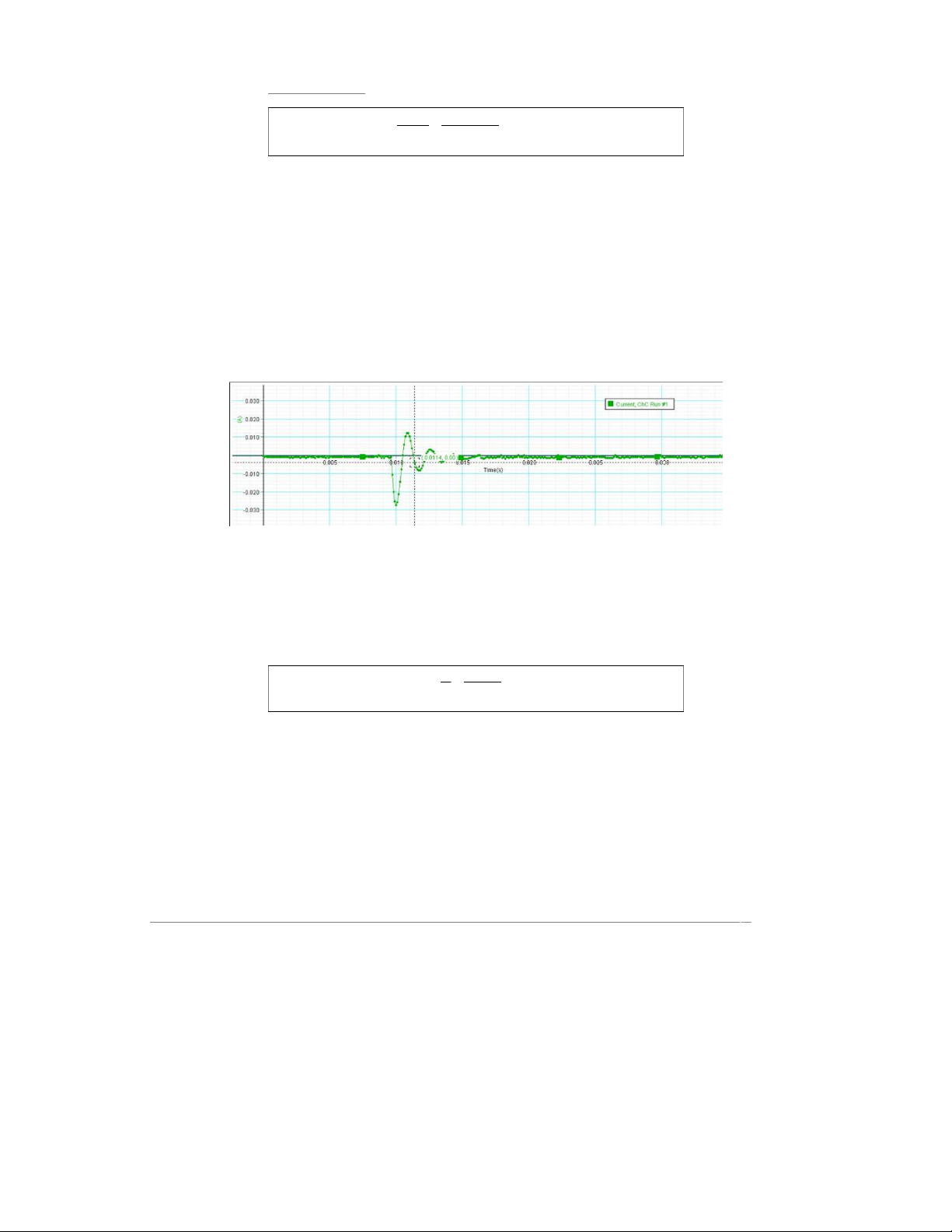
The current in RLC circuit: t1 = 0.0113 (s) t2 = 0.0129 (s) T = t1 - t2 = 0.0016 (s)
The frequency based on the graph:
fmeasured=1T=10.0016=625(Hz)
LW/O=¿ 7.72 mH=7.83× 10⁻³ H C=10-5 F=0.00001 F
The frequency based on theoretical calculation: fprediction=1 LC=1 7.72×10⁻³ 10 × −5=572.81(Hz ) 2π √ 2×3.14× √ Comparison:
Δf=fprediction−fmeasured=625−572.81=52.19(Hz) b. Energy
The total energy in RLC circuit:
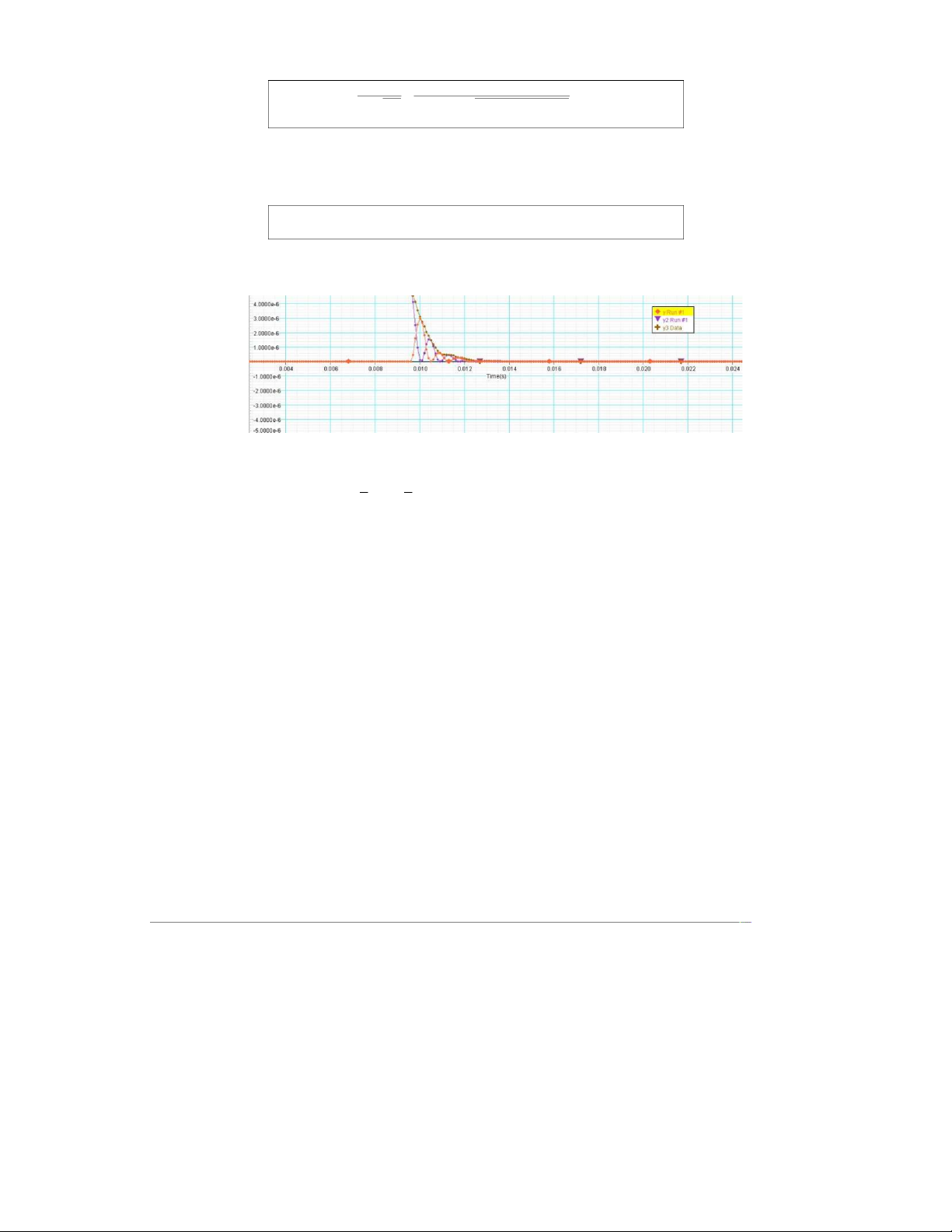
U=Uc+UL=1 2CV2+1 2LI2 = 8.1× 10⁻⁵ (J) Comment:
- After stopping the electric power, the energy of the circuit does not
decrease rapidly to zero, it reduces to zero over a short period of time.
- The energy of oscillations of the coil and the capacitor are damped oscillations. Explain:
The energy of the circuit loses by the heat of the resistor at rate i2R
The graph of total energy is steepest at the time that the magnetic
energy reaches a local maximum because in these times, the current
through the coil is highest, and the loss of energy is mainly due to the resistance of the coil.
Tài liệu liên quan:
-
Bài tập Vật lý nguyên tử môn Vật lý đại cương 2 | Học viện Công Nghệ Bưu Chính Viễn Thông
11 6 -
Bài tập Vật lý nguyên tử môn Vật lý đại cương 2 | Học viện Công Nghệ Bưu Chính Viễn Thông
11 6 -

Tán xạ ánh sáng và Hiệu ứng Tyndall - Lý thuyết và Ứng dụng môn Vật lý đại cương 2 | Học viện Công Nghệ Bưu Chính Viễn Thông
19 10 -

Chương 23: Quang học lượng tử môn Vật lý đại cương 2 | Học viện Công Nghệ Bưu Chính Viễn Thông
17 9 -

Chương 24: Cơ Học Lượng Tử - Tính Sóng-Hạt và Phương Trình Schrödinger môn Vật lý đại cương 2 | Học viện Công Nghệ Bưu Chính Viễn Thông
18 9