Computer Architecture môn Kiến trúc máy tính | Trường Đại học Kiến trúc Hà Nội
Computer Architecture môn Kiến trúc máy tính | Trường Đại học Kiến trúc Hà Nội
Môn: Kiến trúc máy tính (HAU) 15 tài liệu
Trường: Trường Đại học Kiến trúc Hà Nội 335 tài liệu
Tác giả:













Preview text:
Computer Architecture
Ngo Lam Trung, Pham Ngoc Hung, Hoang Van Hiep
Department of Computer Engineering
School of Information and Communication Technology
Hanoi University of Science and Technology
E-mail: [trungnl, hungpn, hiephv]@soict.hust.edu.vn IT3030E Fall 2024 1 Course administration ❑ Textbook:
[Required] Computer Organization and
Design RISC-V 2nd edition, Patterson & Hennessy 2021.
[Optional] Computer Organization and
Architecture, 10th Edition, William Stalling ❑ Slides: pdf ❑ Schedule: as in timetable IT3030E Fall 2024 2 Course syllabus ❑ Chapter 1: Introduction
❑ Chapter 2: Computer System and Interconnection
❑ Chapter 3: Instruction Set Architecture
❑ Chapter 4: Computer Arithmetic ❑ Chapter 5: CPU ❑ Chapter 6: Memory ❑ Chapter 7: I/O system
❑ Chapter 8: Multicores and multiprocessors IT3030E Fall 2024 3
Computers are so important ❑ Current modern life l
Industrial revolutions, the 3rd (Automation) and the 4th (Digital revolution). l
Cell phones, the Internet, Grab, Google Maps... l
WWW, search engines, social networks, e-commerce… l
Robotics, EV, UAV, self-driving cars,… ❑ Future l
Tailored medical care based on individual genome. l
Super-human: transfer human’s brain to a mechanical body
(robot) for interstellar traveling (The Matrix movies franchise,
1999, Michio Kaku, Physics of the Future 2011 and The Future of the Mind 2015). l …and many more IT3030E Fall 2024 4
Outcomes from this course
❑ Computer Architecture and Organization l
Understanding of basic computer system organization. l
Abstraction and instruction set architecture: how high-level
language programs translate into computer language programs,
and how hardware execute the latter programs. l
Hardware/software interface, and how software instructs hardware to perform functions. ❑ Computer performance l How to evaluate performance l
Basic techniques to improve computer performance. IT3030E Fall 2024 5 Study guide
❑ Do read the textbook and APPENDIX A!
❑ Attend class regularly, stay focused.
❑ Comprehend all exercises and homework.
❑ Old-school approach: pen and paper for doing exercise and taking notes.
❑ Experience in C/C++ will be useful. ❑ Code of conduct: l
No web surfing, music, video, game in class. l
Food is not allowed (water/soft drink OK).
❑ Mid-term and Final exam will be online quiz, with topics from exercises and homework. IT3030E Fall 2024 6 Homework/exercises
❑ RISC-V assembly programming
❑ RISC-V simulator (RARS 1.6) IT3030E Fall 2024 7 Chapter 1: Introduction 1.
Computer Abstraction and Technology 2. Performance Evaluation
[with materials from Computer Organization and Design RISC-V Edition,
Patterson & Hennessy, ©2021, MK
and M.J. Irwin’s presentation, PSU 2008] IT3030E Fall 2024 8
1. Computer Abstraction and Technology ❑ What is a computer? ❑ Computer classification ❑ Computer generations
❑ The key of computer evolution: IC making technology ❑ Computer organization IT3030E Fall 2024 9
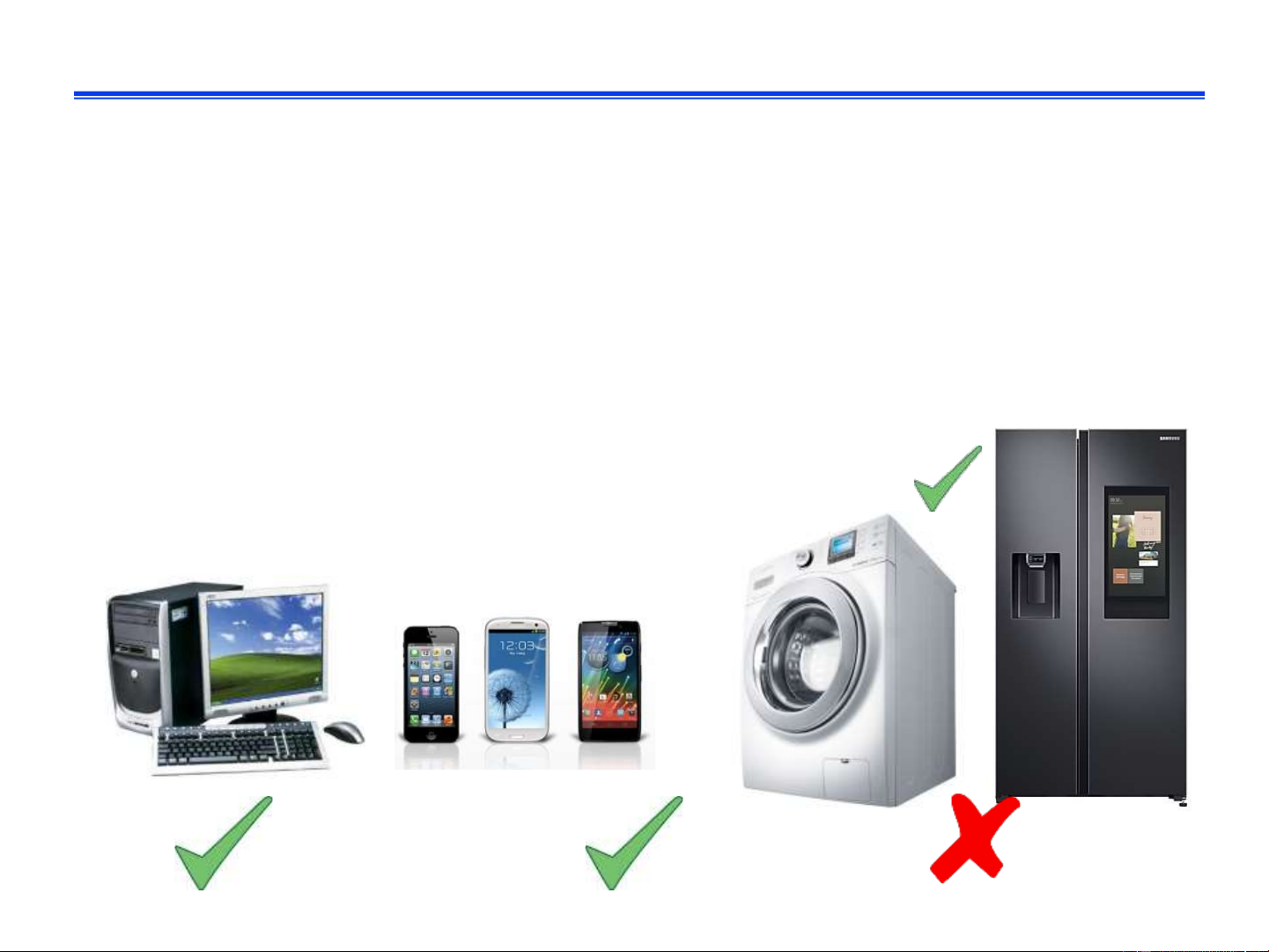
1. Computer Abstraction and Technology ❑ What is a computer? ❑ A machine that l Accepts input data l
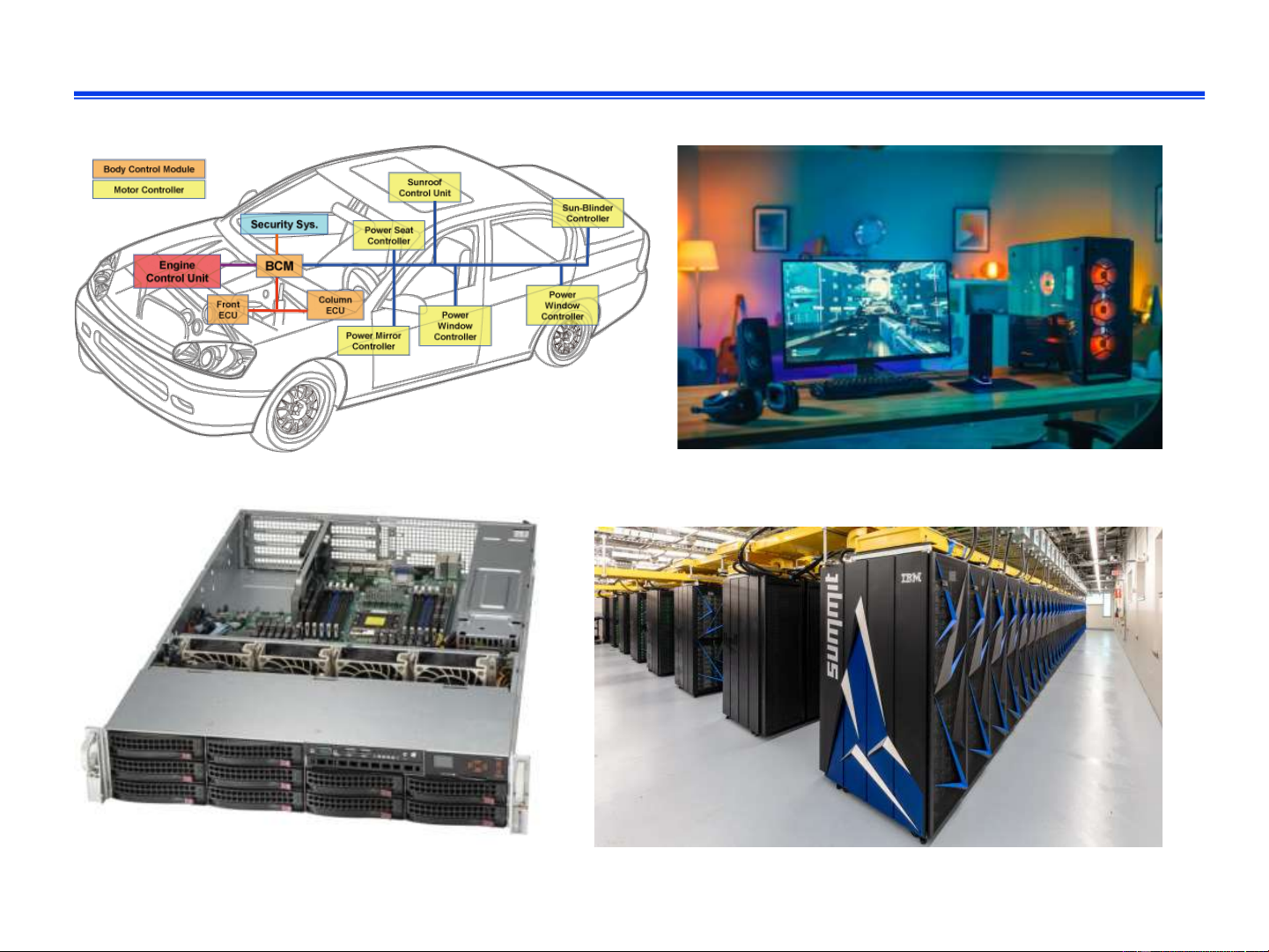
Processes data by executing a stored program l Produces output ❑ Which one is computer? IT3030E Fall 2024 10 Classes of Computers ❑ Supercomputers l
Super fast + expensive for high-end applications ❑ Server l Network based l
High capacity, performance, reliability l
Range from small servers to building sized ❑ Desktop computers l
General purpose, variety of software l
Subject to cost/performance tradeoff ❑ Embedded computers l
Hidden as components of systems l
Stringent power/performance/cost constraints IT3030E Fall 2024 11
Dominant look and feel of computer classes Embedded PC Server Super computer IT3030E Fall 2024 12
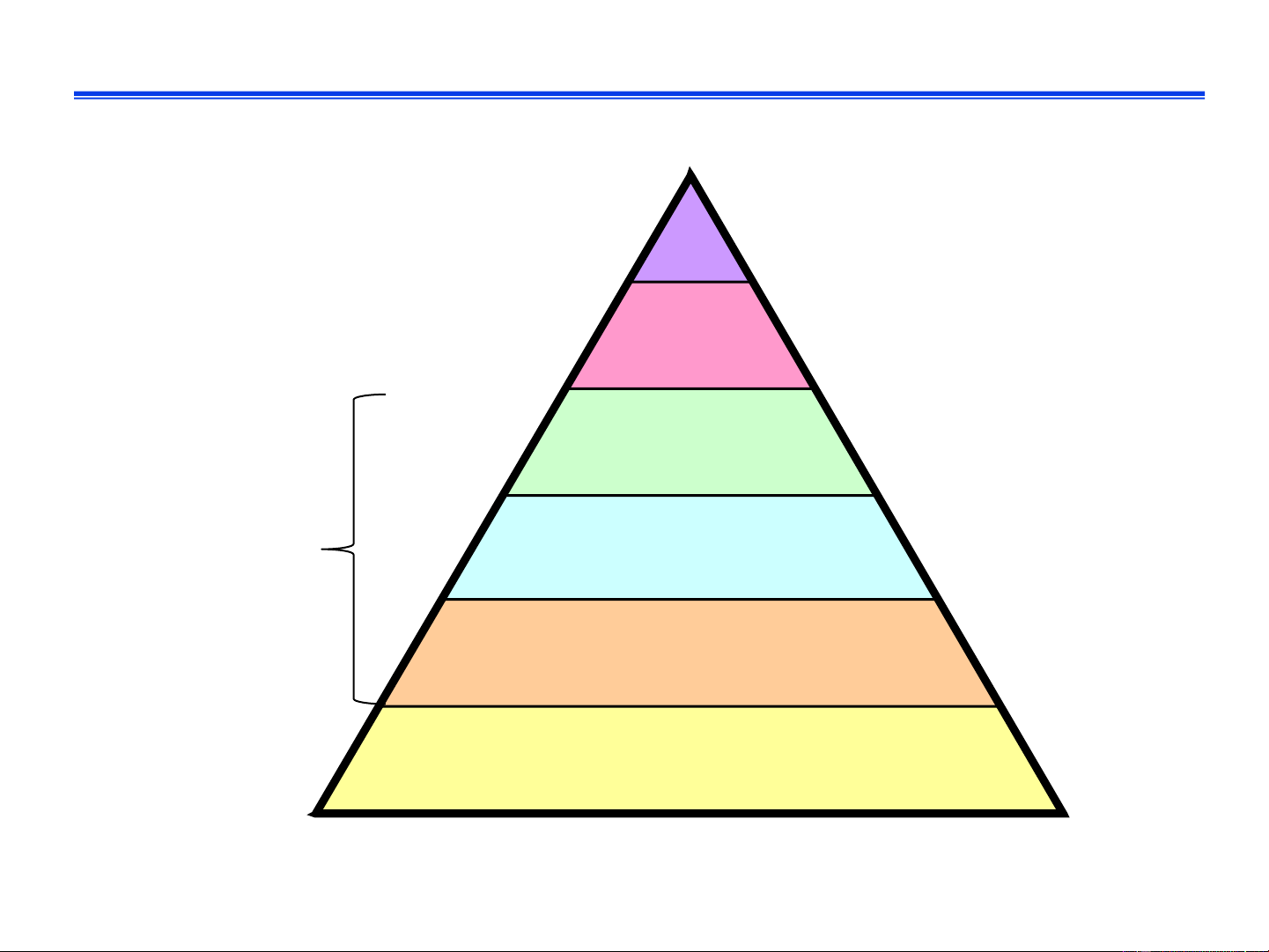
Price/performance of computer classes $Millions Super Mainframe $100s Ks Server $10s Ks Differences in scale, not in substance Workstation $1000s Personal $100s Embedded $10s IT3030E Fall 2024 13 Post-PC era
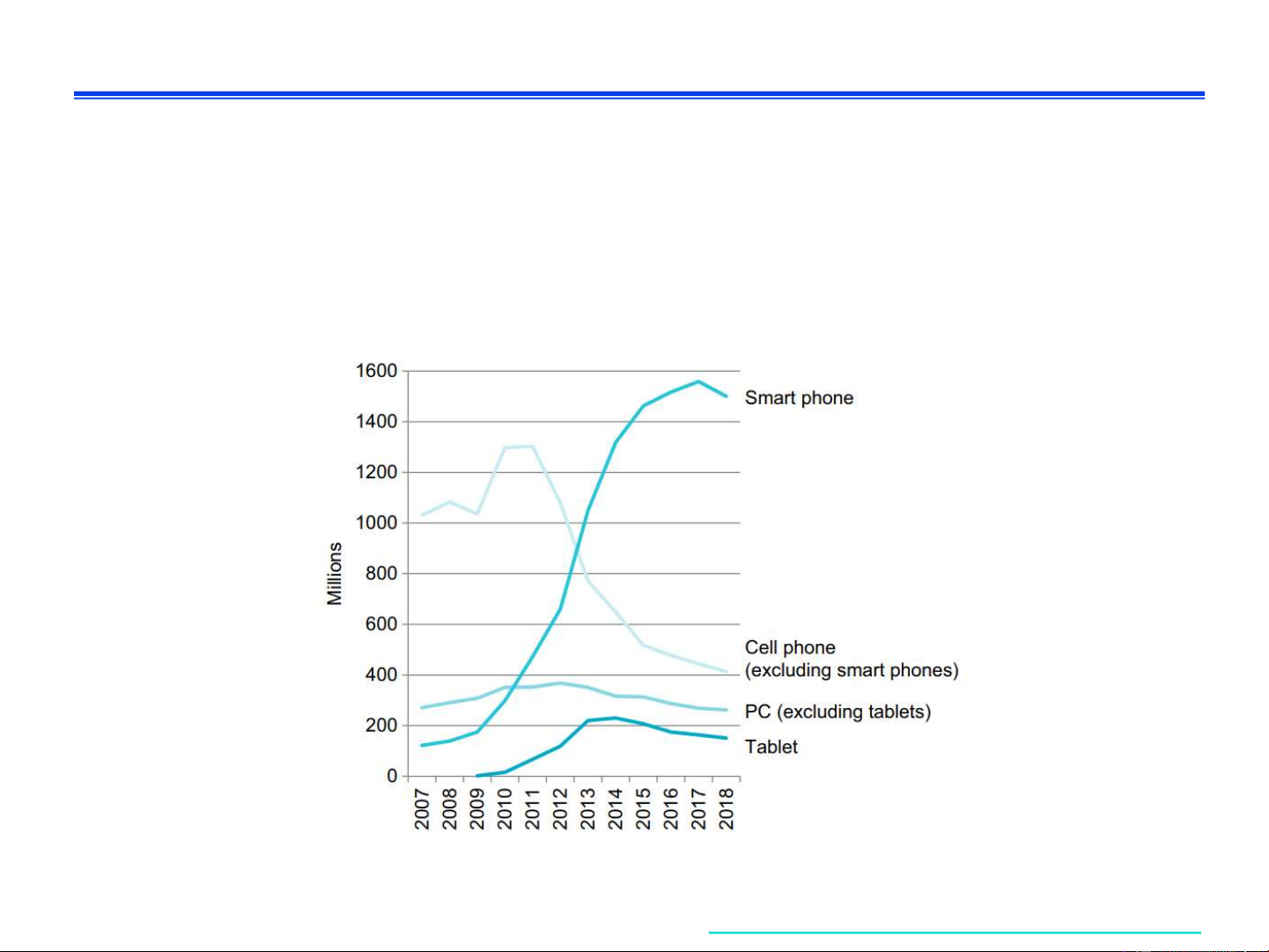
❑ PDA, smart phone, tablet… ❑ Smart TV, set top box…
❑ Cloud computing (AMZ EC2, cloud gaming…)
The number manufactured per year of tablets and smart phones IT3030E Fall 2024
Smartphone sales worldwide 2007-2023 | Statista 14
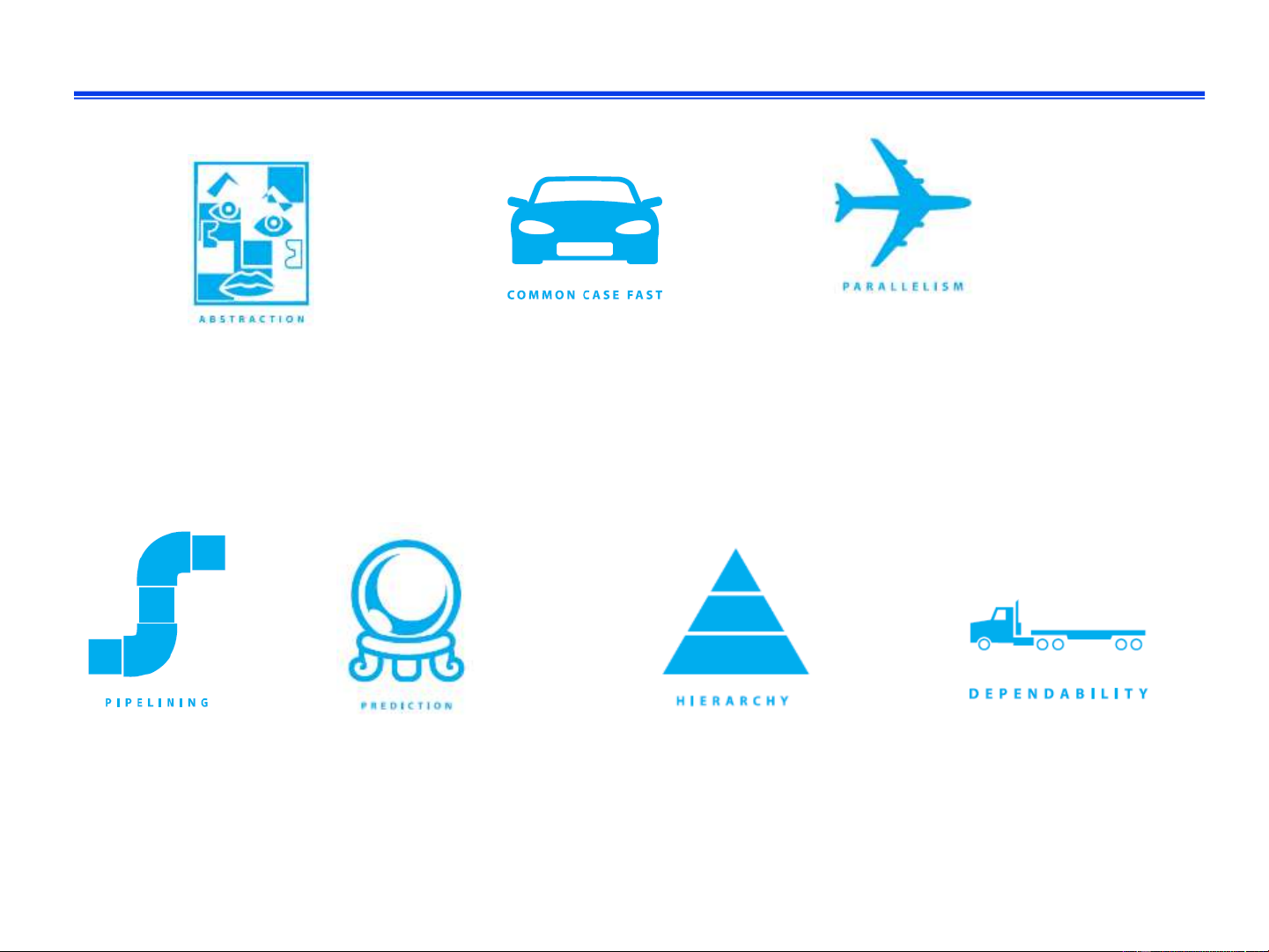
Seven important ideas in computer architecture Simplification Make common Performance via abstraction cases fast via Parallelism Performance Performance Memory Dependability via Pipelining via Prediction hierarchy via redundancy IT3030E Fall 2024 15
A brief history of computers
❑ 0th generation: mechanical/analog calculators l
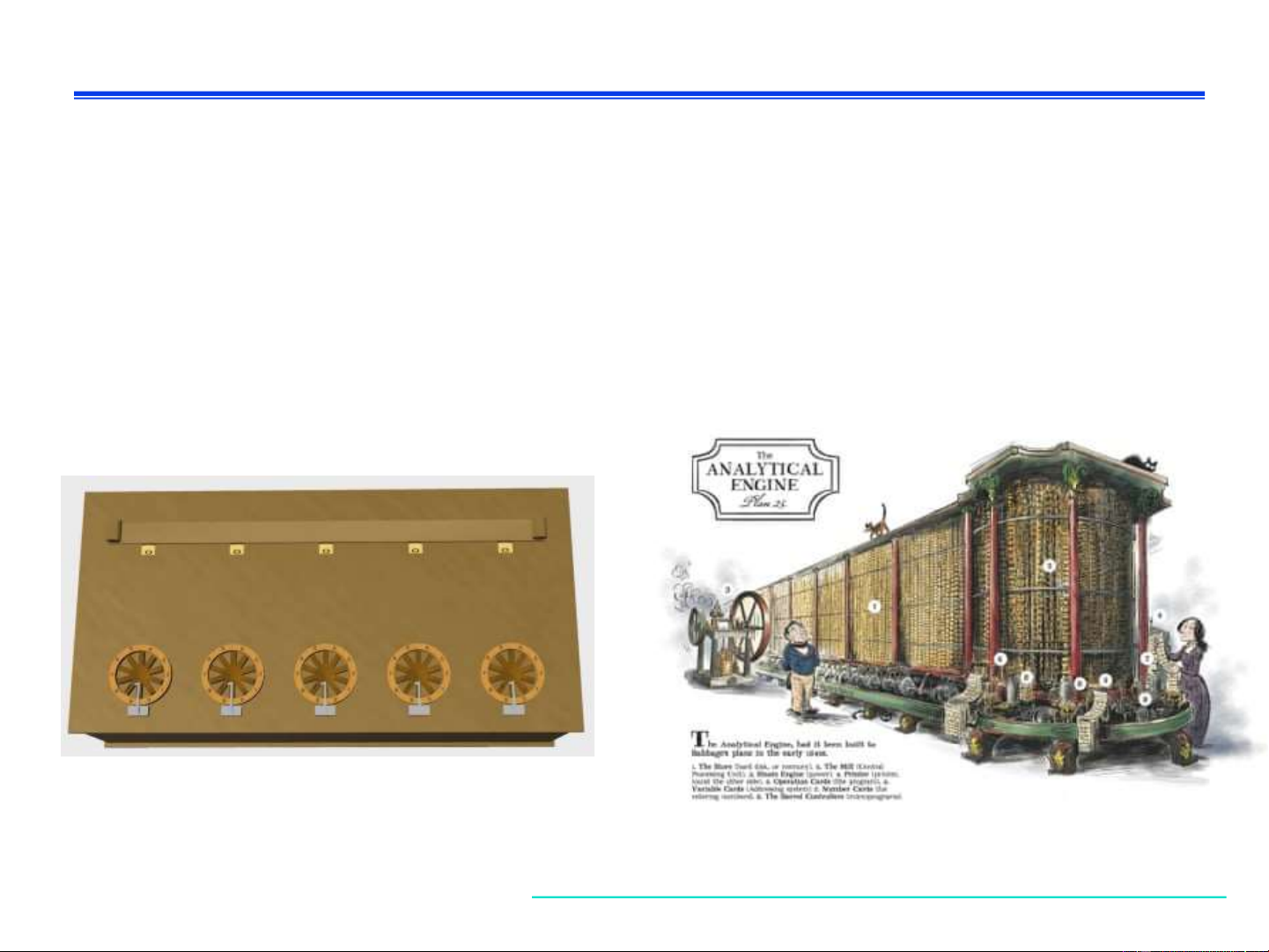
Jacquard’s punch card: for textile factories, later used for the first computers l Pascalite machine l Babage’s Analytical Engine l
Ada Lovelace: first computer program!!! Pascalite machine
Babbage’s Analytical Engine (plan 25)
Curiosity Stream - Calculating Ada: The Countess of Computing IT3030E Fall 2024 16
A brief history of computers
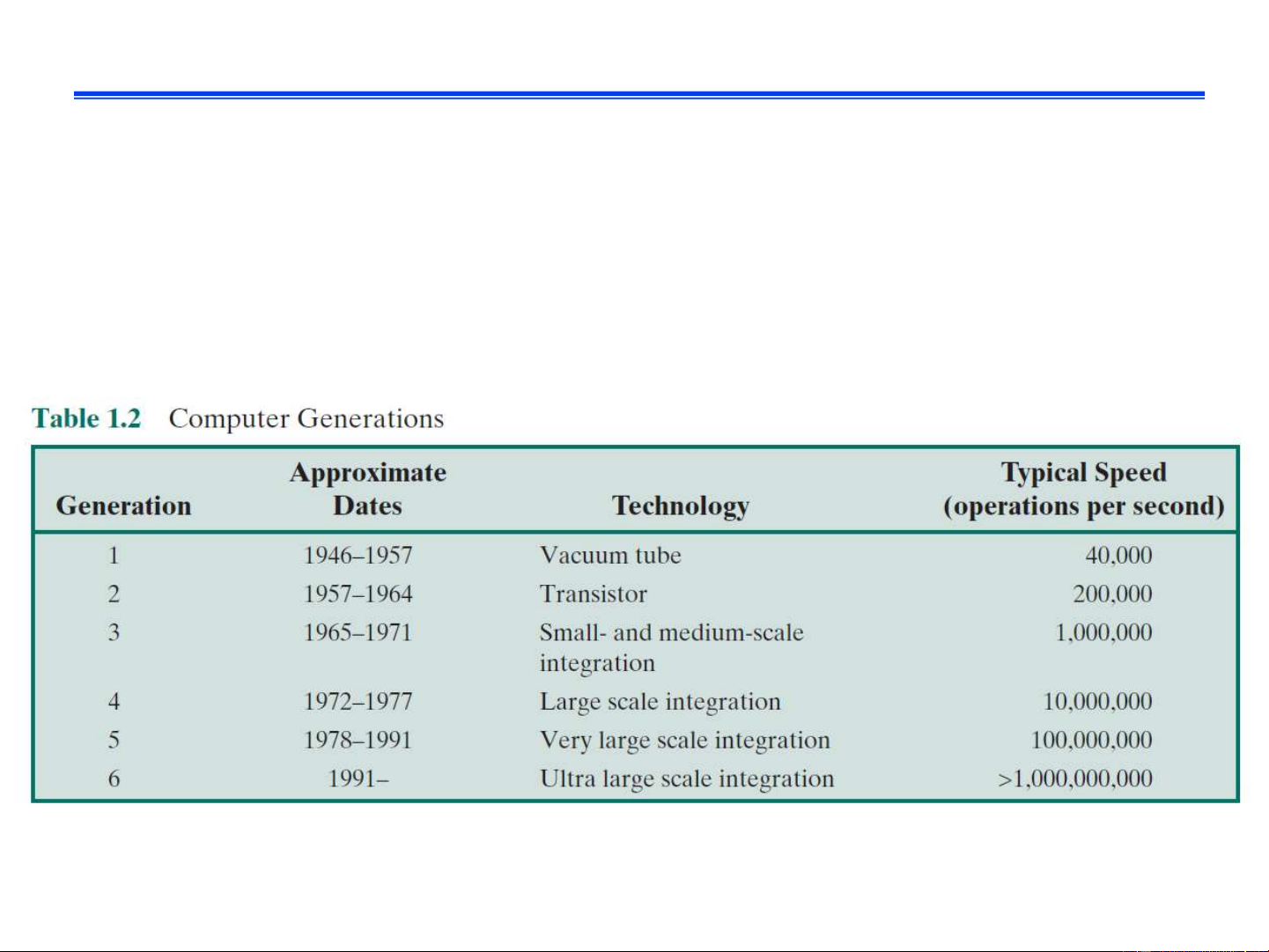
❑ 1st generation: Vacuum tubes l
ENIAC: 1st general purpose computer
- Computing artillery-firing tables
- Enormous in size and energy consumption
l IAS: computer with Von Newman architecture
- Memory, ALU, Control, Input/Output, stored-program concept l
UNIVAC: 1st commercial computer IT3030E Fall 2024 17
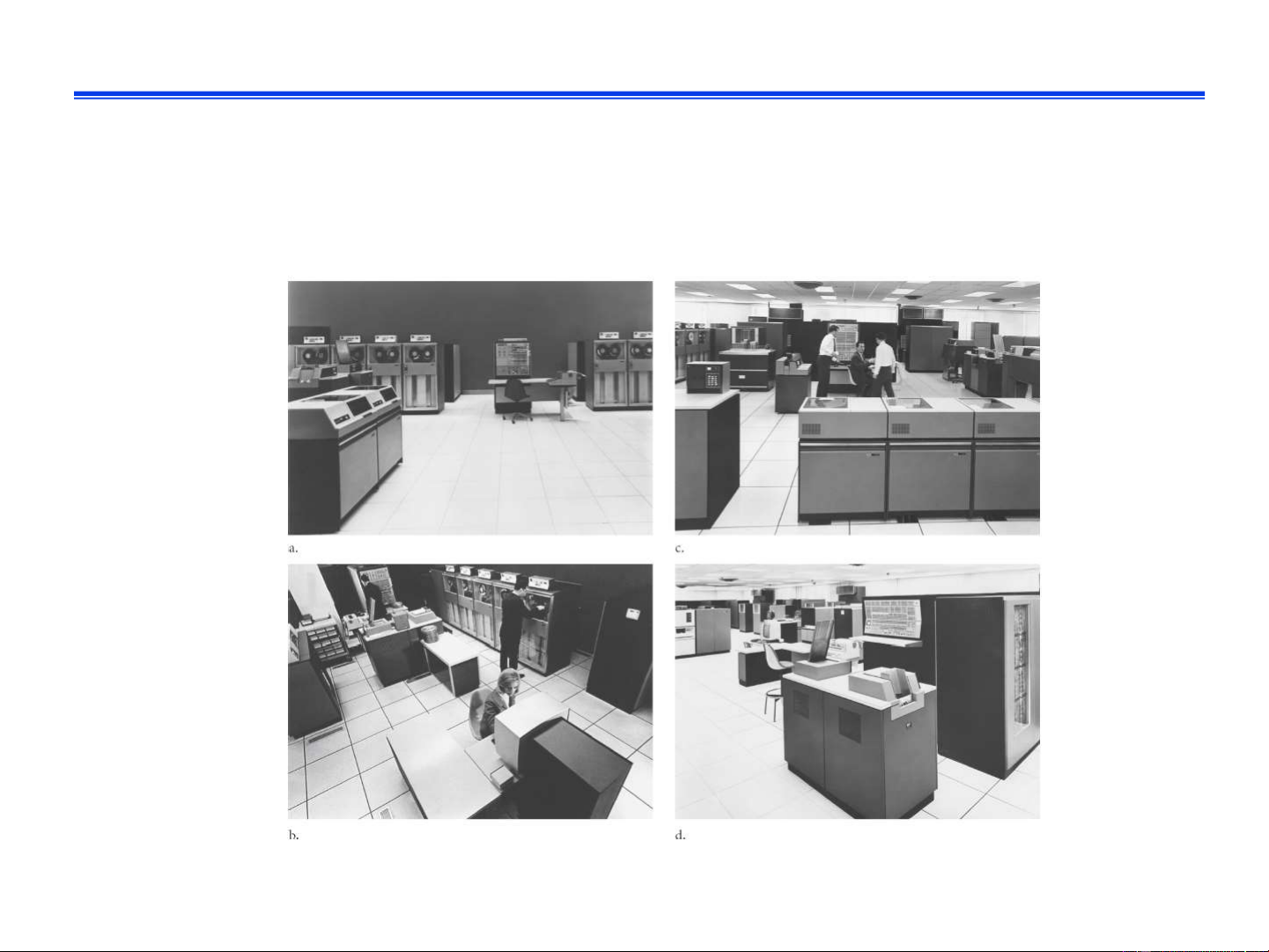
A brief history of computers ❑ 2nd generation: transistor
❑ Computer became smaller and faster IBM System/360 IT3030E Fall 2024 18
A brief history of computers
❑ Later generations: IC and VLSI
❑ Increasing price/performance ❑ Moore’s law W.Stallings, COA, 10th edition IT3030E Fall 2024 19
Key to computer evolution: IC making technology
The chip manufacturing process IT3030E Fall 2024 20
Tài liệu liên quan:
-
Computer Architecture Chapter 2: Top-level view of Computer Functions and Interconnection môn kiến trúc máy tính | Trường Đại học Kiến trúc Hà Nội
34 17 -
Tài liệu sưu tầm. Kiến trúc máy tính có đáp án
37 19 -
Tài liệu tổn hợp. Câu hỏi trắc nghiệm môn kiến trúc máy tính
33 17 -
Tài liệu ôn tập - Kiến trúc máy tính | Trường Đại học Kiến trúc Hà Nội
454 227