lÝ thuyết Marketing căn bản buổi 3
sinh viên học marketing tiếng anh toàn phần
Môn: Kinh doanh quốc tế - Marketing 118 tài liệu
Trường: Đại học Kinh tế Thành phố Hồ Chí Minh 3.1 K tài liệu
Tác giả:




Preview text:
- The Marketing Environment
Include the actors and forces outside marketing that affect marketing management’s ability to build and maintain successful relationships with target customers.
A company’s marketing environment
-Consisting of the actors and forces outside marketing that affect marketing management’s ability to build and maintain successful relationships with target customers.
- The Company’s Microenvironment
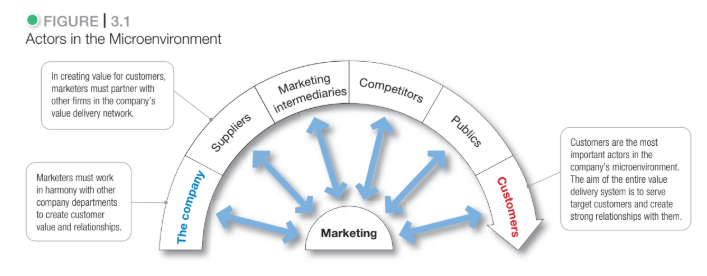
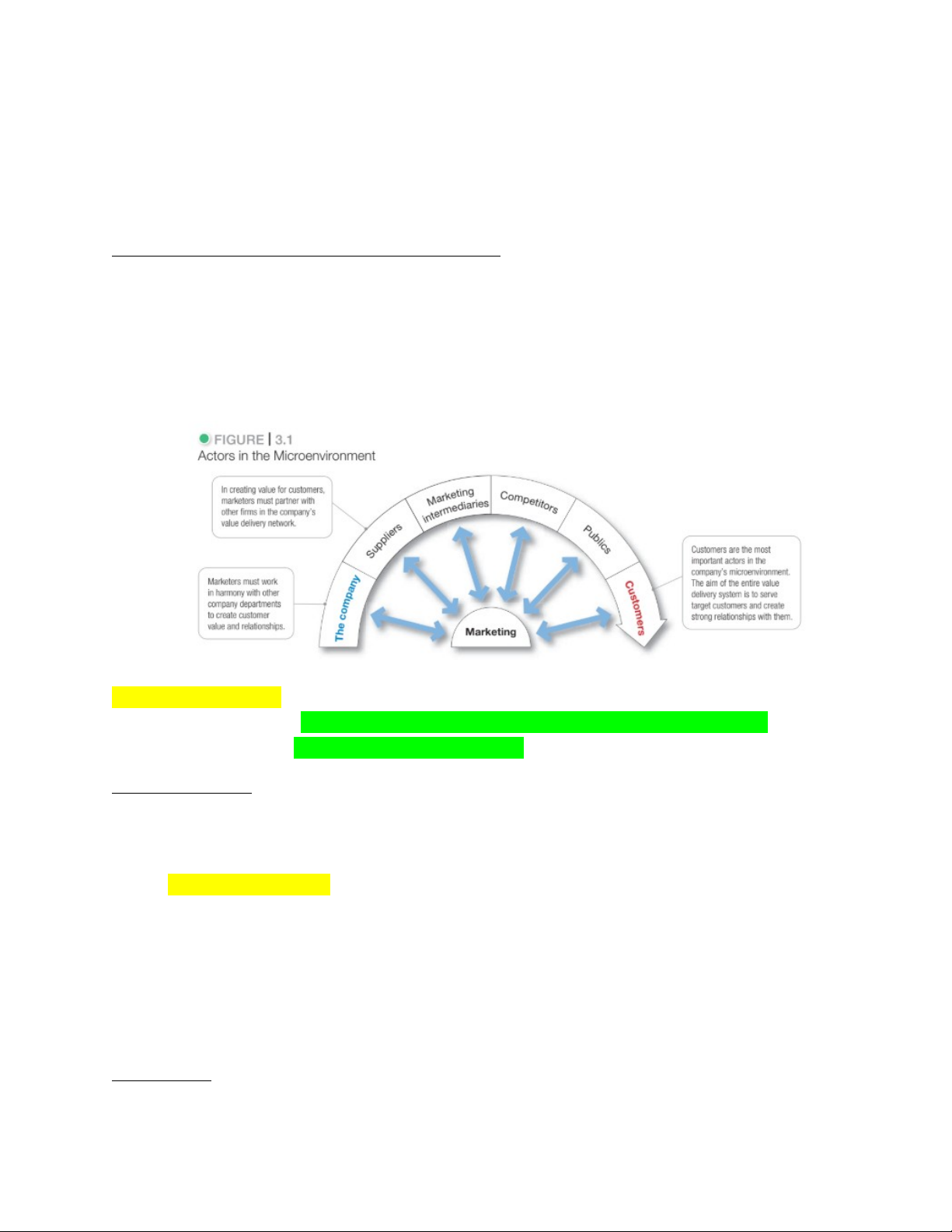
Microenvironment - The actors close to the company that affect its ability to serve its customers the company, suppliers, marketing intermediaries, customer markets, competitors, and publics.
The company
In designing marketing plans, marketing management takes other company groups into account groups such as:
- Top management sets the company’s mission, objectives, broad strategies, and policies.
- Finance
- Research and Development (R&D)
- Purchasing
- Operations
- Accounting
Suppliers
Suppliers form an important link in the company’s overall customer value delivery network. They provide the resources needed by the company to produce its goods and services.
Supplier problems can seriously affect marketing.
Most marketers today treat their suppliers as partners in creating and delivering customer value.
Marketing intermediaries
- Help the company to promote, sell, and distribute its goods to final buyers. They include resellers, physical distribution firms, marketing services agencies, and financial intermediaries.
-Form an important component of the company’s overall value delivery network.
Ex: A company which prints its logo on paper cups and other brands on a beverage machine to advertise many products to consumers.
- Resellers - distribution channel firms that help the company find customers or make sales to them. These include wholesalers and retailers that buy and resell merchandise.
- Physical distribution firms - help the company stock and move goods from their points of origin to their destinations.
- Marketing services agencies - the marketing research firms, advertising agencies, media firms, and marketing consulting firms that help the company target and promote its products to the right markets.
- Financial intermediaries - include banks, credit companies, insurance companies, and other businesses that help finance transactions or insure against the risks associated with the buying and selling of goods.
Competitors
The marketing concept states that, to be successful, a company must provide greater customer value and satisfaction than its competitors do.
Publics
Any group that has an actual or potential interest in or impact on an organization’s ability to achieve its objectives.
- Financial publics. This group influences the company’s ability to obtain funds. Banks, investment analysts, and stockholders are the major financial publics.
- Media publics. This group carries news, features, editorial opinions, and other content. It includes television stations, newspapers, magazines, blogs, and other social media.
- Government publics. Management must take government developments into account. Marketers must often consult the company’s lawyers on issues of product safety, truth in advertising, and other matters.
- Citizen-action publics. A company’s marketing decisions may be questioned by consumer organizations, environmental groups, minority groups, and others. Its public relations department can help it stay in touch with consumer and citizen groups.
- Internal publics. This group includes workers, managers, volunteers, and the board of directors. Large companies use newsletters and other means to inform and motivate their internal publics. When employees feel good about the companies they work for, this positive attitude spills over to the external publics.
- General public. A company needs to be concerned about the general public’s attitude toward its products and activities. The public’s image of the company affects its buying behavior.
- Local publics. This group includes local community residents and organizations. Large companies usually work to become responsible members of the local communities in which they operate.
Customers
Customers are the most important actors in the company’s microenvironment. The aim of the entire value delivery network is to engage target customers and create strong relationships with them.
Five types of customer markets:
- Consumer markets consist of individuals and households that buy goods and services for personal consumption.
- Business markets buy goods and services for further processing or use in their production processes, whereas reseller markets buy goods and services to resell at a profit.
- Government markets consist of government agencies that buy goods and services to produce public services or transfer the goods and services to others who need them.
- International markets consist of these buyers in other countries, including consumers, producers, resellers, and governments.
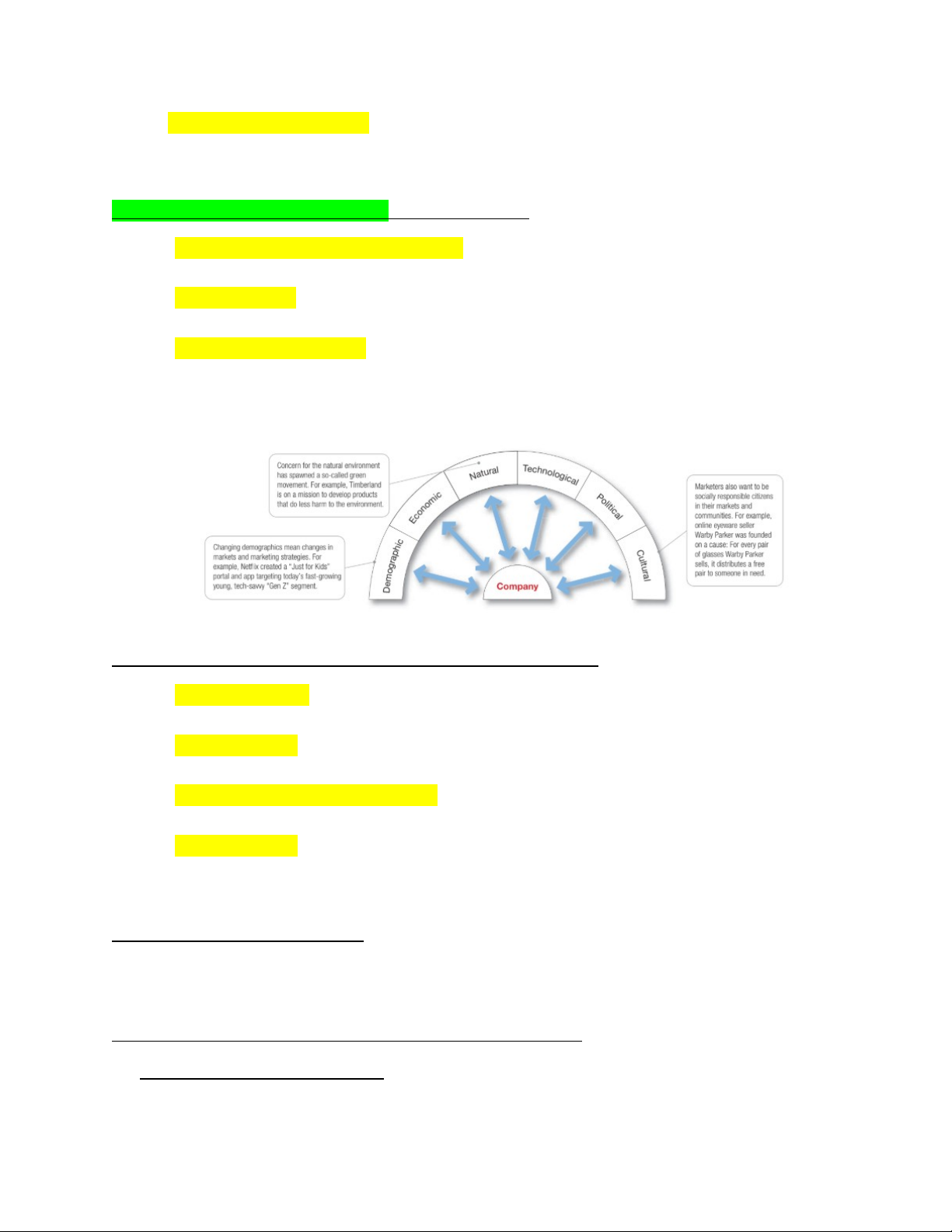
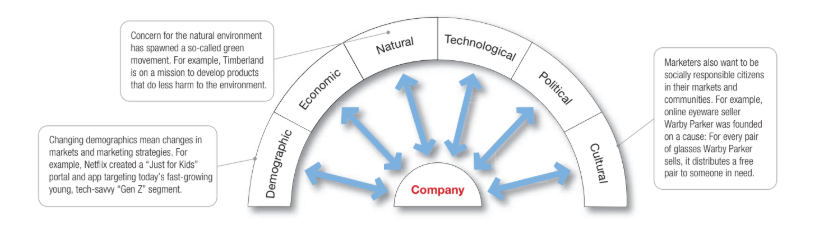
- The company’s macroenvironment
Demographic (dân số học) Environment
- The demographic environment - of major interest to marketers because it involves people, and people make up markets.
- Demography – the study of human populations in terms of size, density, location, age, gender, race, occupation, and other statistics.
- Demographic trends – shifts (changes) in age, family structure, geographic population, educational characteristics, and population diversity.
The Changing Age Structure of the Population
- Baby boomers - the 78 million people born during the years following World War II and lasting until 1964.
- Generation X - The 49 million people born between 1965 and 1976 in the “birth dearth” following the baby boom.
- Millennials (or generation Y) - The 83 million children of the baby boomers born between 1977 and 2000.
- Generation Z - People born after 2000 (although many analysts include people born after 1995) who make up the kids, tweens, and teens markets.
Economic Environments
🡪 Consists of factors that afect consumer purchasing power and spending patterns
The Natural and Technological Environments
The Natural Environments
- Natural environment - The physical environment and the natural resources that are needed as inputs by marketers or that are affected by marketing activities.
- Trends - Increased shortages of raw material
- Increased pollution
- Increased governments intervention
The Technological Environments
- Technological environment - forces that create new technologies, create new products and market opportunities.
- The Political-Social and Cultural Environments
Political and Social Environment
- Political environment – laws, government agencies, and pressure groups that influence or limit various organizations and individuals in a given society.
Cultural environments
- Cultural environments - Institutions and other forces that affect society’s basic values, perceptions, preferences, and behaviors.
Persistence of cultural values
- Core beliefs and values – are persistent and are passed on from parents to children and are reinforced by schools, businesses, religious institutions, and government.
- Secondary beliefs and values – are more open to change and include people’s view of themselves, others, organization, society, nature, universe.
Shifts in Secondary cultural Values