Nội dung lý thuyết môn Marketing căn bản buổi 1
sinh viên học marketing căn bản tiếng anh toàn phần
Môn: Kinh doanh quốc tế - Marketing 118 tài liệu
Trường: Đại học Kinh tế Thành phố Hồ Chí Minh 3.1 K tài liệu
Tác giả:


Preview text:
- What is marketing
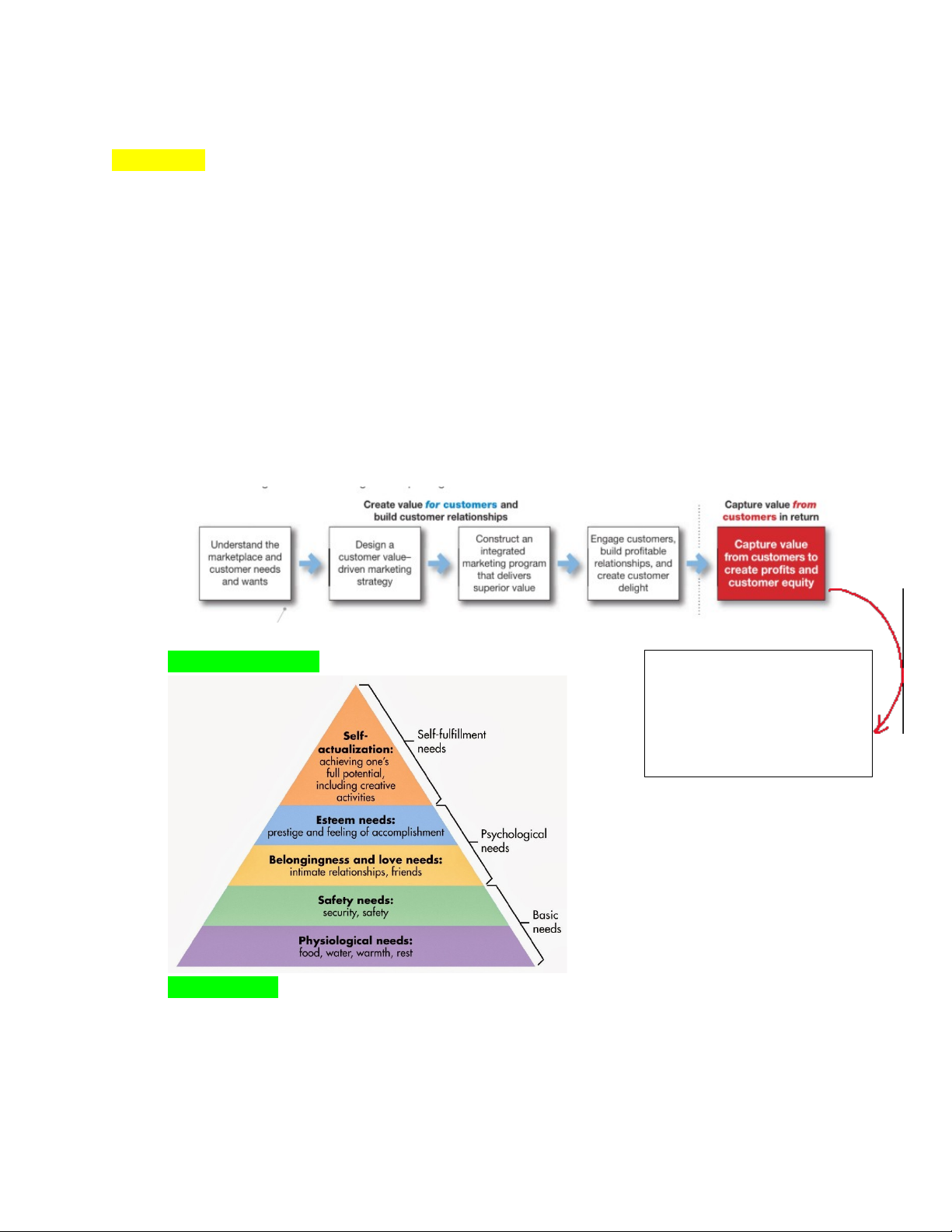
Marketing is a process by which companies value for customers and build strong customer relationships to capture value from customers in return. (memorize)
- Why do companies need to build strong relationships with customers?
- Increased Customer Loyalty and Retention
- Word-of-Mouth Marketing and Reputation
- Valuable Feedback and Insight
- Competitive Advantage
- What value do companies capture from customers?
- profit
- satisfaction
- loyalty and retention
- The marketing process

- Understanding the marketplace and customer needs

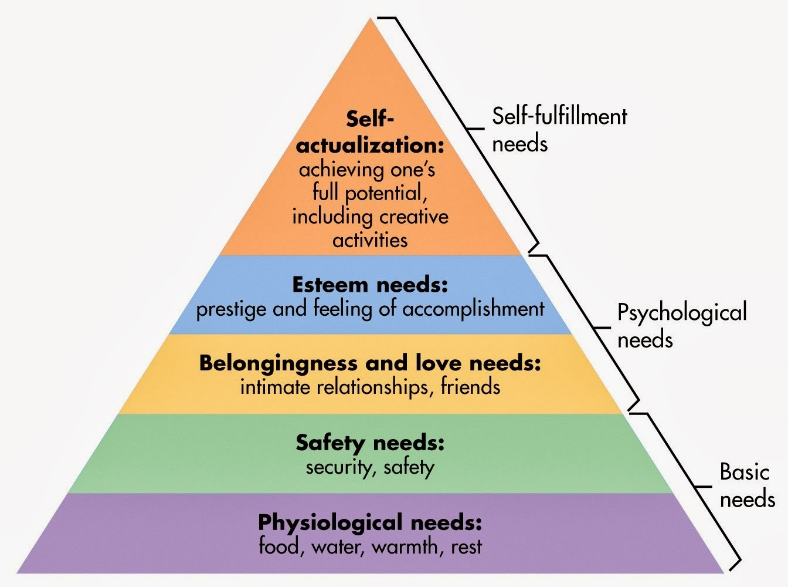
Maslow’s theory
Philip Kotler
Needs: - state of deprivation
- physical (food, clothing, warm, safety)
- social-belonging and affection
- individual- knowledge and self-expression
Want: - form that needs take as they are shaped by culture and individuals’ theory
Demand: - wants are backed by buying power
Market offerings are some combination of products, services, information, or experiences offered to a market to satisfy a need or want
Marketing myopia is focusing only on existing wants and losing sight of underlying customer demands.
- Why do marketers not always understand customer needs?
- How can they better identify customer needs?
Customer value and satisfaction expectations
Marketers - Set the right level of expectations

- Not too high or low

Customers - Value and satisfaction

Exchange is the act of obtaining a desired object from someone by offering something in return.
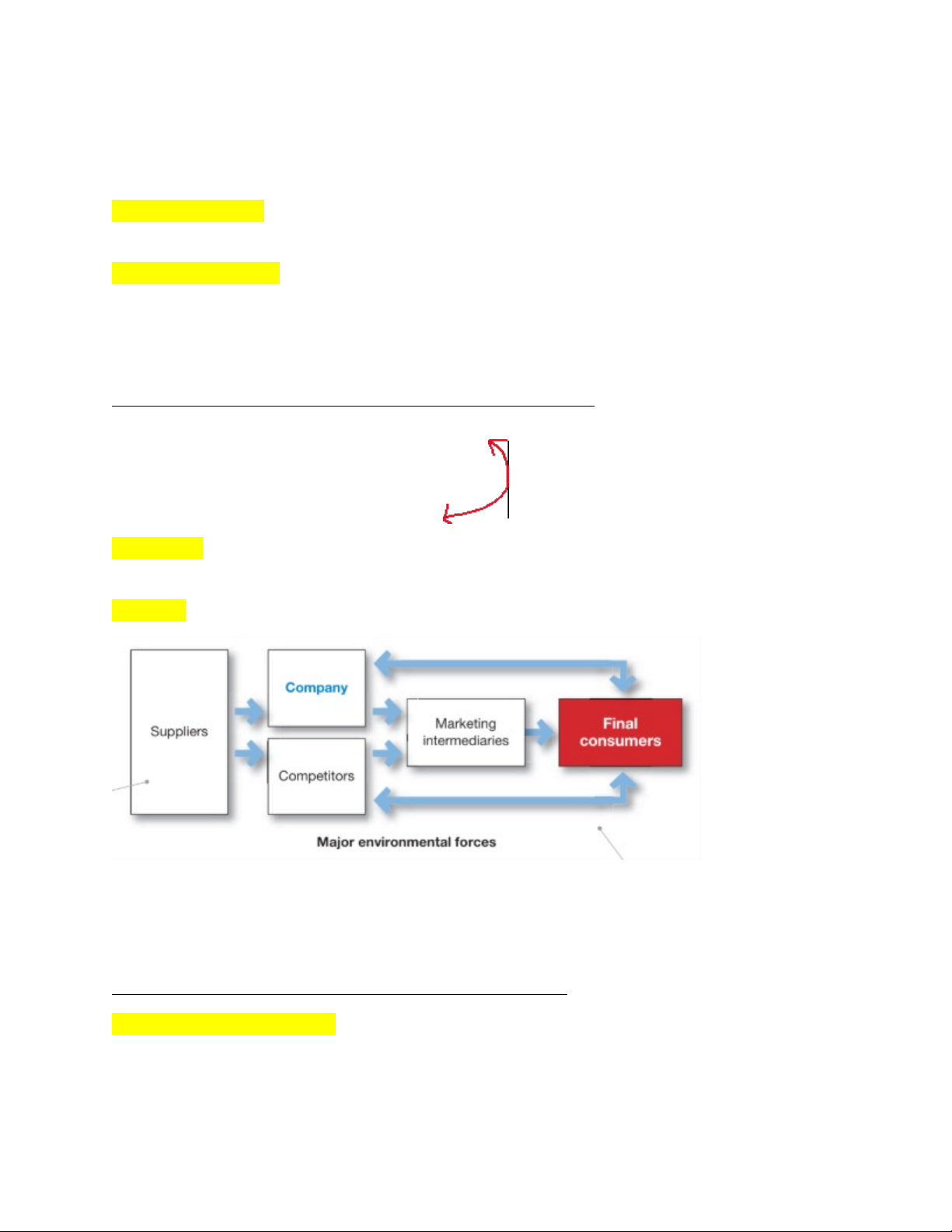
Markets are the set of actual and potential buyers of a product
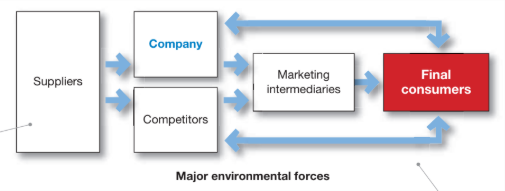
Marketing intermediaries: retailers, banks, sellers… who help you deliver products at the right time.
- Designing a customer-driven marketing strategy and plan
Customer Value–Driven Marketing Strategy
Marketing management is the art and science of choosing target markets and building profitable relationships with them.
Market segmentation refers to dividing the markets into segments of customers.
Target marketing refers to which segments to go after.
Value proposition – set of benefits or values a company promises to deliver to customers to satisfy their needs.
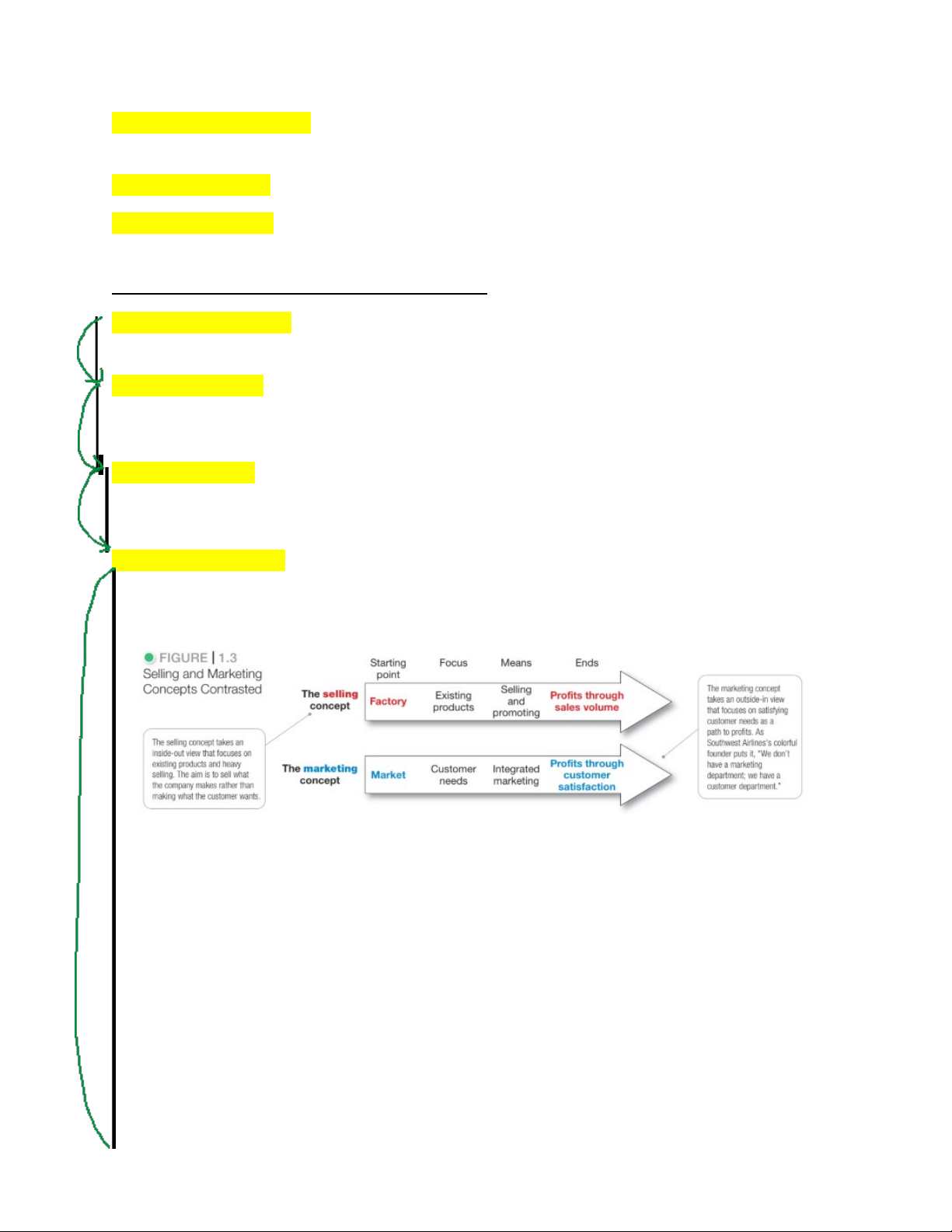
Marketing management orientation
Production concept holds that consumers will favor products that are available and highly affordable.

Product concept is the idea that consumers will favor products that offer the most quality, performance, and features. Organization should therefore devote its energy to making continuous product improvements.


Selling concept is the idea that consumers will not buy enough of the firm’s products unless the firm undertakes a large-scale selling and promotion effort.

Marketing concept is the idea that achieving organizational goals depends on knowing the needs and wants of the target markets and delivering the desired satisfactions better than competitors do.
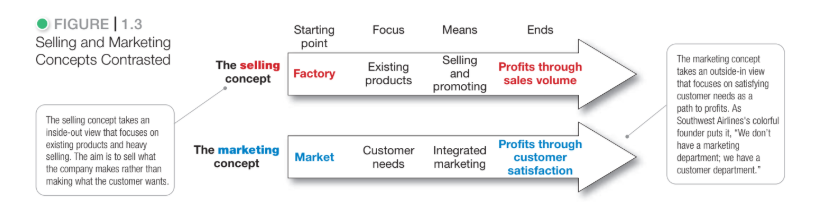
- Should we produce products first then study about the market? Or should we do the advert?

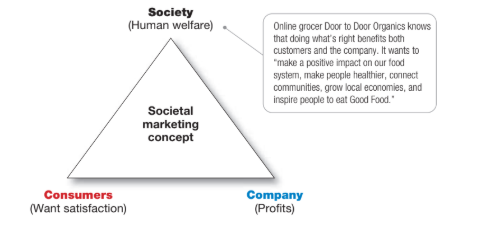


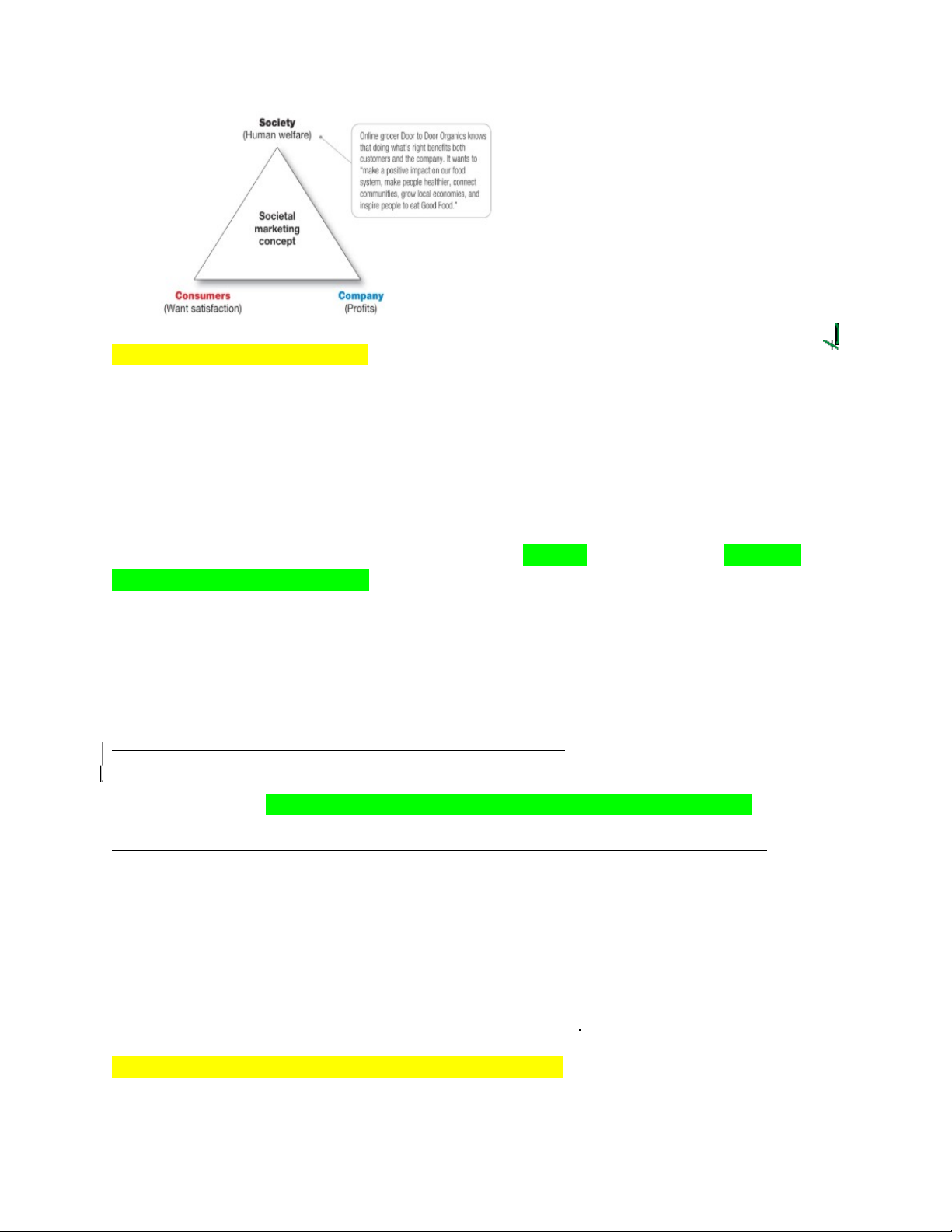
Societal marketing concept is the idea that a company should make good marketing decisions by considering consumer’s wants, the company’s requirements, consumers’ long-term interests, and society’s long-run interests.
- Preparing an integrated marketing plan and program
The marketing mix: a set of marketing tools that work together to engage customers, satisfy customer needs, build customer relationships, and are classified into four broad groups, called the four Ps of marketing: product, price, place, and promotion.
The marketing program builds customer relationships by transforming the marketing strategy into action. It consists of the firm’s marketing mix; the set of marketing tools the firm uses to implement its marketing strategy.
- Building customer relationships
Customer Relationship Management (CRM)

🡪 The overall process of building and maintaining profitable customer relationships by delivering superior customer value and satisfaction.
Relationship building blocks: Customer Value and Satisfaction
🡪 Customer-perceived value - The customer’s evaluation of the difference between all the benefits and all the costs of a marketing offer relative to those of competing offers.
🡪 Customer satisfaction - The extent to which a product’s perceived performance matches a buyer’s expectations.
Customer relationship Levels and Tools

The changing nature of Customer Relationships:
Customer-managed relationships – marketing in which customers, empowered by today’s new digital technologies, interact with companies and with each other to shape their relationships with brands.
Partner relationship management - working closely with others inside and outside the company to jointly engage and bring more value to customers.
OUTSIDE INSIDE



Outside the company is how marketers connect with their suppliers, channel partners, and competitors by developing partnerships.
Inside the company is very function area interacting with customers - electronically
- Cross-functional teams
- Capturing Value from Customers
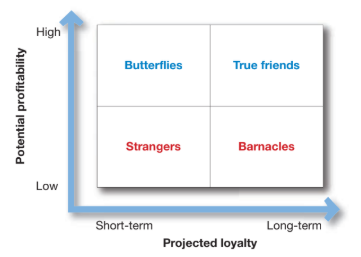
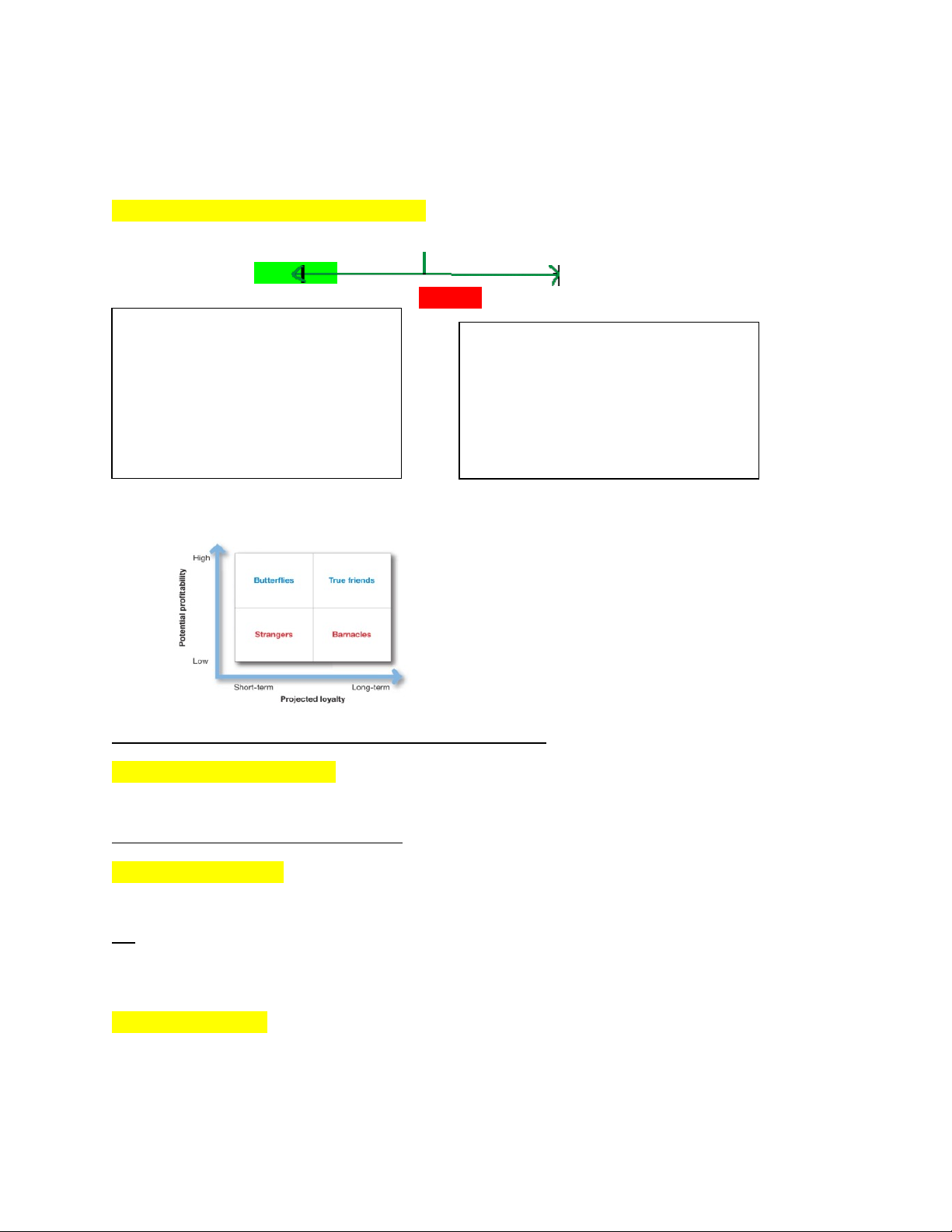
Creating customer Loyalty and Retention
Customer lifetime value - The value of the entire stream of purchases a customer makes over a lifetime of patronage.
Growing Share of Customer
Share of customer - the portion of the customer’s purchasing that a company gets in its product categories.
Ex: When a customer pays for a product, the company of that brand can encourage the customer to buy other products that are related to the product which the customer has just bought.
Customer equity – the total combined customer lifetime values of all of the company’s customer.
- The Changing Marketing Landscape
Uncertain Economic Environment
- New consumer frugality (tiết kiệm)
- Marketers focus on the value for the customer
Digital Age
- People are connected continuously to people and information worldwide
- Marketers have great new tools to communicate with customers
- Internet = mobile communication devices create environment for online marketing
- Rapid globalization
- Sustainable marketing
- Not-for-profit Marketing