lÝ thuyết Marketing căn bản buổi 5
sinh viên học marketing tiếng anh toàn phần
Môn: Kinh doanh quốc tế - Marketing 118 tài liệu
Trường: Đại học Kinh tế Thành phố Hồ Chí Minh 3.1 K tài liệu
Tác giả:



Preview text:
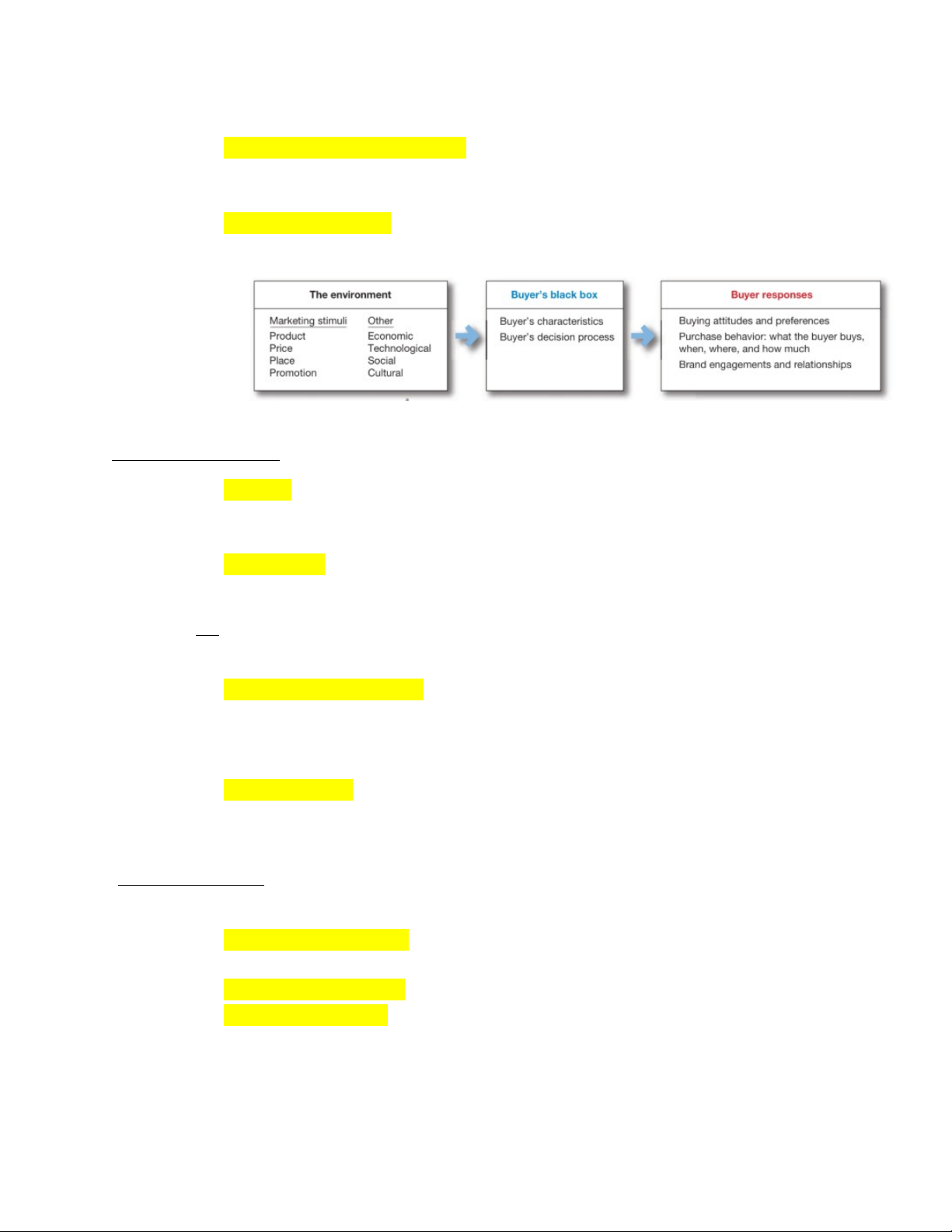
- Model of Consumer Behavior
- Consumer buyer behavior - The buying behavior of final consumers-individuals and households that buy goods and services for personal consumption.
- Consumer market - All the individuals and households that buy or acquire goods and services for personal consumption.

- Characteristics Affecting Consumer Behavior
Cultural Factors
- Culture - The set of basic values, perceptions, wants, and behaviors learned by a member of society from family and other important institutions.
- Subculture – Groups of people within a culture with shared value systems based on common life experiences and situations.
Ex: Hispanic American, African American, Asian American, Mature consumers.
- Total market strategy - Integrating ethnic themes and cross-cultural perspectives within a brand’s mainstream marketing, appealing to consumer similarities across subcultural segments rather than differences.
- Social classes – are society’s relatively permanent and ordered divisions in society whose members share similar values, interests, and behaviors.
Social Factors
- Groups and Social Networks:
- Membership groups – groups with direct influence and to which a person belongs
- Aspirational groups – groups an individual wishes to belong to
- Reference groups – groups that form a companion or reference in forming attitudes or behaviors
- Word-of-moth influence – the impact of the personal words and recommendations of trusted friends, family, associates, and other consumers on buying behavior.
- Opinion leader - A person within a reference group who, because of special skills, knowledge, personality, or other characteristics, exerts social influence on others.
- Online social networks - Online social communities—blogs, online social media, brand communities, and other online forums—where people socialize or exchange information and opinions.
Personal Factors
- Occupation affects the goods and the services bought by consumers
- Economic situation includes trends in:
- Personal income
- Savings
- Interest rates
- Lifestyle - A person’s pattern of living as expressed in his or her activities, interests, and opinions.
Personality and Self-Concept
- Personality - The unique psychological characteristics that distinguish a person or group.
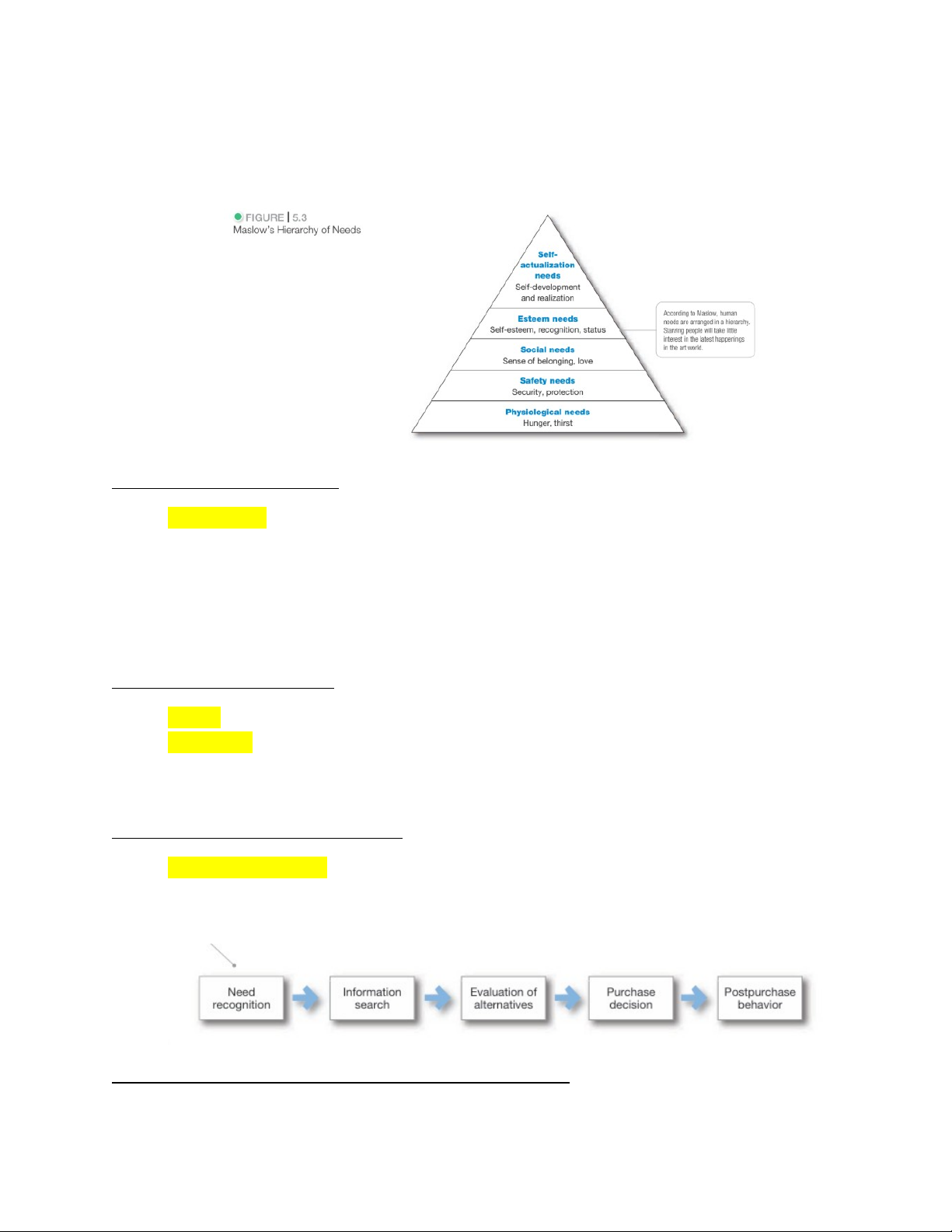
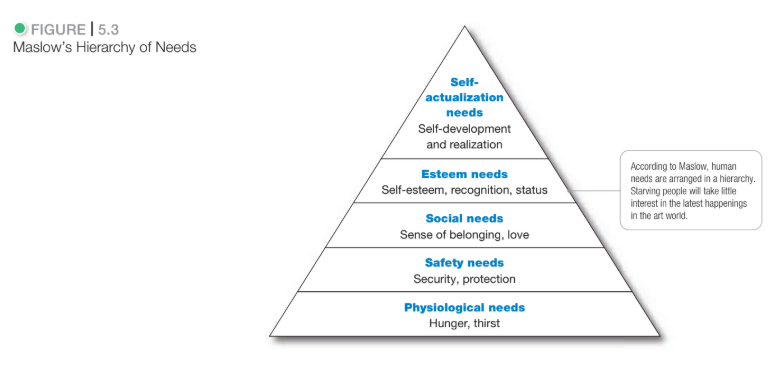
Psychological Factors Motivation
- A motive is a need that is sufficiently pressing to direct the person to seek satisfaction
- Motivation research refers to qualitative research designed to probe consumer’s hidden, subconscious motivations.
Psychological Factors
- Perception – the process by which people select, organize, and interpret information to form a meaningful picture of the world from three perceptual processes:
- Selective attention
- Selective distortion
- Selective retention
Beliefs and Attitudes
- Belief is a descriptive thought that a person
- Attitudes - a person’s consistently favorable or unfavorable evaluations, feelings, and tendencies toward an object or idea.
- Buying Decision Behavior and the Buyer Decision Process
The Buyer Decision Process
- Need recognition – occurs when the first stage of the buyer decision process, in which the consumer recognizes a problem or need: internal stimuli, external stimuli.

Information Search, Sources of Information
- Information search - The stage of the buyer decision process in which the consumer is motivated to search for more information.
- Personal sources: family and friends
- Commercial sources: advertising, Internet
- Public sources: mass media, consumer organizations
- Experiential sources: handling, examining, using the product
Evaluation of Alternatives
- How the consumer processes information to arrive at brand choices
-
- How does the consumer choose among alternative brands
-
Purchase Decision
- Purchase decision - The buyer’s decision about which brand to purchase, it can be affected by attitudes of others, unexpected situational factors.
Post-Purchase Decision
- Customer satisfaction is a key to building profitable relationships with consumers—to keeping and growing consumers and reaping their customer lifetime value.
- Post-purchase decision – the satisfaction that the consumer feels about the purchase
- Relationship between:
- consumer’s expectation
- product’s perceived performance
- The larger the gap between expectation and performances, the greater the consumer’s dissatisfaction.
- Cognitive dissatisfaction is the discomfort caused by a post-purchase conflict