Multiple Choice & True/False Questions môn Kinh tế vi mô | Trường Đại học Kinh Tế Quốc Dân
The economising problem is essentially one of deciding how to makethe best use of:A: virtually unlimited resources, to satisfy virtually unlimited wants.B: limited resources, to satisfy virtually unlimited wants.C: unlimited resources, to satisfy limited wants.D: limited resources, to satisfy limited wants.Tài liệu giúp bạn tham khảo, ôn tập và đạt kết quả cao. Mời đọc đón xem!
Môn: Kinh tế vi mô ( NEU ) 762 tài liệu
Trường: Trường Đại học Kinh Tế Quốc Dân 7.6 K tài liệu
Tác giả:







Preview text:
TEST 1.
SECTION A: MULTIPLE CHOICE QUESTIONS
Choose ONLY ONE best answer for each of the lowing questions ( mark/question) QUESTION 1
The economising problem is essentially one of deciding how to make the best use of:
A: virtually unlimited resources, to satisfy virtually unlimited wants.
B: limited resources, to satisfy virtually unlimited wants.
C: unlimited resources, to satisfy limited wants.
D: limited resources, to satisfy limited wants. QUESTION 2
Production possibilities (options) Capital goods Consumer goods
Refer to the above data, if the economy is producing at production option C, the opportunity
cost of the tenth unit of consumer goods will be: A: 4 units of capital goods. B: 2 units of capital goods. C: 3 units of capital goods. D: of a unit of capital goods. QUESTION 3:
Which of the following could be expected to produce an increase in the demand for chicken
A. a reduction in the price of chicken food
B. a decrease in the price of chicken
C. an increase in the supply of chicken
D. an increase in the price of pork. QUESTION 4
If the price of declines, the demand curve for the complementary product will: A. shift to the left. B. decrease. C. shift to the right. D. remain unchanged. QUESTION 5
Price discounting of 3-star Hotel daily room tariffs has shown that cutting prices by leads to
12%, more rooms being booked. We can conclude that
A. demand for hotel rooms is price clastic and discounting increases revenue
B. demand for hotel rooms is price clastic and discounting reduces revenue
C. demand for hotel rooms is price inelastic and discounting increases revenue
D. demand for hotel rooms is price inelastic and discounting reduces revenue QUESTION 6
If rice demand is inelastic, a good rice harvest will cause rice growers' revenue to:
A. increase because of the increase in the quantity that farmers can sell
B. remain unchanged, because the increase in the quantity that can be sold will be matched by an equal decrease in price
C. increase because of a downward movement along the supply curve, encouraging an increase in demand
D. decrease because of a percentage fall in price greater than the percentage increase in quantity sold QUESTION 7
The buyer' tax incidence would be higher if:
A: the price elasticity of demand is higher
: the price elasticity of demand is lower
: the price elasticity of demand is perfectly elastic D: None of the above QUESTION 8
Suppose that a firm's output increase from 910 to 1070 units when it increases its labour input
from 63 to 64 workers. The marginal product of the last worker is: A 1070 B. 910 C. 64 D. 160 QUESTION 9
Marginal cost may be defined as the:
A: rate of change in total fixed cost which results from producing one more unit of output.
B. change in total cost which results from producing one more unit of output.
C: change in average variable cost which results from producing one more unit of output
D: change in average total cost which results from producing one more unit of output QUESTION 10
A firm in a competitive market is producing at the level of output that maximises profit. At this output level:
A. marginal revenue equals price
B. average revenue equals marginal cost
C. marginal revenue equals marginal cost D. all the above QUESTION 11
Consider the following relationship between cost and output for a perfectly competitive firm:
If the market price of the firm’s output is $12, how many units of output should the firm produce: 3 4 5 6 QUESTION 12
A firm finds that its MR = MC output, its TC = $1,000, VC = $800, FC = $200 and total revenue is $900. This firm should: Close down in the short run
Produce because the resulting loss is less than its FC.
Produce because it will realise an economic profit
Liquidate its assets and go out of business QUESTION 13
Which of the following do firms in monopolistic competition, oligopoly and monopoly have in common. All have: Strongly competitive features
Downward sloping demand schedules
Full control of their output price A small number of producers QUESTION 14
If a firm doubles its output in the long run and its unit cost of production decline, we can conclude that:
Technological progress has occurred
Economies of scale are being realized
The firm is encountering diminishing returns
Diseconomies of scale are being encountered QUESTION 15
In a perfect competitive industry, the market price of the product is $12. Firm A is producing
the output at which average cost equals marginal cost, both of which are $10. TO maximize its profit, firm A should: A. decrease output B. expand output C. leave output unchanged D. increase its selling price QUESTION 16
Which of the following best describes the situation of firms in monopolistic competition?
A. they are normally as large as monopolies
B. they enjoy substantial barriers to entry
C. they are typified by inter-dependence between firms
D. they produce similar. but not identical products QUESTION 17
Price will always be greater than marginal revenue for a monopolist because:
A. The firm faces a perfectly elastic demand curve
B. The demand curve is above the ATC curve
C. Since no new firms can enter the market, the firm is not forced to lower price to increase quantity sold
D. The firm must lower price for all units sold in order to increase the quantity sold QUESTION 18
Compare to perfectly competitive firm, a monopolist firm:
A. Produce a higher level of output and make a higher price
B. Produce a lower level of output and make a lower price
C. Produce a lower level of output but make a higher price
D. Produce a higher level of output but make a lower price QUESTION 19
According to the kinked demand curve theory, an oligopolistic firm will:
A. always cam economic profits:
B. be faced with a more inelastic demand curve if it increases price
C. be faced with a more clastic demand curve if it reduces price
D. match price decreases and ignore price increases of rivals QUESTION 20
Price competition among oligopolists ( thi u quyềền/ đ ể ộ c quyềền nhóm ) usually:
A. Results in higher profits for all firms as a result of the increase in sales
B. Lowers profits for all firms as total revenue for the industry falls
C. Takes the form of advertising and product differentiation
D. Is frequent because it is a simple way to compete with rivals.
SECTION B: TRUE/FALSE/EXPLAIN QUESTIONS
Answer (true) or (false) for each of the following statements. Support your answer with a clear
esplanation and a diagram ( points/question)
If demand increases and supply simultaneously decreases, equilibrium price will rise.
In attempting to maximise profits, a firm will always produce at that output where total revenues are at a maximum. SECTION C (2 marks)
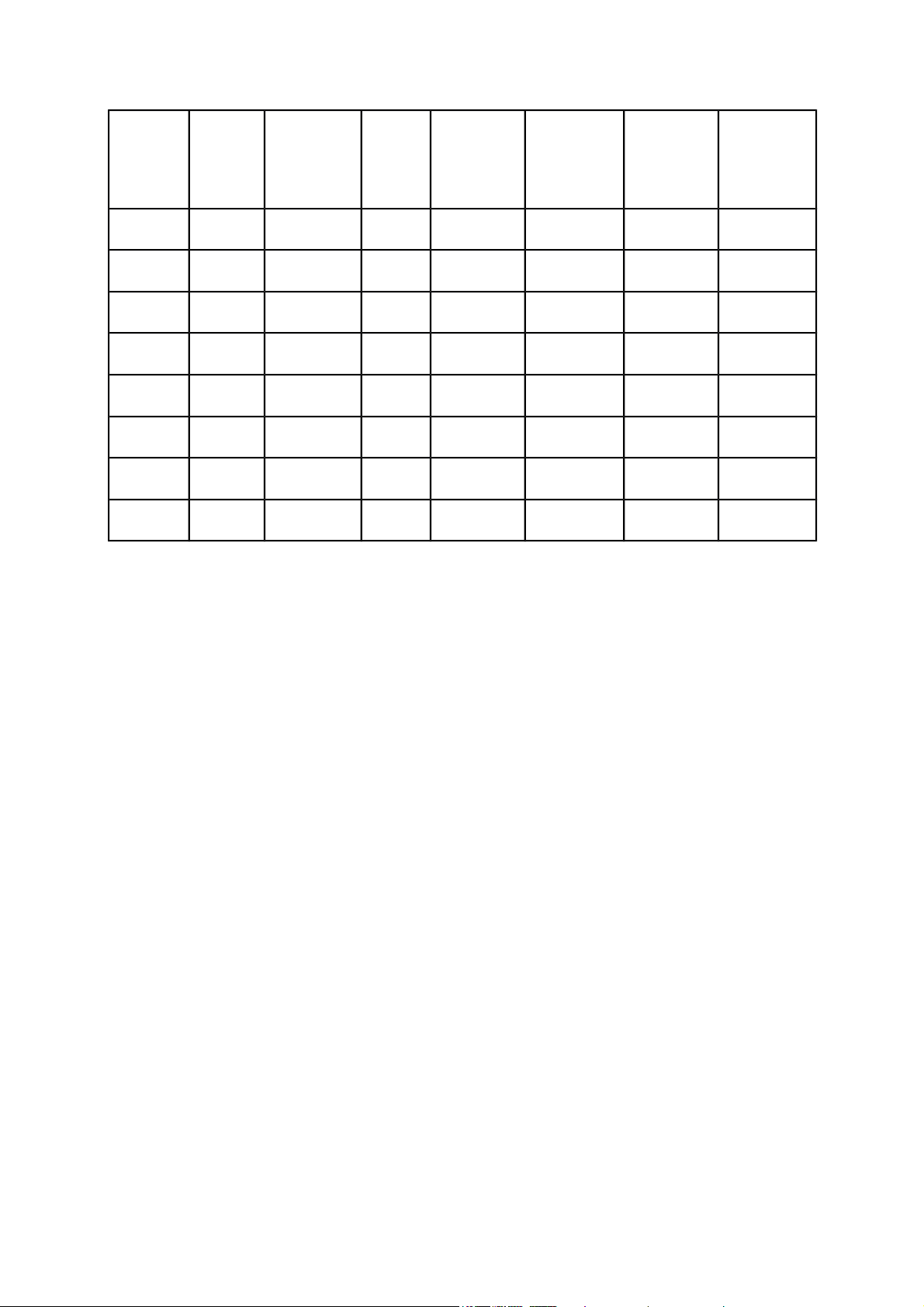
The table below includes Mr Chang's firm's short run cost data. Total Total Total Average Average Average Marginal Output Fixed Variable Cost Fixed Variable Total Cost $ Cost $ Cost $ $ Cost $ Cost $ Cost $ 0 500 0 1 70 2 50 3 40 4 40 5 42 6 45 7 50
Complete the table above ( marks)
Illustrate and explain shape of the marginal cost by the data and graph ( marks)
Tài liệu liên quan:
-
TOPIC: COSMETICS môn Kinh tế vi mô | Trường Đại học Kinh tế Quốc dân
5 3 -

Sách Bài Tập Vi Mô - Hướng Dẫn và Lời Giải Chi Tiết
13 7 -

Nguyên lý chiến lược kinh doanh - Bài giảng môn Kinh tế vi mô | Trường Đại học Kinh Tế Quốc Dân
13 7 -

Chương 7 các kỹ thuật lựa chọn chiến lược - Bài giảng môn Kinh tế vi mô | Trường Đại học Kinh Tế Quốc Dân
14 7 -
Tổng hợp câu hỏi trắc nghiệm theo chương ôn tập môn Kinh tế vi mô | Trường Đại học Kinh Tế Quốc Dân
18 9