Organizational BehaviorEighteenth Edition, Global Edition môn Principle of Management | Trường Đại học Quốc tế, Đại học Quốc gia Thành phố Hồ Chí Minh
Grouping jobs together so common tasks can be coordinated is called departmentalization. Tài liệu giúp bạn tham khảo, ôn tập và đạt kết quả cao. Mời đọc đón xem!
Môn: Principles of Management 187 tài liệu
Trường: Trường Đại học Quốc tế, Đại học Quốc gia Thành phố Hồ Chí Minh 1.5 K tài liệu
Tác giả:
















Preview text:
g
ighteenth Edition, Global Edition Week 13: Foundations of Organization Structure
Copyright © 2019 Pearson Education, Ltd. All Rights Reserved. Learning Objectives
4.1 Identify seven elements of an organization’s structure.
4.2 Identify the characteristics of the functional structure,
the bureaucracy, and the matrix structure.
4.3 Identify the characteristics of the virtual structure, the
team structure, and the circular structure.
4.4 Describe the effects of downsizing on organizational structures and employees.
4.5 Contrast the reasons for using mechanistic versus organic structural models.
4.6 Analyze the behavioral implications of different organizational designs.
Copyright © 2019 Pearson Education, Ltd. All Rights Reserved. dentify Seven Elements of an
Organization’s Structure (1 of 10)
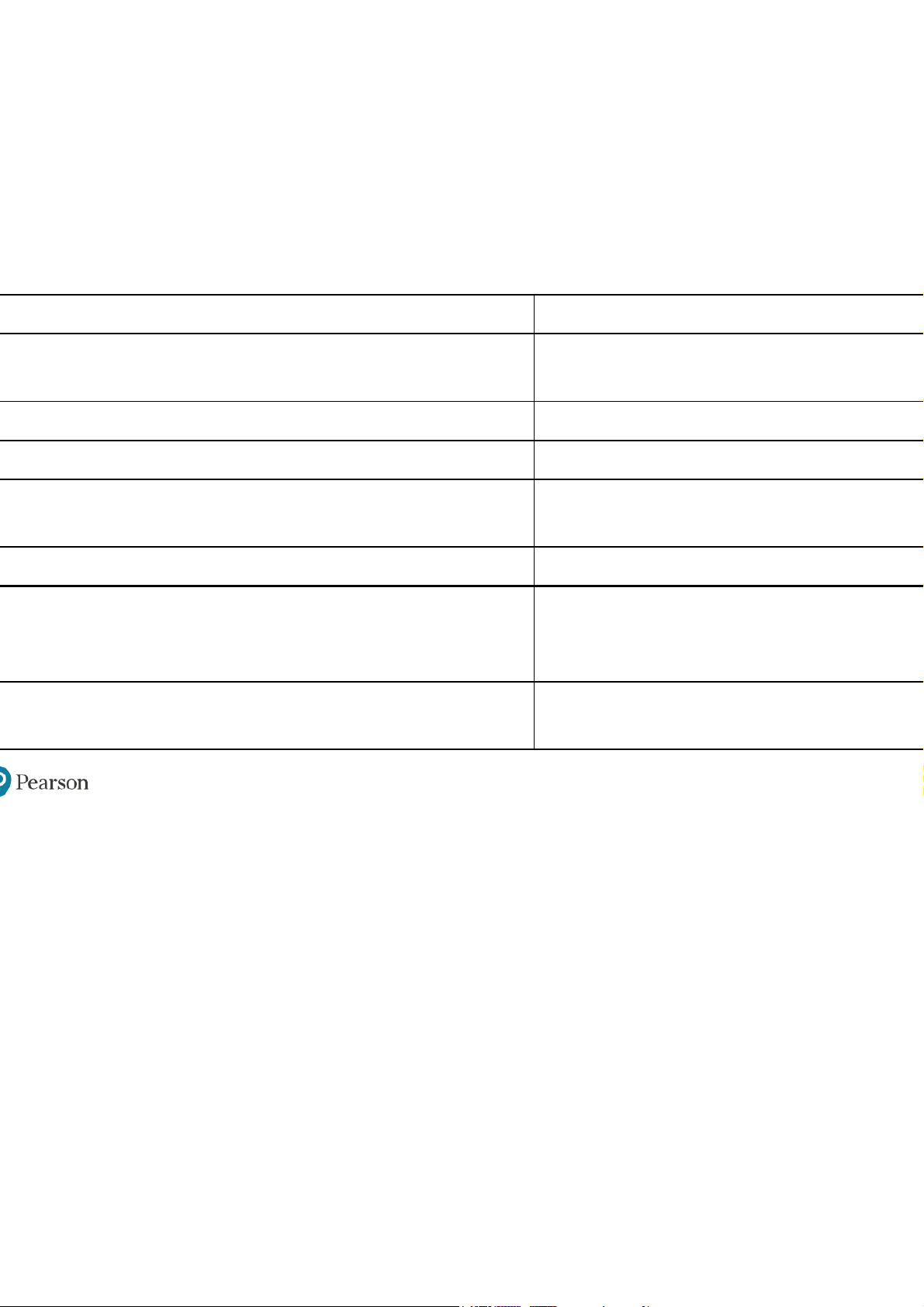
xhibit 14-1 Key Design Questions and Answers for Designing the roper Organizational Structure The Key Question The Answer Is Provided by
1. To what degree are activities subdivided into Work specialization separate jobs?
2. On what basis will jobs be grouped together? Departmentalization
3. To whom do individuals and groups report? Chain of command
4. How many individuals can a manager efficiently Span of control and effectively direct? 5. Where does decision -making authority lie?
Centralization and decentralization
6. To what degree will there be rules and Formalization
regulations to direct employees and managers?
7. Do individuals from different areas need to Boundary spanning regularly interact?
Copyright © 2019 Pearson Education, Ltd. All Rights Reserved. dentify Seven Elements of an
Organization’s Structure (2 of 10)
Work specialization: the division of labor into separate activities. –Repetition of work.
–Training for specialization.
–Increasing efficiency through invention. –Henry Ford
Copyright © 2019 Pearson Education, Ltd. All Rights Reserved. dentify Seven Elements of an
Organization’s Structure (3 of 10)
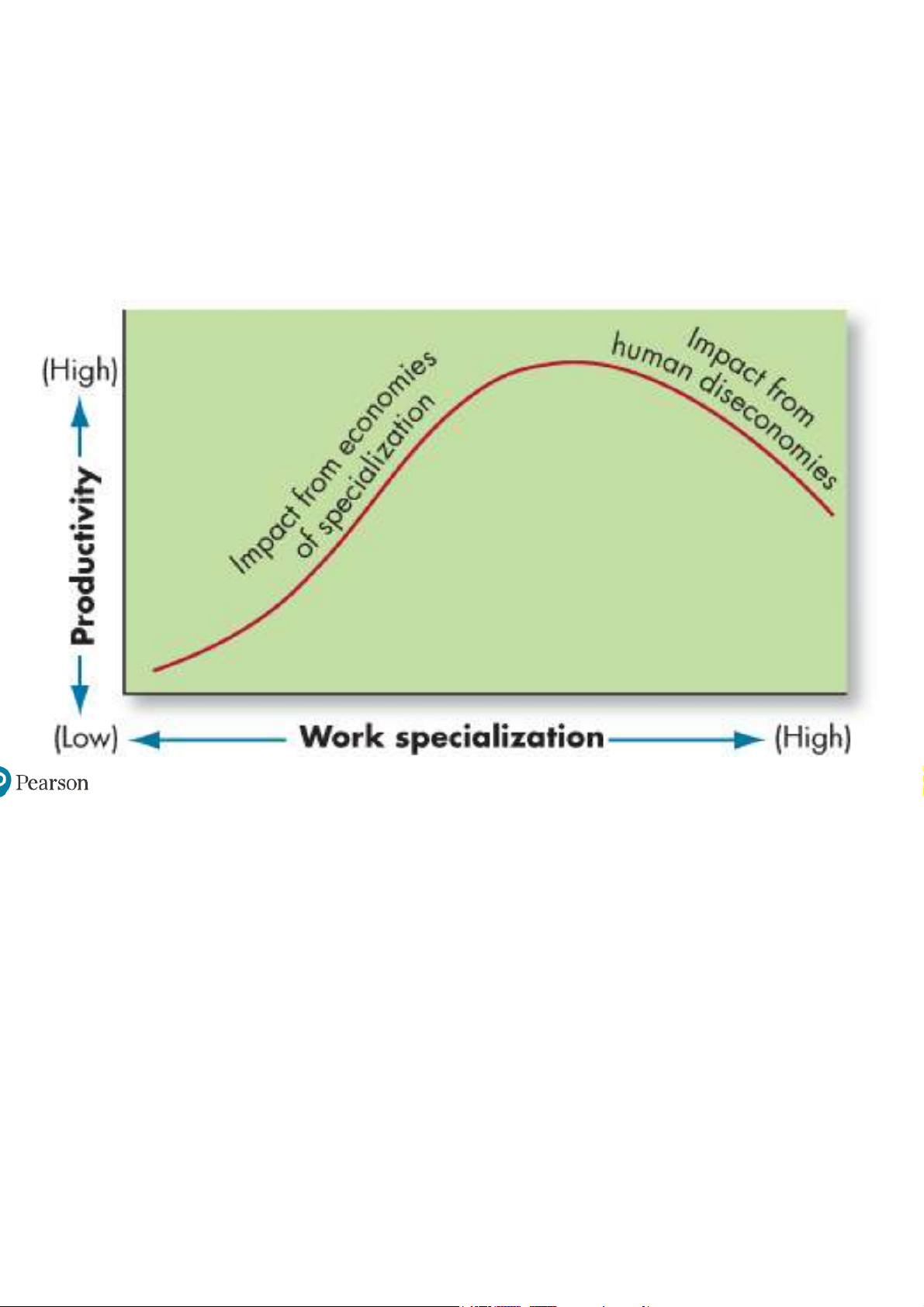
Exhibit 14-2 Economies and Diseconomies of Work pecialization
Copyright © 2019 Pearson Education, Ltd. All Rights Reserved. dentify Seven Elements of an
Organization’s Structure (4 of 10)
Grouping jobs together so common tasks can be
coordinated is called departmentalizatio . n –By functions performed.
–By type of product or service the organization produces. –By geography or territory. –By process differences. –By type of customer.
Copyright © 2019 Pearson Education, Ltd. All Rights Reserved. dentify Seven Elements of an
Organization’s Structure (5 of 10)
Chain of command: an unbroken line of authority that
extends from the top of the organization to the lowest
echelon and clarifies who reports to whom.
–Once a basic cornerstone in organization design. –Two complementary concepts: §Unity of command §Authority
Copyright © 2019 Pearson Education, Ltd. All Rights Reserved. dentify Seven Elements of an
Organization’s Structure (6 of 10)
The chain of command is less relevant today because of
technology and the trend of empowering people.
–Operating employees make decisions once reserved for management.
–Increased popularity of self-managed and cross- functional teams.
Many organizations still find that enforcing the chain of command is productive.
Copyright © 2019 Pearson Education, Ltd. All Rights Reserved. dentify Seven Elements of an
Organization’s Structure (7 of 10)
Exhibit 14-3 Contrasting Spans of Control
Copyright © 2019 Pearson Education, Ltd. All Rights Reserved. dentify Seven Elements of an
Organization’s Structure (8 of 10)
Centralization and Decentralization
–Centralization refers to the degree to which decision
making is concentrated at a single point in the organization.
–Advantages of a decentralized organization:
§Can act more quickly to solve problems.
§More people provide input into decisions.
§Employees are less likely to feel alienated from
those who make decisions that affect their work lives.
Copyright © 2019 Pearson Education, Ltd. All Rights Reserved. dentify Seven Elements of an
Organization’s Structure (9 of 10)
Formalization: the degree to which jobs within the organization are standardized.
–A highly formalized job means a minimum amount of discretion.
–Low formalization – job behaviors are relatively non-
programmed, and employees have a great deal of
freedom to exercise discretion in their work.
Copyright © 2019 Pearson Education, Ltd. All Rights Reserved. dentify Seven Elements of an
Organization’s Structure (10 of 10)
Boundary spanning occurs when individuals form
relationships with people outside their formally assigned groups.
–Positive results are especially strong in organizations
that encourage extensive internal communication; in
other words, external boundary spanning is most
effective when it is followed up with internal boundary spanning.
Copyright © 2019 Pearson Education, Ltd. All Rights Reserved.
Common Organizational Frameworks and Structures (1 of 7)
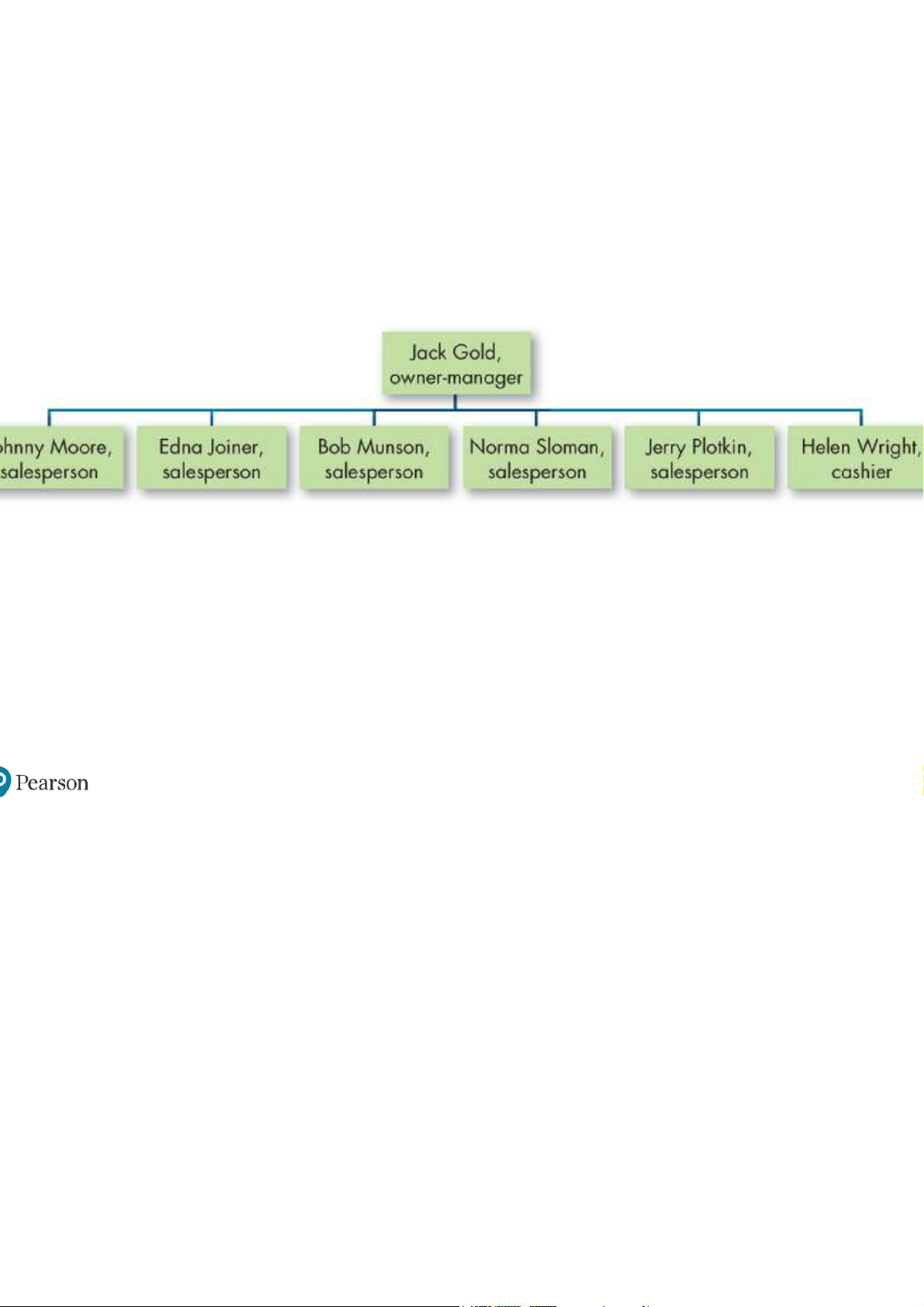
Exhibit 14-4 A Simple Structure (Jack Gold’s Men’s Store)
Copyright © 2019 Pearson Education, Ltd. All Rights Reserved.
Common Organizational Frameworks and Structures (2 of 7)
Simple structure: the manager and the owner are one and the same. –Strengths: §Simple, fast, and flexible. §Inexpensive to maintain. §Accountability is clear. –Weaknesses:
§Difficult to maintain in anything other than small organizations.
§Risky—everything depends on one person.
Copyright © 2019 Pearson Education, Ltd. All Rights Reserved.
Common Organizational Frameworks and Structures (3 of 7)
A bureaucracy is characterized by standardization.
–Highly routine operating tasks.
–Very formalized rules and regulations.
–Tasks grouped into functional departments. –Centralized authority. –Narrow spans of control.
–Decision making that follows the chain of command.
Copyright © 2019 Pearson Education, Ltd. All Rights Reserved.
Common Organizational Frameworks and Structures (4 of 7) Strengths of bureaucracy:
–Ability to perform standardized activities in a highly efficient manner. Weaknesses of bureaucracy: –Subunit conflicts. –Unit goals dominate. –Obsessive behavior. –Covering weak management.
Copyright © 2019 Pearson Education, Ltd. All Rights Reserved.
Common Organizational Frameworks and Structures (5 of 7) Two aspects of bureaucracies:
•Functional structure: groups employees by their
similar specialties, roles, or tasks.
•Divisional structure: groups employees into units by
product, service, customer, or geographical market area.
Copyright © 2019 Pearson Education, Ltd. All Rights Reserved.
Common Organizational Frameworks and Structures (6 of 7)
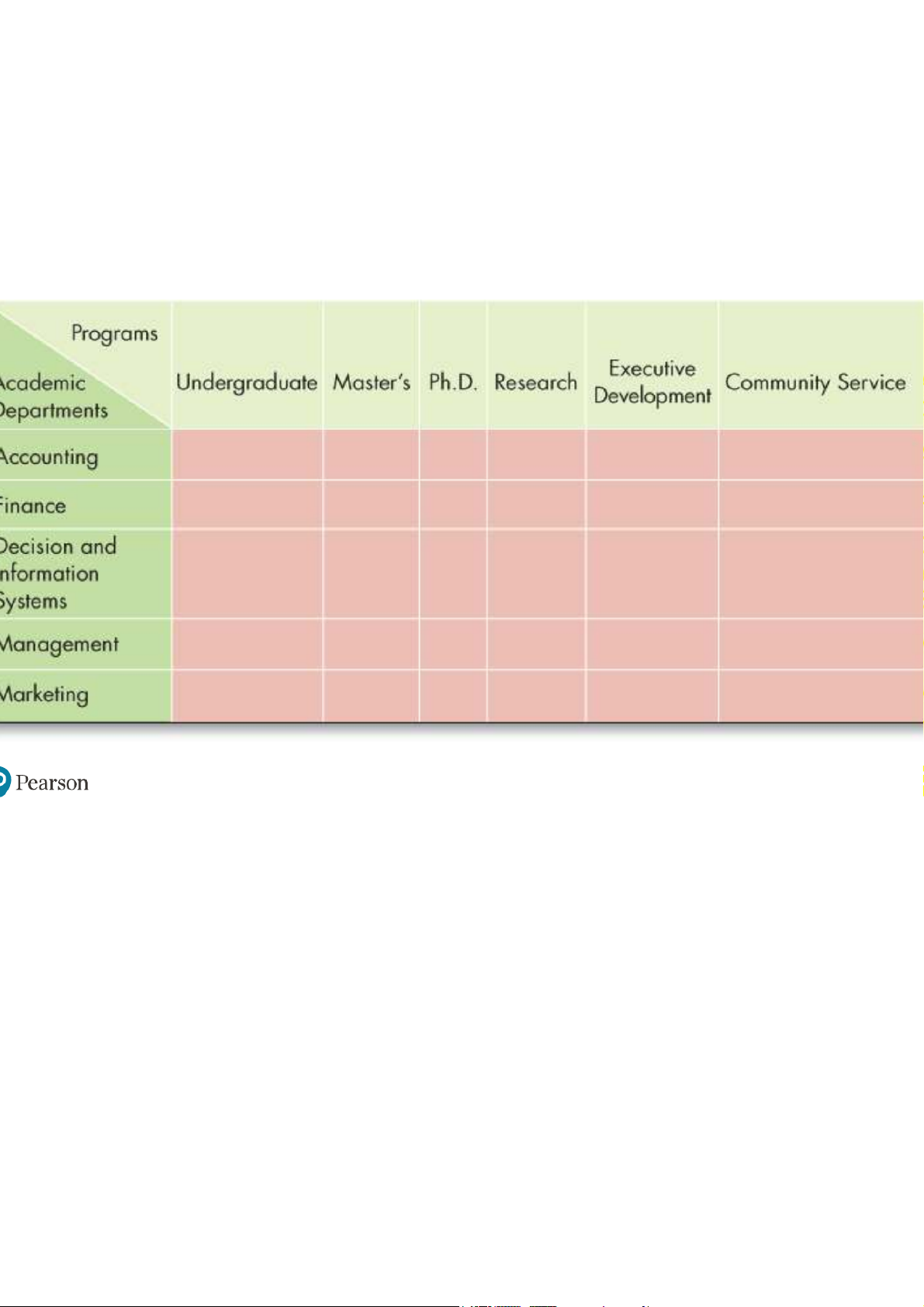
The matrix structure combines two forms of
departmentalization—functional and product:
–The strength of functional is putting specialists together.
–Product departmentalization facilitates coordination.
§It provides clear responsibility for all activities
related to a product, but with duplication of activities and costs.
Copyright © 2019 Pearson Education, Ltd. All Rights Reserved.
Common Organizational Frameworks and Structures (7 of 7)
Exhibit 14-5 Matrix Structure for a College of Business Administration
Copyright © 2019 Pearson Education, Ltd. All Rights Reserved.
Alternate Design Options (1 of 4) The Virtual Organization
–The essence of the virtual organization is that it is
typically a small, core organization that outsources major business functions.
§Also referred to as a modular or network organization.
§It is highly centralized, with little or no departmentalization.
Copyright © 2019 Pearson Education, Ltd. All Rights Reserved.
Tài liệu liên quan:
-
Leadership Styles Preferred by Generation Z môn Principle of Management | Trường Đại học Quốc tế, Đại học Quốc gia Thành phố Hồ Chí Minh
3 2 -
Chapter 7 Blowing the Whistl môn Principle of Management | Trường Đại học Quốc tế, Đại học Quốc gia Thành phố Hồ Chí Minh
3 2 -
Chapter 11 - Organizational Structures and Their Impacts on Leadership môn Principle of Management | Trường Đại học Quốc tế, Đại học Quốc gia Thành phố Hồ Chí Minh
3 2 -
Lecture 2: Relational Model and Algebra môn Principle of Management | Trường Đại học Quốc tế, Đại học Quốc gia Thành phố Hồ Chí Minh
3 2 -
Lecture 6: ER –Relational Translation môn Principle of Management | Trường Đại học Quốc tế, Đại học Quốc gia Thành phố Hồ Chí Minh
3 2