Demand Trends in Vietnam’s Instant Noodle Market | Microeconomics | Trường Đại học Quốc tế, Đại học Quốc gia Thành phố Hồ Chí Minh
Vietnam's instant noodle market is a vibrant and significant segment of the country's food industry, reflecting a unique blend of cultural preferences, economic conditions, and lifestyle changes. Renowned for its convenience, affordability, and variety, instant noodles have become a staple in the Vietnamese diet. Instant noodles in Vietnam are more than just a quick meal option. Tài liệu được sưu tầm và soạn thảo dưới dạng file PDF để gửi tới các bạn cùng tham khảo, ôn tập đầy đủ kiến thức, chuẩn bị cho các buổi học thật tốt. Mời bạn đọc đón xem!
Môn: Microeconomics 613 tài liệu
Trường: Trường Đại học Quốc tế, Đại học Quốc gia Thành phố Hồ Chí Minh 1.9 K tài liệu
Tác giả:


Preview text:
2.1.
Demand of Instant Noodles in Vietnam
Vietnam's instant noodle market is a vibrant and significant segment of the country's food
industry, reflecting a unique blend of cultural preferences, economic conditions, and lifestyle
changes. Renowned for its convenience, affordability, and variety, instant noodles have become
a staple in the Vietnamese diet. Instant noodles in Vietnam are more than just a quick meal
option. They have integrated into the cultural fabric, often being a go-to choice for busy students,
working professionals, and families seeking a convenient and satisfying meal. The variety of
flavors available, ranging from traditional Vietnamese tastes to international influences, caters to
a wide palette. To have a deeper understanding of this, let’s take a look in Instant noodles’
demand in Vietnam through 2018 – 2022 period.
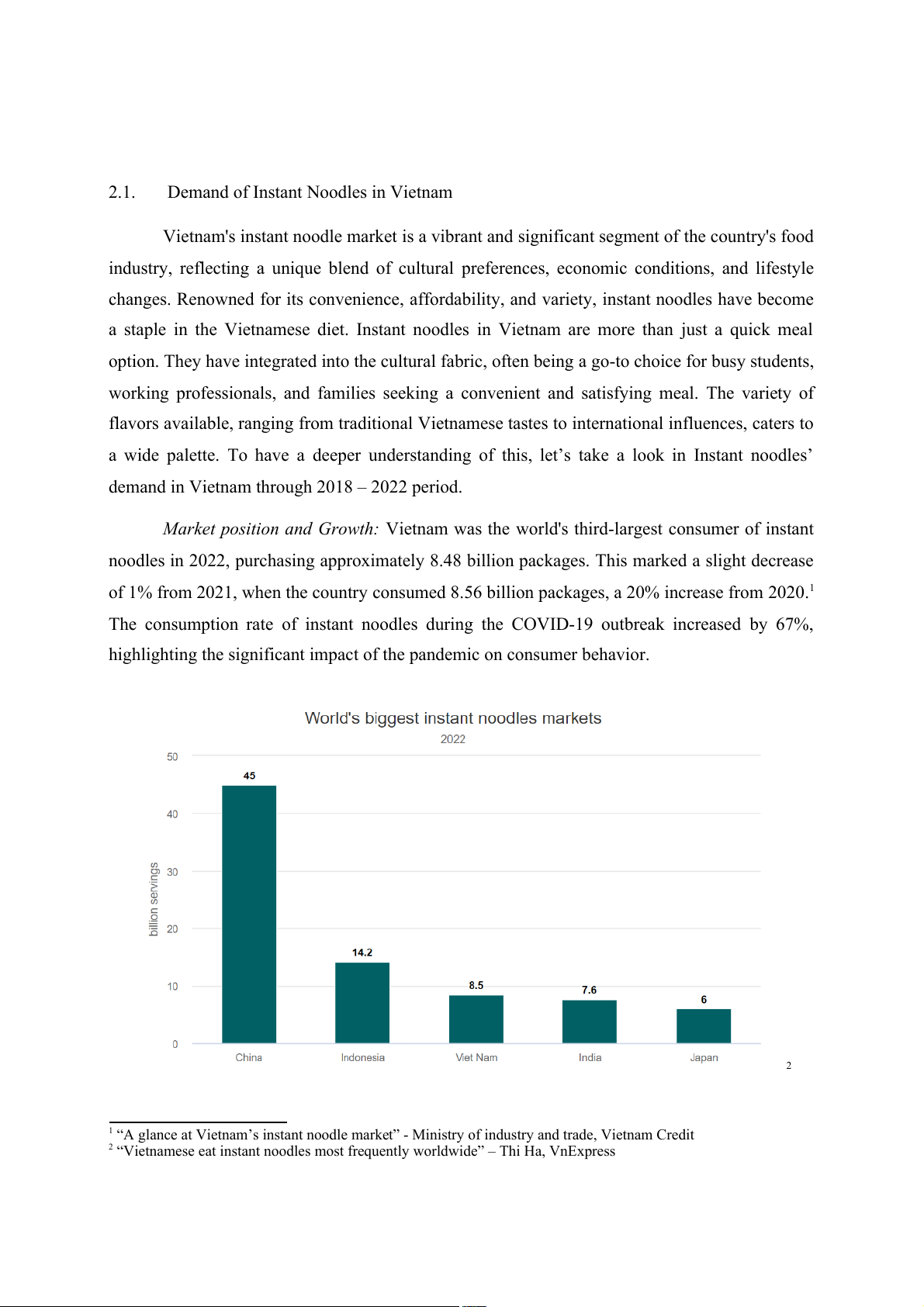
Market position and Growth: Vietnam was the world's third-largest consumer of instant
noodles in 2022, purchasing approximately 8.48 billion packages. This marked a slight decrease
of 1% from 2021, when the country consumed 8.56 billion packages, a 20% increase from 2020.1
The consumption rate of instant noodles during the COVID-19 outbreak increased by 67%,
highlighting the significant impact of the pandemic on consumer behavior. 2
1 “A glance at Vietnam’s instant noodle market” - Ministry of industry and trade, Vietnam Credit
2 “Vietnamese eat instant noodles most frequently worldwide” – Thi Ha, VnExpress
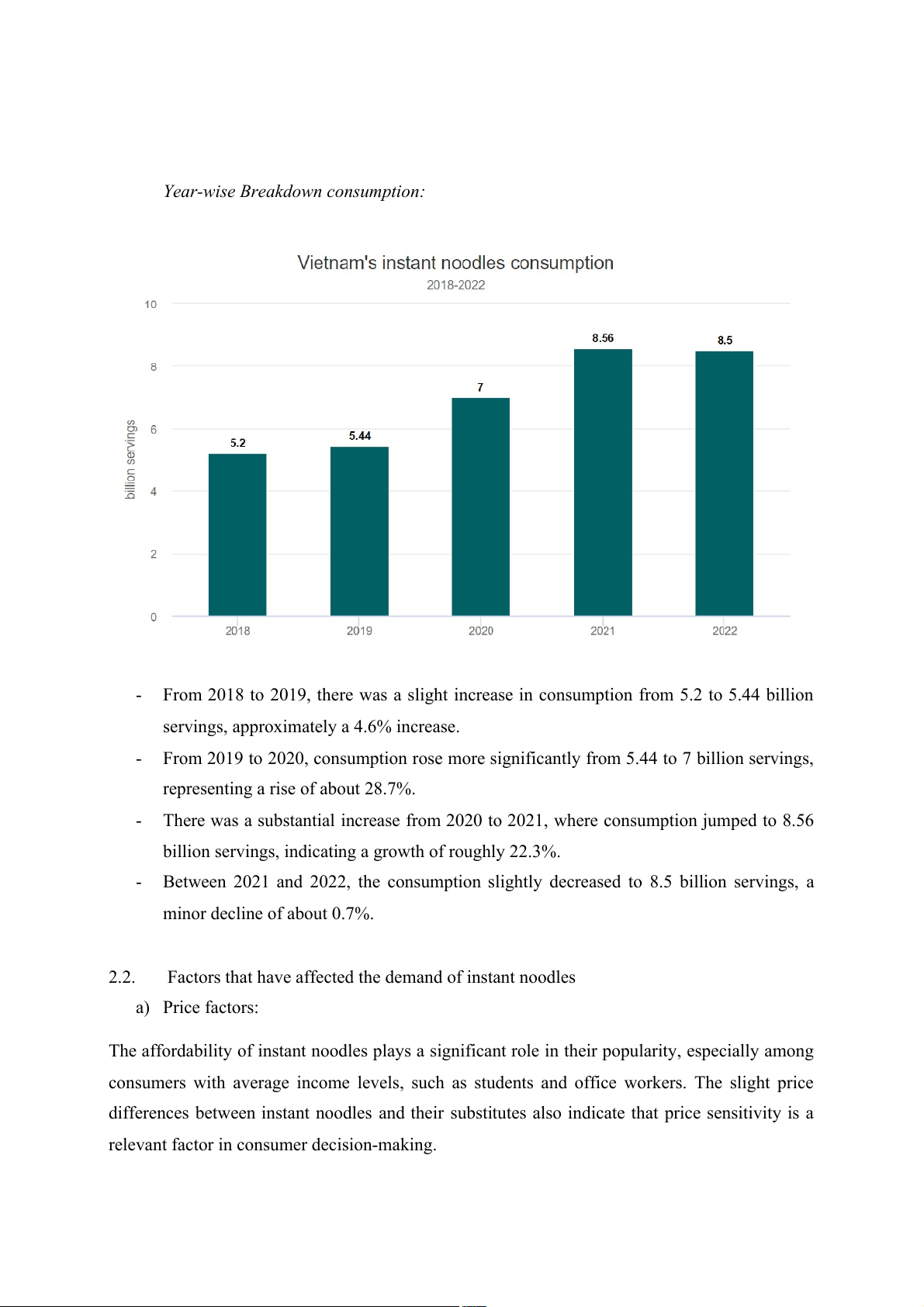
Year-wise Breakdown consumption: -
From 2018 to 2019, there was a slight increase in consumption from 5.2 to 5.44 billion
servings, approximately a 4.6% increase. -
From 2019 to 2020, consumption rose more significantly from 5.44 to 7 billion servings,
representing a rise of about 28.7%. -
There was a substantial increase from 2020 to 2021, where consumption jumped to 8.56
billion servings, indicating a growth of roughly 22.3%. -
Between 2021 and 2022, the consumption slightly decreased to 8.5 billion servings, a minor decline of about 0.7%. 2.2.
Factors that have affected the demand of instant noodles a) Price factors:
The affordability of instant noodles plays a significant role in their popularity, especially among
consumers with average income levels, such as students and office workers. The slight price
differences between instant noodles and their substitutes also indicate that price sensitivity is a
relevant factor in consumer decision-making.
The research on influential factors affecting consumer purchase intentions towards instant noodle
products in the Hungarian market provides several insights that could be applicable to the
Vietnamese market, especially considering the commonalities in consumer behavior across
different regions. According to the research, four main factors were identified as having a
significant impact on the willingness to purchase instant noodles: packaging (appearance), price
(product price compared to average), promotion (marketing communication), and convenience
(time spent on preparing food and shopping).
Packaging: The packaging of instant noodles plays a dual role in both protecting the product and
attracting consumers. An attractive package can act as a 'salesman on the shelf,' drawing the
attention of shoppers and potentially influencing their purchase decision.
Price: Price is a traditional decision criterion in the purchase process. Instant noodles are often
seen as an affordable meal option, and competitive pricing can significantly affect their market
demand. The perception of price relative to average prices influences consumer purchase
intentions, with the research suggesting a focus on competitive pricing strategies to attract consumers.
Promotion: Marketing communications and promotions have been identified as major factors
influencing purchase behavior. Effective promotion can significantly increase consumer
awareness and the likelihood of purchase, implying that marketing strategies should be well-
crafted to enhance the appeal of instant noodles.
Convenience: With busy lifestyles, consumers value the convenience that instant noodles
provide. The ease of preparation and the reduced time spent shopping for food are significant
factors that can drive instant noodle sales. Businesses are encouraged to emphasize convenience
in their sales and marketing activities.
Other factors such as label information, portion quality, flavor, perceived health risks, and
consumer involvement were found to be less relevant in influencing purchase intentions in the
Hungarian market. This suggests that while these factors might be important in certain regions or
for specific consumer segments, they do not universally impact willingness to purchase instant noodles.
The research also identifies a specific consumer profile—young, single, lower-educated, and
below-average income earners—as showing the highest willingness to purchase instant noodles.
This demographic is suggested as a target for businesses looking to enhance instant noodle sales,
implying that marketing efforts should be tailored to appeal to these consumers' preferences and purchasing power.
In applying these insights to the Vietnamese market, businesses and management professionals
may consider focusing on attractive packaging, competitive pricing, effective promotion, and
convenience to boost the demand for instant noodles. Additionally, targeting marketing efforts
towards younger, single, and price-sensitive consumers could potentially increase sales volumes.
However, it's important to note that cultural differences may require adjustments to these
strategies to fit the specific tastes and preferences of the Vietnamese market. Non-Price Factors
Consumer Preferences: Vietnamese consumers prioritize convenience and affordability in their
choice of instant noodles. The demand for products easily available in grocery stores and
convenience outlets, coupled with cost-effectiveness, significantly influences consumer choices.
Substitute Goods: During the peak of the COVID-19 pandemic, instant noodles became scarce,
leading consumers to opt for alternative ready-to-eat products like packaged porridge, instant
pho, or cereal. These substitutes are priced similarly to instant noodles, making them viable alternatives during shortages.
Consumer Base: Instant noodles are a common food item for over 90% of Vietnamese
households. Despite health concerns associated with excessive consumption, a survey by Tuổi
Trẻ revealed that 79% of respondents regularly consume instant noodles for their taste and time- saving convenience. Price Factors
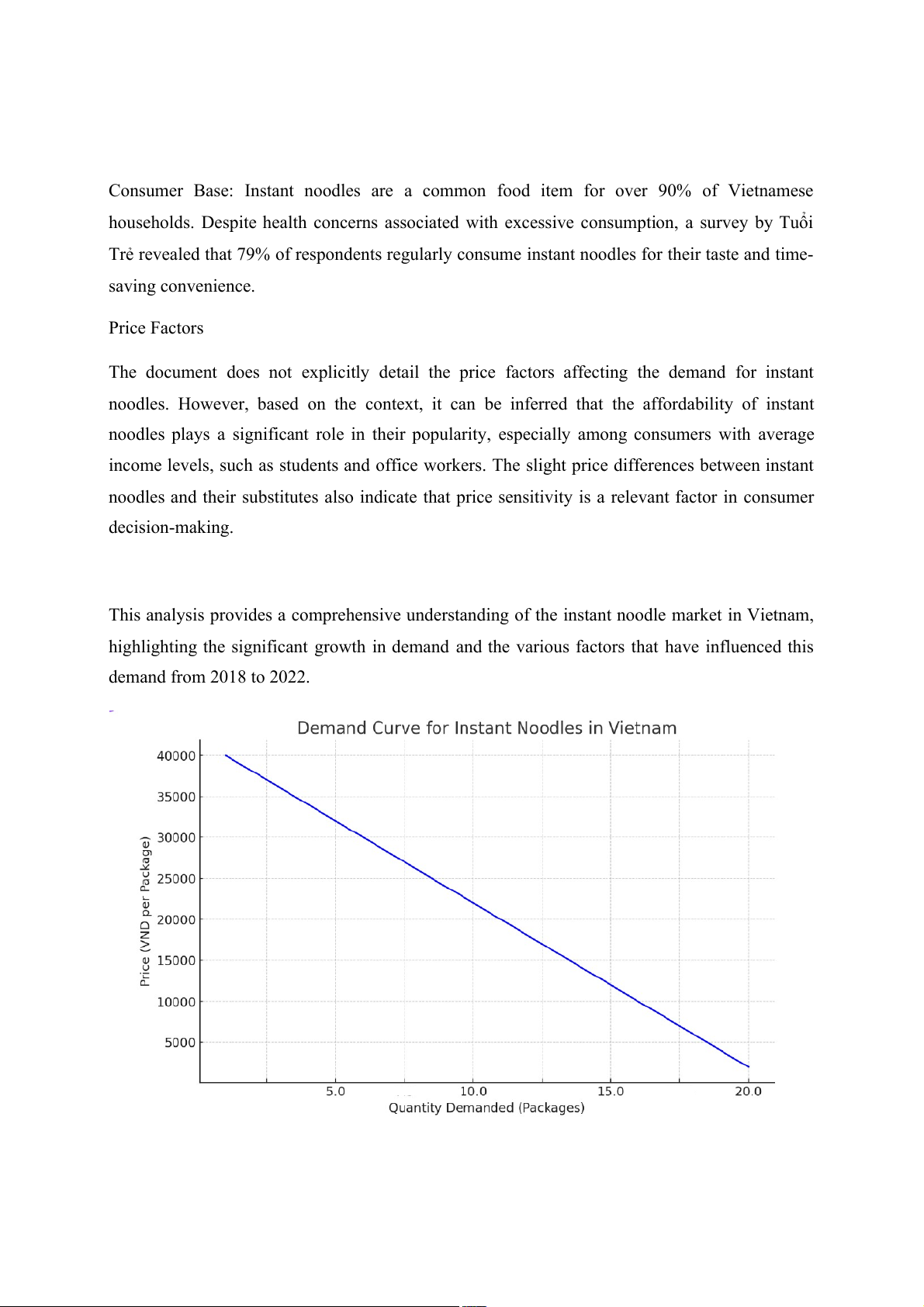
The document does not explicitly detail the price factors affecting the demand for instant
noodles. However, based on the context, it can be inferred that the affordability of instant
noodles plays a significant role in their popularity, especially among consumers with average
income levels, such as students and office workers. The slight price differences between instant
noodles and their substitutes also indicate that price sensitivity is a relevant factor in consumer decision-making.
This analysis provides a comprehensive understanding of the instant noodle market in Vietnam,
highlighting the significant growth in demand and the various factors that have influenced this demand from 2018 to 2022.
Tài liệu liên quan:
-

Tự Luận Vimo: Phân Tích Cung, Cầu và Thị Trường Cạnh Tranh| Microeconomics | Trường Đại học Quốc tế, Đại học Quốc gia Thành phố Hồ Chí Minh
5 3 -
Review Questions: Thinking Like an Economist | Microeconomics | Trường Đại học Quốc tế, Đại học Quốc gia Thành phố Hồ Chí Minh
5 3 -
Final Exam Quizlet Questions & Answers | Microeconomics | Trường Đại học Quốc tế, Đại học Quốc gia Thành phố Hồ Chí Minh
5 3 -
Đề thi giữa kỳ II | Microeconomics | Trường Đại học Quốc tế, Đại học Quốc gia Thành phố Hồ Chí Minh
5 3 -
Final Group Project_ The Beer Industry | Microeconomics | Trường Đại học Quốc tế, Đại học Quốc gia Thành phố Hồ Chí Minh
4 2