Ghi chú về Thiết kế Giao diện Người dùng | Phân tích thiết kế hệ thống | Trường Đại học Thủ Dầu Một
The main components of interface design include:1. Presentation Layout: This involves the visual arrangement of elements on the screen, ensuring that it is clear and organized.2. Data Structure: The way information is organized and presented, such as tables, lists, or hierarchies, ensuring ease of use and logical flow. Tài liệu được sưu tầm và soạn thảo dưới dạng file PDF để gửi tới các bạn cùng tham khảo, ôn tập đầy đủ kiến thức, chuẩn bị cho các buổi học thật tốt. Mời bạn đọc đón xem!
Môn: Phân tích và thiết kế hệ thống 69 tài liệu
Trường: Trường Đại học Thủ Dầu Một 243 tài liệu
Tác giả:


Preview text:
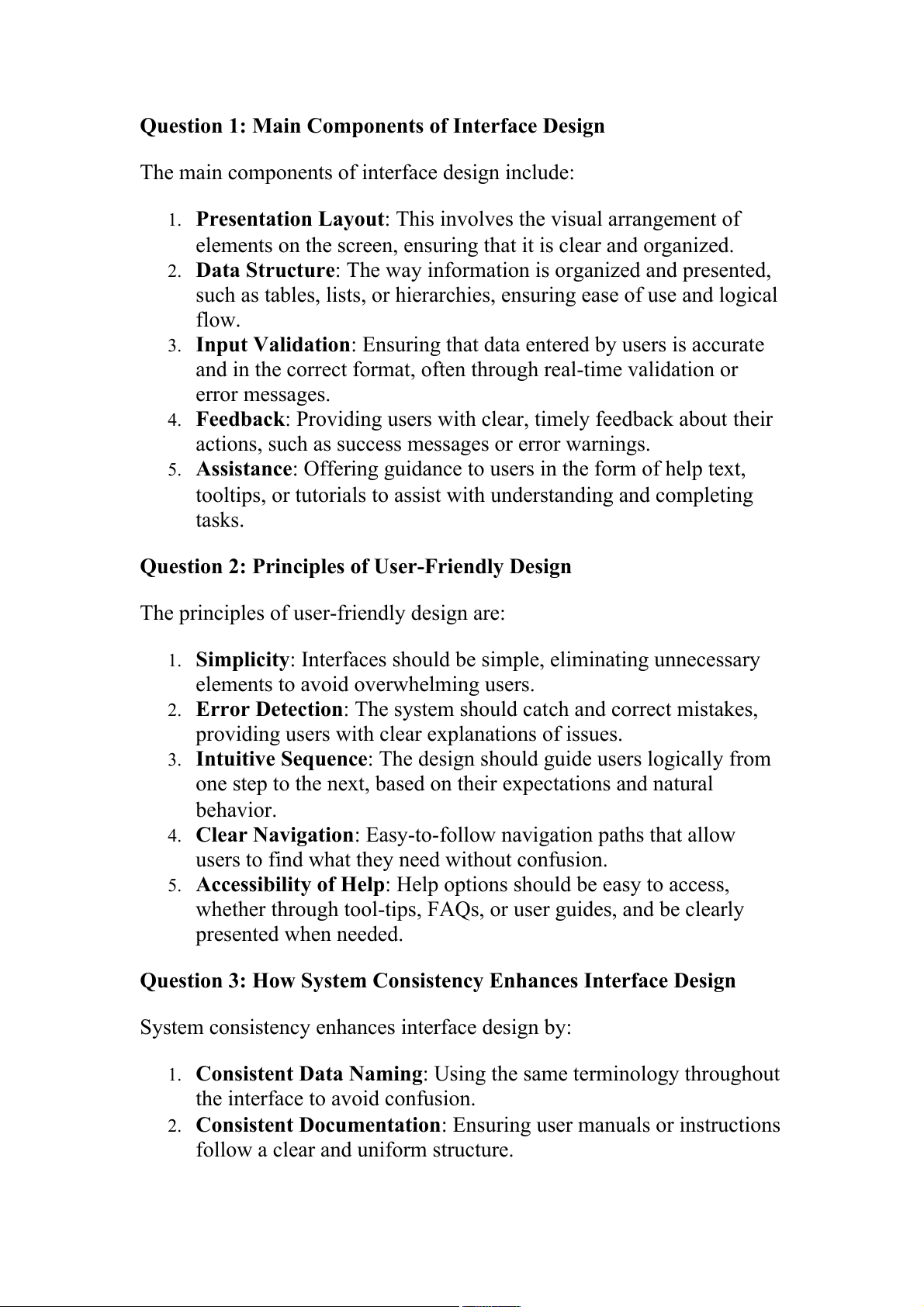
Question 1: Main Components of Interface Design
The main components of interface design include:
1. Presentation Layout: This involves the visual arrangement of
elements on the screen, ensuring that it is clear and organized.
2. Data Structure: The way information is organized and presented,
such as tables, lists, or hierarchies, ensuring ease of use and logical flow.
3. Input Validation: Ensuring that data entered by users is accurate
and in the correct format, often through real-time validation or error messages.
4. Feedback: Providing users with clear, timely feedback about their
actions, such as success messages or error warnings.
5. Assistance: Offering guidance to users in the form of help text,
tooltips, or tutorials to assist with understanding and completing tasks.
Question 2: Principles of User-Friendly Design
The principles of user-friendly design are:
1. Simplicity: Interfaces should be simple, eliminating unnecessary
elements to avoid overwhelming users.
2. Error Detection: The system should catch and correct mistakes,
providing users with clear explanations of issues.
3. Intuitive Sequence: The design should guide users logically from
one step to the next, based on their expectations and natural behavior.
4. Clear Navigation: Easy-to-follow navigation paths that allow
users to find what they need without confusion.
5. Accessibility of Help: Help options should be easy to access,
whether through tool-tips, FAQs, or user guides, and be clearly presented when needed.
Question 3: How System Consistency Enhances Interface Design
System consistency enhances interface design by:
1. Consistent Data Naming: Using the same terminology throughout
the interface to avoid confusion.
2. Consistent Documentation: Ensuring user manuals or instructions
follow a clear and uniform structure.
3. Consistent Encoding Formats: Data formats (like date or
currency) should be presented consistently throughout the system.
4. Consistent Menu Structures: Menus and buttons should follow a
similar layout across different sections of the system, making it
easier for users to understand and navigate.
Question 4: Input vs. Output Interfaces
1. Input Interfaces: These allow users to provide data to the system,
such as text fields for entering information, drop-down menus for
selection, or check boxes for options. Examples include forms or surveys.
2. Output Interfaces: These display the results or feedback from the
system, such as reports, dashboards, or error messages. Examples
include on-screen data displays or printed reports.
Question 5: Designing Forms and Reports
The process of designing forms and reports includes:
1. Defining User Requirements: Understand what the user needs to
achieve and what information should be collected or presented.
2. Creating Prototypes: Develop initial design drafts or wire frames
to visualize how the form or report will appear.
3. Refining Based on Feedback: After testing the prototype with
users, refine the design based on their feedback to ensure it is intuitive and effective.
Question 6: Guidelines for Formatting Text in Interface Design
Guidelines for text formatting include:
1. Proper Case: Use sentence case for text, avoiding all caps as it can be harder to read.
2. Spacing: Adequate line spacing and padding around text make it
easier to read and prevent clutter.
3. Alignment: Text should be aligned in a way that promotes
readability, such as left-aligning for most languages.
4. Avoiding Hyphenation: Hyphenation at the end of lines should be
avoided as it can disrupt the flow of reading.
Question 7: Techniques to Minimize Data Input Errors To minimize input errors:
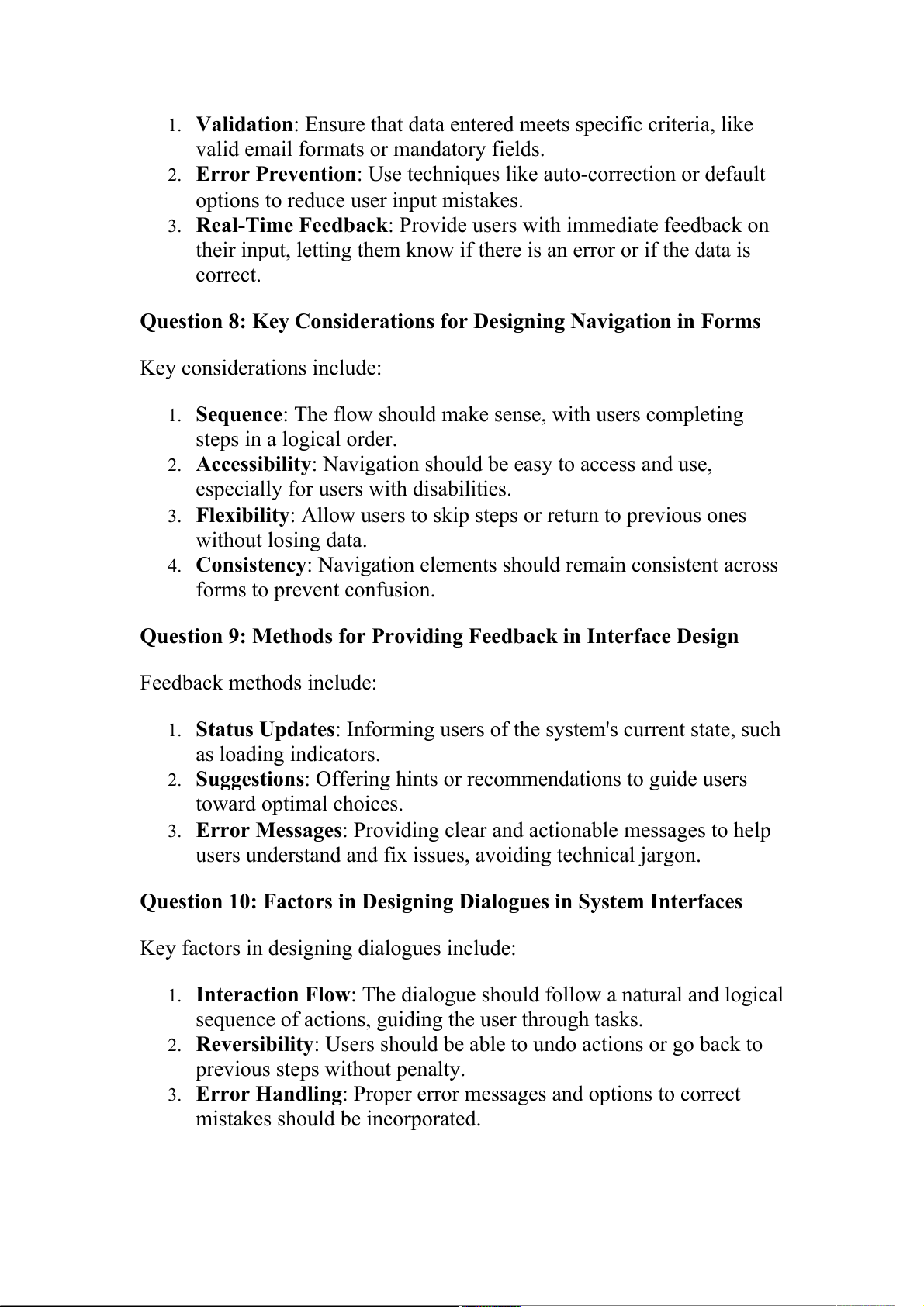
1. Validation: Ensure that data entered meets specific criteria, like
valid email formats or mandatory fields.
2. Error Prevention: Use techniques like auto-correction or default
options to reduce user input mistakes.
3. Real-Time Feedback: Provide users with immediate feedback on
their input, letting them know if there is an error or if the data is correct.
Question 8: Key Considerations for Designing Navigation in Forms Key considerations include:
1. Sequence: The flow should make sense, with users completing steps in a logical order.
2. Accessibility: Navigation should be easy to access and use,
especially for users with disabilities.
3. Flexibility: Allow users to skip steps or return to previous ones without losing data.
4. Consistency: Navigation elements should remain consistent across forms to prevent confusion.
Question 9: Methods for Providing Feedback in Interface Design Feedback methods include:
1. Status Updates: Informing users of the system's current state, such as loading indicators.
2. Suggestions: Offering hints or recommendations to guide users toward optimal choices.
3. Error Messages: Providing clear and actionable messages to help
users understand and fix issues, avoiding technical jargon.
Question 10: Factors in Designing Dialogues in System Interfaces
Key factors in designing dialogues include:
1. Interaction Flow: The dialogue should follow a natural and logical
sequence of actions, guiding the user through tasks.
2. Reversibility: Users should be able to undo actions or go back to
previous steps without penalty.
3. Error Handling: Proper error messages and options to correct
mistakes should be incorporated.
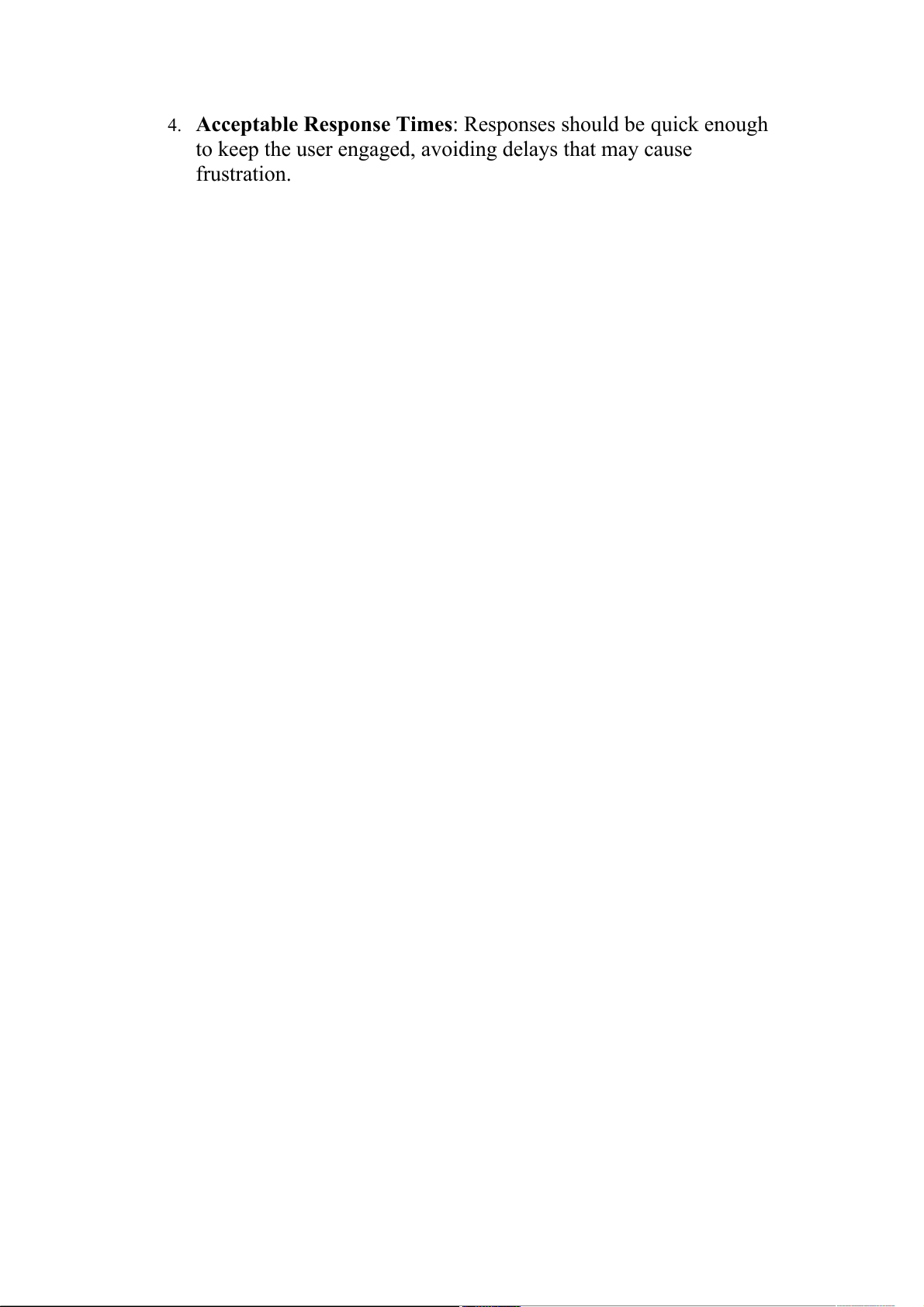
4. Acceptable Response Times: Responses should be quick enough
to keep the user engaged, avoiding delays that may cause frustration.
Tài liệu liên quan:
-
Hướng dẫn Quy Trình Quản Lý Nhà Hàng PTTK: Nhiệm Vụ và Quy Tắc | Phân tích thiết kế hệ thống | Trường Đại học Thủ Dầu Một
39 20 -
Chương 3: Phân Tích & Thiết Kế Hệ Thống Thông Tin (Systems Design) | Phân tích thiết kế hệ thống | Trường Đại học Thủ Dầu Một
37 19 -
Hệ thống Quản lý Kinh doanh của Thầy Tĩnh | Phân tích thiết kế hệ thống | Trường Đại học Thủ Dầu Một
40 20 -
Câu hỏi thi cuối kỳ: Tóm tắt và thiết kế hệ thống quản lý | Phân tích thiết kế hệ thống | Trường Đại học Thủ Dầu Một
33 17 -
Phân Tích Hệ Thống Quản Lý Cửa Hàng YumYum | Phân tích thiết kế hệ thống | Trường Đại học Thủ Dầu Một
30 15