Individuals Assignment: Luxury Goods Tax Implications | Microeconomics | Trường Đại học Quốc tế, Đại học Quốc gia Thành phố Hồ Chí Minh
The change from S1 to S2 shows the 10% tax increase. By assuming the demand was inelastic, the demand curve is steep. As a result, when the supply curve shifted up, the price rise significantly, while the quantity demanded fall slightly from Q1 to Q. Tài liệu được sưu tầm và soạn thảo dưới dạng file PDF để gửi tới các bạn cùng tham khảo, ôn tập đầy đủ kiến thức, chuẩn bị cho các buổi học thật tốt. Mời bạn đọc đón xem!
Môn: Microeconomics 613 tài liệu
Trường: Trường Đại học Quốc tế, Đại học Quốc gia Thành phố Hồ Chí Minh 1.9 K tài liệu
Tác giả:

Preview text:
INDIVIDUALS ASSIGNMENT – DANG QUOC HUY EBBA 14.1 – Topic 4
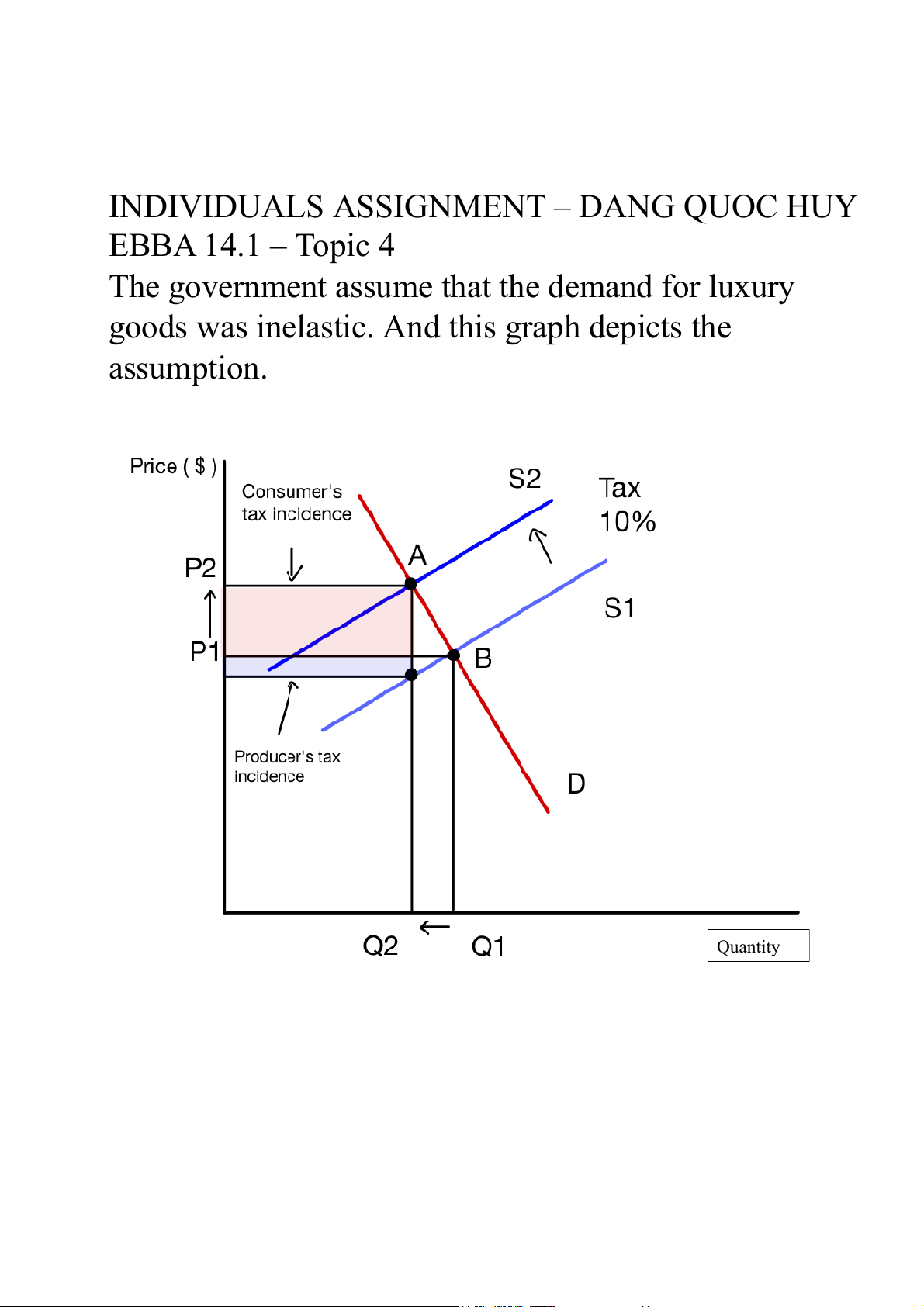
The government assume that the demand for u l xury
goods was inelastic. And this graph depicts t e h assumption. Quantity
The change from S1 to S2 shows the 10% tax increase. By assuming the demand w as inelastic, the demand
curve is steep. As a result, when the supply u c rve
shifted up, the price rise significantly, while the
quantity demanded fall slightly from Q1 to Q2. The government assum d e that the wealthy was
willing to pay more money on luxury goods because
they were rich and t hey would not react severely and they would pay the a m jority of a t x imposed.
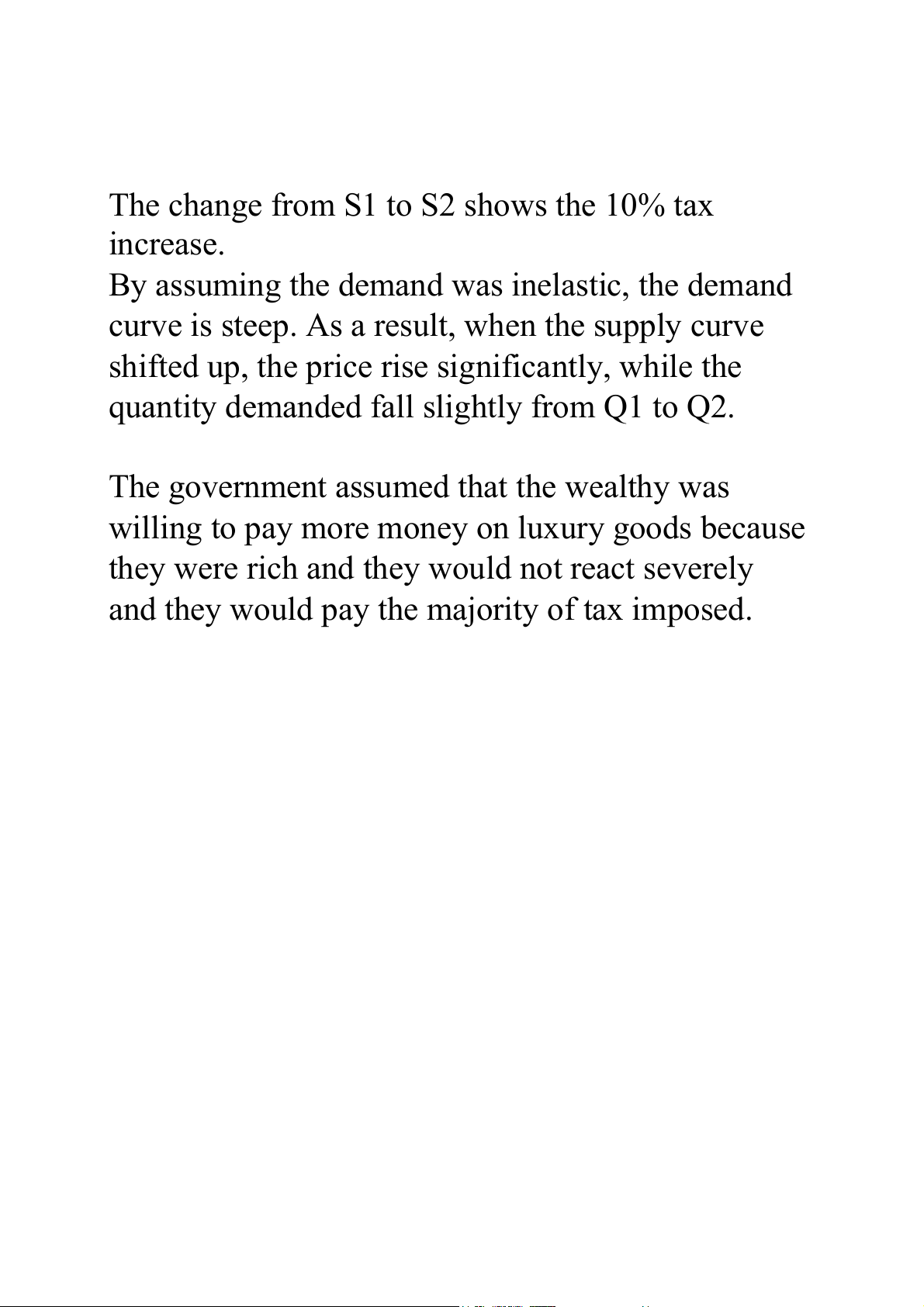
But in fact, they were wrong, t e h demand for t e h se
luxury goods is reasonably elastic. The demand u
c rve is actually flat because the
demand is elastic. The price go up slightly because
the rich had many alternative choices to avoid
paying taxes and it means that most of the tax
imposed is paid by producers, workers who make these high -end produ t c s.
In conclusion, the tax was counterproductiv . e
2. What is the implication for the Government in the tax policy ?
The tax policy of the Government puts more tax on
workers and retailers who are middle class at best,
it also doesn’t help the government to o c llect much
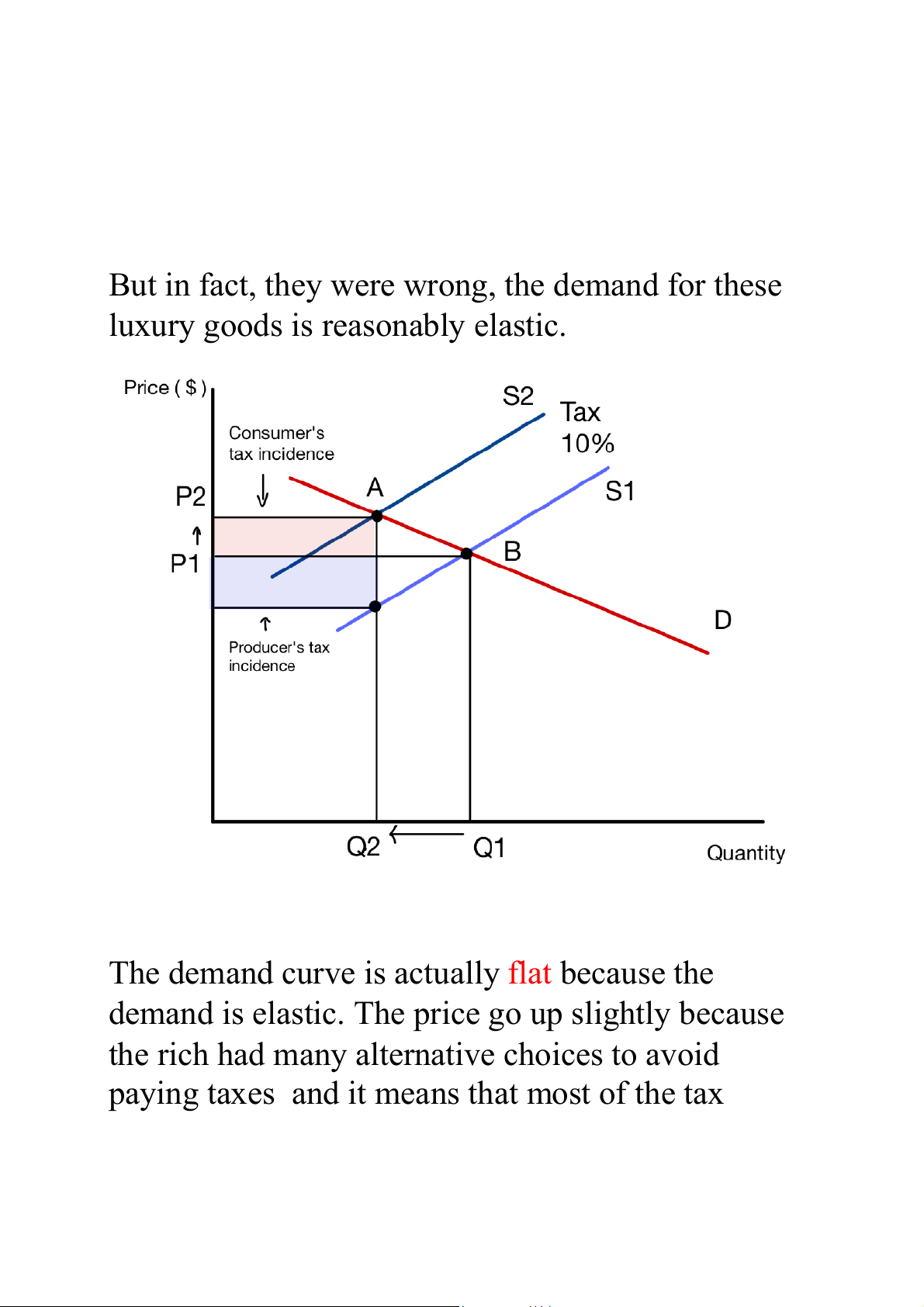
more tax as expected. But the biggest impact o f the
policy is it reduces the mark t e efficiency and shrinks NSB.
The new tax policy creates a deadweight loss = ABCD
Tài liệu liên quan:
-
Tự Luận Vimo: Phân Tích Cung, Cầu và Thị Trường Cạnh Tranh| Microeconomics | Trường Đại học Quốc tế, Đại học Quốc gia Thành phố Hồ Chí Minh
5 3 -
Review Questions: Thinking Like an Economist | Microeconomics | Trường Đại học Quốc tế, Đại học Quốc gia Thành phố Hồ Chí Minh
5 3 -
Final Exam Quizlet Questions & Answers | Microeconomics | Trường Đại học Quốc tế, Đại học Quốc gia Thành phố Hồ Chí Minh
5 3 -

Đề thi giữa kỳ II | Microeconomics | Trường Đại học Quốc tế, Đại học Quốc gia Thành phố Hồ Chí Minh
5 3 -
Final Group Project_ The Beer Industry | Microeconomics | Trường Đại học Quốc tế, Đại học Quốc gia Thành phố Hồ Chí Minh
4 2