Sách tài liệu Quản trị thương hiệu | Trường Đại học Thương Mại
Sách tài liệu Quản trị thương hiệu | Trường Đại học Thương Mại. Tài liệu được sưu tầm giúp bạn tham khảo, ôn tập và đạt kết quả cao. Mời bạn đọc đón xem.
Môn: Quản trị thương hiệu (TMU) 125 tài liệu
Trường: Trường Đại học Thương Mại 3 K tài liệu
Tác giả:




















Preview text:
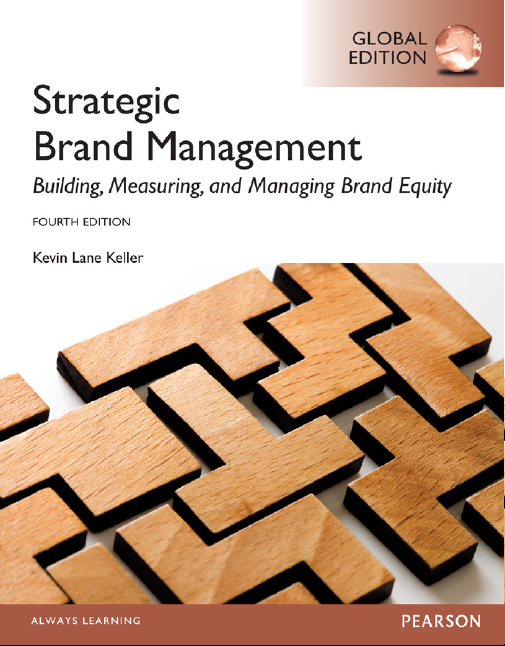
Strategic Brand Management Building, Measuring, and Managing Brand Equity Global Edition 1
This page intentionally left blank Strategic Brand Management Building, Measuring, and Managing Brand Equity 4e Global Edition Kevin Lane Keller Tuck School of Business Dartmouth College
Boston Columbus Indianapolis New York San Francisco Upper Saddle River Amsterdam Cape
Town Dubai London Madrid Milan Munich Paris Montreal Toronto Delhi Mexico City São Paulo Sydney Hong
Kong Seoul Singapore Taipei Tokyo
Editor in Chief: Stephanie Wall
Senior Operations Supervisor: Arnold Vila
Senior Acquisitions Editor: Erin Gardner
Operation Specialist: Cathleen Petersen
Senior Acquisitions Editor, Global Edition:
Creative Art Director: Blair Brown Steven Jackson
Senior Art Director: Janet Slowik
Senior Editorial Project Manager: Kierra Bloom
Interior Designer: Karen Quigley
Editorial Assistant: Jacob Garber
Cover Designer: Jodi Notowitz
Editorial Assistant, Global Edition: Toril Cooper
Cover Image: © t_kimura
Director of Marketing: Maggie Moylan
Media Project Manager, Editorial: Denise Vaughn
Executive Marketing Manager: Anne Fahlgren
Media Project Manager, Production: Lisa Rinaldi
Marketing Manager, International: Dean Erasmus
Co mposition/Full-Service Project Management:
Senior Managing Editor: Judy Leale PreMediaGlobal
Senior Production Project Manager: Ann Pulido
Cover Printer: Lehigh-Phoenix Color/Hagerstown Pearson Education Limited Edinburgh Gate Harlow Essex CM20 2JE England
and Associated Companies throughout the world
Visit us on the World Wide Web at: www.pearson.com/uk
© Pearson Education Limited 2013
The rights of Kevin Lane Keller to be identified as authors of this work have been asserted by them in
accordance with the Copyright, Designs and Patents Act 1988.
Authorised adaptation from the United States edition, entitled Strategic Brand Management, 4th Edition,
ISBN: 978-0-13-266425-7 by Kevin Lane Keller, published by Pearson Education, Inc., © 2013.
All rights reserved. No part of this publication may be reproduced, stored in a retrieval system, or transmitted
in any form or by any means, electronic, mechanical, photocopying, recording or otherwise, without either
the prior written permission of the publisher or a licence permitting restricted copying in the United Kingdom
issued by the Copyright Licensing Agency Ltd, Saffron House, 6–10 Kirby Street, London EC1N 8TS.
All trademarks used herein are the property of their respective owners. The use of any trademark in this text
does not vest in the author or publisher any trademark ownership rights in such trademarks, nor does the use
of such trademarks imply any affiliation with or endorsement of this book by such owners.
Microsoft and/or its respective suppliers make no representations about the suitability of the information
contained in the documents and related graphics published as part of the services for any purpose. All such
documents and related graphics are provided “as is” without warranty of any kind. Microsoft and/or its
respective suppliers hereby disclaim all warranties and conditions with regard to this information, including
all warranties and conditions of merchantability, whether express, implied or statutory, fitness for a particular
purpose, title and non-infringement. In no event shall Microsoft and/or its respective suppliers be liable for
any special, indirect or consequential damages or any damages whatsoever resulting from loss of use, data or
profits, whether in an action of contract, negligence or other tortious action, arising out of or in connection
with the use or performance of information available from the services.
Credits and acknowledgments borrowed from other sources and reproduced, with permission, in this textbook
appear on the appropriate page within text. ISBN 13: 978-0-273-77941-4 ISBN 10: 0-273-77941-9
British Library Cataloguing-in-Publication Data
A catalogue record for this book is available from the British Library 10 9 8 7 6 5 4 3 2 1 16 15 14 13 12
Typeset in Times LT Std by PreMediaGlobal
Printed and bound by Courier/Kendallville in The United States of America
The publisher’s policy is to use paper manufactured from sustainable forests. Dedication This book is dedicated to
my mother and the memory of my father
with much love, respect, and admiration.
This page intentionally left blank Brief Contents PART I Opening Perspectives 29 Chapter 1 Brands and Brand Management 29 PART II
Developing a Brand Strategy 67 Chapter 2
Customer-Based Brand Equity and Brand Positioning 67 Chapter 3
Brand Resonance and the Brand Value Chain 106 PART III
Designing and Implementing Brand Marketing Programs 141 Chapter 4
Choosing Brand Elements to Build Brand Equity 141 Chapter 5
Designing Marketing Programs to Build Brand Equity 177 Chapter 6
Integrating Marketing Communications to Build Brand Equity 217 Chapter 7
Leveraging Secondary Brand Associations to Build Brand Equity 259 PART IV
Measuring and Interpreting Brand Performance 291 Chapter 8
Developing a Brand Equity Measurement and Management System 291 Chapter 9
Measuring Sources of Brand Equity: Capturing Customer Mind-Set 324 Chapter 10
Measuring Outcomes of Brand Equity: Capturing Market Performance 362 PART V
Growing and Sustaining Brand Equity 385 Chapter 11
Designing and Implementing Branding Architecture Strategies 385 Chapter 12
Introducing and Naming New Products and Brand Extensions 431 Chapter 13 Managing Brands Over Time 477 Chapter 14
Managing Brands Over Geographic Boundaries and Market Segments 509 PART VI
Closing Perspectives 547 Chapter 15 Closing Observations 547 7
This page intentionally left blank Contents
Prologue: Branding Is Not Rocket Science 19 Preface 21 Acknowledgments 26 About the Author 28 PART I Opening Perspectives 29 Chapter 1
Brands and Brand Management 29 Preview 30 What Is a Brand? 30 Brand Elements 30 Brands versus Products 31
BRANDING BRIEF 1-1: Coca-Cola’s Branding Lesson 32
Why Do Brands Matter? 34 Consumers 34 Firms 35
Can Anything Be Branded? 36 Physical Goods 37
BRANDING BRIEF 1-2: Branding Commodities 38
THE SCIENCE OF BRANDING 1-1: Understanding Business-to-Business Branding 40
THE SCIENCE OF BRANDING 1-2: Understanding High-Tech Branding 41 Services 42 Retailers and Distributors 43
Online Products and Services 43 People and Organizations 45
Sports, Arts, and Entertainment 46
BRANDING BRIEF 1-3: Place Branding 48 Geographic Locations 48 Ideas and Causes 48
What Are the Strongest Brands? 48
THE SCIENCE OF BRANDING 1-3: Understanding Market Leadership 50
Branding Challenges and Opportunities 52 Savvy Customers 52 Economic Downturns 54 Brand Proliferation 54
THE SCIENCE OF BRANDING 1-4: Marketing Brands in a Recession 55 Media Transformation 55 Increased Competition 56 Increased Costs 56 Greater Accountability 56
The Brand Equity Concept 57 9 10 CONTENTS
Strategic Brand Management Process 58
Identifying and Developing Brand Plans 58
Designing and Implementing Brand Marketing Programs 58
Measuring and Interpreting Brand Performance 60
Growing and Sustaining Brand Equity 60 Review 61 Discussion Questions 61
BRAND FOCUS 1.0: History of Branding 61 Notes 64 PART II
Developing a Brand Strategy 67 Chapter 2
Customer-Based Brand Equity and Brand Positioning 67 Preview 68
Customer-Based Brand Equity 68
Defining Customer-Based Brand Equity 68 Brand Equity as a Bridge 70
Making a Brand Strong: Brand Knowledge 71
THE SCIENCE OF BRANDING 2-1: Brand Critics 72
Sources of Brand Equity 73 Brand Awareness 73 Brand Image 76
Identifying and Establishing Brand Positioning 79 Basic Concepts 79 Target Market 79 Nature of Competition 81
Points-of-Parity and Points-of-Difference 82
Positioning Guidelines 85
Defining and Communicating the Competitive Frame of Reference 85
Choosing Points-of-Difference 87
Establishing Points-of-Parity and Points-of-Difference 88
BRANDING BRIEF 2-1: Positioning Politicians 89 Straddle Positions 90
Updating Positioning over Time 91
Developing a Good Positioning 93
Defining a Brand Mantra 93 Brand Mantras 93
BRANDING BRIEF 2-2: Nike Brand Mantra 94
BRANDING BRIEF 2-3: Disney Brand Mantra 95
THE SCIENCE OF BRANDING 2-2: Branding Inside the Organization 97 Review 97 Discussion Questions 98
BRAND FOCUS 2.0: The Marketing Advantages of Strong Brands 98 Notes 100 Chapter 3
Brand Resonance and the Brand Value Chain 106 Preview 107
Building a Strong Brand: The Four Steps of Brand Building 107 Brand Salience 107 Brand Performance 111 Brand Imagery 113 CONTENTS 11
THE SCIENCE OF BRANDING 3-1: Luxury Branding 114 Brand Judgments 117 Brand Feelings 118 Brand Resonance 120
BRANDING BRIEF 3-1: Building Brand Communities 122
Brand-Building Implications 122
THE SCIENCE OF BRANDING 3-2: Putting Customers First 126
The Brand Value Chain 128 Value Stages 129 Implications 131 Review 132
Discussion Questions 134
BRAND FOCUS 3.0: Creating Customer Value 134 Customer Equity 134 Notes 138 PART III
Designing and Implementing Brand Marketing Programs 141 Chapter 4
Choosing Brand Elements to Build Brand Equity 141 Preview 142
Criteria for Choosing Brand Elements 142 Memorability 143 Meaningfulness 143 Likability 143 Transferability 144 Adaptability 144
THE SCIENCE OF BRANDING 4-1: Counterfeit Business Is Booming 146 Protectability 147
Options and Tactics for Brand Elements 147 Brand Names 147 URLs 155 Logos and Symbols 155 Characters 156 Slogans 158
BRANDING BRIEF 4-1: Updating the Disneyland Castle 159
THE SCIENCE OF BRANDING 4-2: Balance Creative and Strategic Thinking to
Create Great Characters 160
BRANDING BRIEF 4-2: Benetton’s Brand Equity Management 162 Jingles 164 Packaging 164
Putting It All Together 167
BRANDING BRIEF 4-3: Do-Overs with Brand Makeovers 168
THE SCIENCE OF BRANDING 4-3: The Psychology of Packaging 169 Review 170
Discussion Questions 171
BRAND FOCUS 4.0: Legal Branding Considerations 171 Notes 173 Chapter 5
Designing Marketing Programs to Build Brand Equity 177 Preview 178
New Perspectives on Marketing 178 12 CONTENTS
Integrating Marketing 179 Personalizing Marketing 181
THE SCIENCE OF BRANDING 5-1: Making Sense Out of Brand Scents 183
Reconciling the Different Marketing Approaches 186 Product Strategy 187 Perceived Quality 187 Aftermarketing 187 Summary 190 Pricing Strategy 191 Consumer Price Perceptions 191
THE SCIENCE OF BRANDING 5-2: Understanding Consumer Price Perceptions 192
Setting Prices to Build Brand Equity 193
BRANDING BRIEF 5-1: Marlboro’s Price Drop 193 Summary 199 Channel Strategy 199 Channel Design 199 Indirect Channels 201 Direct Channels 205
BRANDING BRIEF 5-2: Goodyear’s Partnering Lessons 206 Online Strategies 208 Summary 208 Review 209
Discussion Questions 209
BRAND FOCUS 5.0: Private-Label Strategies and Responses 210 Notes 212 Chapter 6
Integrating Marketing Communications to Build Brand Equity 217 Preview 218
The New Media Environment 219
Challenges in Designing Brand-Building Communications 219
Role of Multiple Communications 221
Four Major Marketing Communication Options 221 Advertising 221
THE SCIENCE OF BRANDING 6-1: The Importance of Database Marketing 229 Promotion 232
Online Marketing Communications 236 Events and Experiences 239
BRANDING BRIEF 6-1: Tough Mudder: The Toughest Event on the Planet 242 Mobile Marketing 244 Brand Amplifiers 246
Public Relations and Publicity 246 Word-of-Mouth 246
Developing Integrated Marketing Communication Programs 247 Criteria for IMC Programs 248 Using IMC Choice Criteria 250
THE SCIENCE OF BRANDING 6-2: Coordinating Media to Build Brand Equity 251 Review 252
Discussion Questions 253
BRAND FOCUS 6.0: Empirical Generalizations in Advertising 254 Notes 255 CONTENTS 13 Chapter 7
Leveraging Secondary Brand Associations to Build Brand Equity 259 Preview 260
Conceptualizing the Leveraging Process 261
Creation of New Brand Associations 261
Effects on Existing Brand Knowledge 261 Guidelines 262 Company 263
BRANDING BRIEF 7-1: IBM Promotes a Smarter Planet 264
Country of Origin and Other Geographic Areas 266
BRANDING BRIEF 7-2: Selling Brands the New Zealand Way 268
Channels of Distribution 269 Co-Branding 269
THE SCIENCE OF BRANDING 7-1: Understanding Retailers’ Brand Images 270 Guidelines 271 Ingredient Branding 272
THE SCIENCE OF BRANDING 7-2: Understanding Brand Alliances 273 Licensing 275
BRANDING BRIEF 7-3: Ingredient Branding the DuPont Way 276 Guidelines 278
Celebrity Endorsement 278 Potential Problems 279 Guidelines 281
Sporting, Cultural, or Other Events 282
BRANDING BRIEF 7-4: Managing a Person Brand 283 Third-Party Sources 284 Review 285
Discussion Questions 286
BRAND FOCUS 7.0: Going for Corporate Gold at the Olympics 286 Notes 288 PART IV
Measuring and Interpreting Brand Performance 291 Chapter 8
Developing a Brand Equity Measurement and Management System 291 Preview 292
The New Accountability 292
Conducting Brand Audits 293 Brand Inventory 294 Brand Exploratory 295
Brand Positioning and the Supporting Marketing Program 298
THE SCIENCE OF BRANDING 8-1: The Role of Brand Personas 299
Designing Brand Tracking Studies 300 What to Track 300
BRANDING BRIEF 8-1: Sample Brand Tracking Survey 301
How to Conduct Tracking Studies 303
How to Interpret Tracking Studies 305 14 CONTENTS
Establishing a Brand Equity Management System 305
BRANDING BRIEF 8-2: Understanding and Managing the Mayo Clinic Brand 306 Brand Charter 307 Brand Equity Report 308
Brand Equity Responsibilities 309
THE SCIENCE OF BRANDING 8-2: Maximizing Internal Branding 310
BRANDING BRIEF 8-3: How Good Is Your Marketing? Rating a Firm’s
Marketing Assessment System 312 Review 314
Discussion Questions 315 BRAND FOCUS 8.0: Rolex Brand Audit 315 Notes 322 Chapter 9
Measuring Sources of Brand Equity: Capturing Customer Mind-Set 324 Preview 325
Qualitative Research Techniques 325
BRANDING BRIEF 9-1: Digging Beneath the Surface to Understand Consumer Behavior 326 Free Association 326 Projective Techniques 328
BRANDING BRIEF 9-2: Once Upon a Time . . . You Were What You Cooked 329
Zaltman Metaphor Elicitation Technique 330
BRANDING BRIEF 9-3: Gordon Ramsay 331 Neural Research Methods 332
Brand Personality and Values 333
Ethnographic and Experiential Methods 334
BRANDING BRIEF 9-4: Making the Most of Consumer Insights 335 Summary 338
Quantitative Research Techniques 338 Brand Awareness 339 Brand Image 342
THE SCIENCE OF BRANDING 9-1: Understanding Categorical Brand Recall 343 Brand Responses 344 Brand Relationships 346
THE SCIENCE OF BRANDING 9-2: Understanding Brand Engagement 349
Comprehensive Models of Consumer-Based Brand Equity 351 BrandDynamics 351
Relationship to the CBBE Model 352 Review 352
Discussion Questions 353
BRAND FOCUS 9.0: Young & Rubicam’s BrandAsset Valuator 353 Notes 359 Chapter 10
Measuring Outcomes of Brand Equity: Capturing Market Performance 362 Preview 363 Comparative Methods 364
Brand-Based Comparative Approaches 364 CONTENTS 15
Marketing-Based Comparative Approaches 365 Conjoint Analysis 367 Holistic Methods 368 Residual Approaches 369 Valuation Approaches 371
THE SCIENCE OF BRANDING 10-1: The Prophet Brand Valuation Methodology 375
BRANDING BRIEF 10-1: Beauty Is in the Eye of the Beholder 378 Review 379
Discussion Questions 380
BRAND FOCUS 10.0: Branding and Finance 380 Notes 382 PART V
Growing and Sustaining Brand Equity 385 Chapter 11
Designing and Implementing Brand Architecture Strategies 385 Preview 386
Developing a Brand Architecture Strategy 386
Step 1: Defining Brand Potential 386
THE SCIENCE OF BRANDING 11-1: The Brand–Product Matrix 387
THE SCIENCE OF BRANDING 11-2: Capitalizing on Brand Potential 390
Step 2: Identifying Brand Extension Opportunities 392
Step 3: Branding New Products and Services 392 Summary 393 Brand Portfolios 393
BRANDING BRIEF 11-1: Expanding the Marriott Brand 396 Brand Hierarchies 398
Levels of a Brand Hierarchy 398
Designing a Brand Hierarchy 400
BRANDING BRIEF 11-2: Netflix Branding Stumbles 401 Corporate Branding 408
THE SCIENCE OF BRANDING 11-3: Corporate Brand Personality 409
Corporate Image Dimensions 409
BRANDING BRIEF 11-3: Corporate Reputations: The Most Admired U.S. Companies 410
BRANDING BRIEF 11-4: Corporate Innovation at 31M 412
Managing the Corporate Brand 414
Brand Architecture Guidelines 421 Review 422
Discussion Questions 423
BRAND FOCUS 11.0: Cause Marketing 423 Notes 426 Chapter 12
Introducing and Naming New Products and Brand Extensions 431 Preview 432
New Products and Brand Extensions 432
BRANDING BRIEF 12-1: Growing the McDonald’s Brand 434
Advantages of Extensions 435
Facilitate New-Product Acceptance 436
Provide Feedback Benefits to the Parent Brand 438 16 CONTENTS
Disadvantages of Brand Extensions 441
Can Confuse or Frustrate Consumers 441
Can Encounter Retailer Resistance 442
Can Fail and Hurt Parent Brand Image 442
THE SCIENCE OF BRANDING 12-1: When Is Variety a Bad Thing? 443
Can Succeed but Cannibalize Sales of Parent Brand 444
Can Succeed but Diminish Identification with Any One Category 444
BRANDING BRIEF 12-2: Are There Any Boundaries to the Virgin Brand Name? 445
Can Succeed but Hurt the Image of the Parent Brand 446 Can Dilute Brand Meaning 446
Can Cause the Company to Forgo the Chance to Develop a New Brand 446
Understanding How Consumers Evaluate Brand Extensions 447 Managerial Assumptions 448
Brand Extensions and Brand Equity 448 Vertical Brand Extensions 451
Evaluating Brand Extension Opportunities 452
Define Actual and Desired Consumer Knowledge about the Brand 452
BRANDING BRIEF 12-3: Mambo Extends Its Brand 453
Identify Possible Extension Candidates 454
Evaluate the Potential of the Extension Candidate 454
Design Marketing Programs to Launch Extension 457
Evaluate Extension Success and Effects on Parent Brand Equity 458
Extension Guidelines Based on Academic Research 459 Review 469
Discussion Questions 469
BRAND FOCUS 12.0: Scoring Brand Extensions 470 Notes 471 Chapter 13
Managing Brands Over Time 477 Preview 478 Reinforcing Brands 479
Maintaining Brand Consistency 480
THE SCIENCE OF BRANDING 13-1: Brand Flashbacks 482
Protecting Sources of Brand Equity 482
Fortifying versus Leveraging 484
Fine-Tuning the Supporting Marketing Program 484
BRANDING BRIEF 13-1: Razor-Sharp Branding at Gillette 487 Revitalizing Brands 490
BRANDING BRIEF 13-2: Remaking Burberry’s Image 492
BRANDING BRIEF 13-3: Harley-Davidson Motor Company 493
BRANDING BRIEF 13-4: A New Morning for Mountain Dew 494
Expanding Brand Awareness 495 Improving Brand Image 497
Adjustments to the Brand Portfolio 499 Migration Strategies 499 Acquiring New Customers 499 Retiring Brands 500 Review 502
Discussion Questions 504
BRAND FOCUS 13.0: Responding to a Brand Crisis 504 Notes 507 CONTENTS 17 Chapter 14
Managing Brands Over Geographic Boundaries and Market Segments 509 Preview 510
Regional Market Segments 510
Other Demographic and Cultural Segments 511
Rationale for Going International 512
BRANDING BRIEF 14-1: Marketing to African Americans 513
Advantages of Global Marketing Programs 514
Economies of Scale in Production and Distribution 514 Lower Marketing Costs 515 Power and Scope 515 Consistency in Brand Image 515
Ability to Leverage Good Ideas Quickly and Efficiently 515
Uniformity of Marketing Practices 515
Disadvantages of Global Marketing Programs 516
Differences in Consumer Needs, Wants, and Usage Patterns for Products 516
Differences in Consumer Response to Branding Elements 516
Differences in Consumer Responses to Marketing Mix Elements 517
Differences in Brand and Product Development and the Competitive Environment 518
Differences in the Legal Environment 518
Differences in Marketing Institutions 518
Differences in Administrative Procedures 518
Global Brand Strategy 519 Global Brand Equity 519 Global Brand Positioning 520
Standardization versus Customization 521
Standardization and Customization 521
BRANDING BRIEF 14-2: Coca-Cola Becomes the Quintessential Global Brand 522
BRANDING BRIEF 14-3: UPS’s European Express 524
Developing versus Developed Markets 528
Building Global Customer-Based Brand Equity 529
1. Understand Similarities and Differences in the Global Branding Landscape 529
2. Don’t Take Shortcuts in Brand Building 530
3. Establish Marketing Infrastructure 531
4. Embrace Integrated Marketing Communications 532
5. Cultivate Brand Partnerships 532
6. Balance Standardization and Customization 533
BRANDING BRIEF 14-4: Managing Global Nestlé Brands 534
7. Balance Global and Local Control 535
8. Establish Operable Guidelines 536
8. Implement a Global Brand Equity Measurement System 537
10. Leverage Brand Elements 537
THE SCIENCE OF BRANDING 14-1: Brand Recall and Language 538 Review 539
Discussion Questions 541
BRAND FOCUS 14.0: China Global Brand Ambitions 541 Notes 543 18 CONTENTS PART VI
Closing Perspectives 547 Chapter 15
Closing Observations 547 Preview 548
Strategic Brand Management Guidelines 548
Summary of Customer-Based Brand Equity Framework 548 Tactical Guidelines 550
What Makes a Strong Brand? 554
BRANDING BRIEF 15-1: The Brand Report Card 555
Future Brand Priorities 556
1. Fully and Accurately Factor the Consumer into the Branding Equation 556
BRANDING BRIEF 15-2: Reinvigorating Branding at Procter & Gamble 558
2. Go Beyond Product Performance and Rational Benefits 560
3. Make the Whole of the Marketing Program Greater Than the Sum of the Parts 561
4. Understand Where You Can Take a Brand (and How) 563
5. Do the “Right Thing” with Brands 565
6. Take a Big Picture View of Branding Effects. Know What Is Working (and Why) 566
Finding the Branding Sweet Spot 566 Review 567
Discussion Questions 568
BRAND FOCUS 15.0: Special Applications 568 Notes 573 Epilogue 575 Index 577 Prologue: Branding Is Not Rocket Science
Although the challenges in branding can be immense and difficult, branding is not necessarily
rocket science. I should know. I am not a rocket scientist—but my dad was. He was a physicist
in the Air Force for 20 years, working on various rocket fuels. Always interested in what I did,
he once asked what the book was all about. I explained the concept of brand equity and how
the book addressed how to build, measure, and manage it. He listened, paused, and remarked,
“That’s very interesting but, uh, that’s not exactly rocket science.”
He’s right. Branding is not rocket science. In fact, it is an art and a science. There’s always
a creativity and originality component involved with marketing. Even if someone were to fol-
low all the guidelines in this book—and all the guidelines were properly specified—the success
or failure of a brand strategy would still depend largely on how, exactly, this strategy would be implemented.
Nevertheless, good marketing is all about improving the odds for success. My hope is that
this book adds to the scientific aspect of branding, illuminating the subject and providing guid-
ance to those who make brand-related decisions. 19
Tài liệu liên quan:
-
QUẢN TRỊ THƯƠNG HIỆU 1 - NHÓM 2
9 5 -

Thực trạng và biện pháp bảo vệ thương hiệu Christian Dior tại Việt Nam | Bài thảo luận quản trị thương hiệu
27 14 -
Phát triển thương hiệu tập thể mang trích dẫn địa lý. Liên hệ thực tiễn vào thương hiệu chè Tân Cương của tỉnh Thái Nguyên | Bài thảo luận quản trị thương hiệu
28 14 -
Phát triển thương hiệu địa phương Phố cổ Hội An | Bài thảo luận quản trị thương hiệu
27 14