Bài giảng Chương 7 - Memory Devices môn Kỹ thuật số | Trường Đại học Sư phạm Kỹ thuật Thành phố Hồ Chí Minh
Bài giảng Chương 7 - Memory Devices môn Kỹ thuật số | Trường Đại học Sư phạm Kỹ thuật Thành phố Hồ Chí Minh. Tài liệu được sưu tầm giúp bạn tham khảo, ôn tập và đạt kết quả cao. Mời bạn đọc đón xem.
Môn: Kỹ thuật số (DIGI330163) 14 tài liệu
Trường: Trường Đại học Sư phạm Kỹ thuật Thành phố Hồ Chí Minh 4.4 K tài liệu
Tác giả:



Preview text:
HCMC University of Technology and Education
Faculty of Electrical & Electronic Engineering
No.1 Vo Van Ngan Street, Thu Duc Dist., HCMC, VN DIGITAL SYSTEM
NGUYEN THANH NGHIA , PhD 7/3/2024 1 NGUYEN THANH NGHIA 1
HCMC University of Technology and Education
Faculty of Electrical & Electronic Engineering
No.1 Vo Van Ngan Street, Thu Duc Dist., HCMC, VN CHAPTER 7: MEMORY DEVICES
NGUYEN THANH NGHIA , PhD 7/3/2024 2 NGUYEN THANH NGHIA 2 Outline 1. Introduction. 2. Memory terminology. 3. ROM. 4. RAM. 5. Memory Expansion. NGUYEN THANH NGHIA 3
C7: MEMORY DEVICES
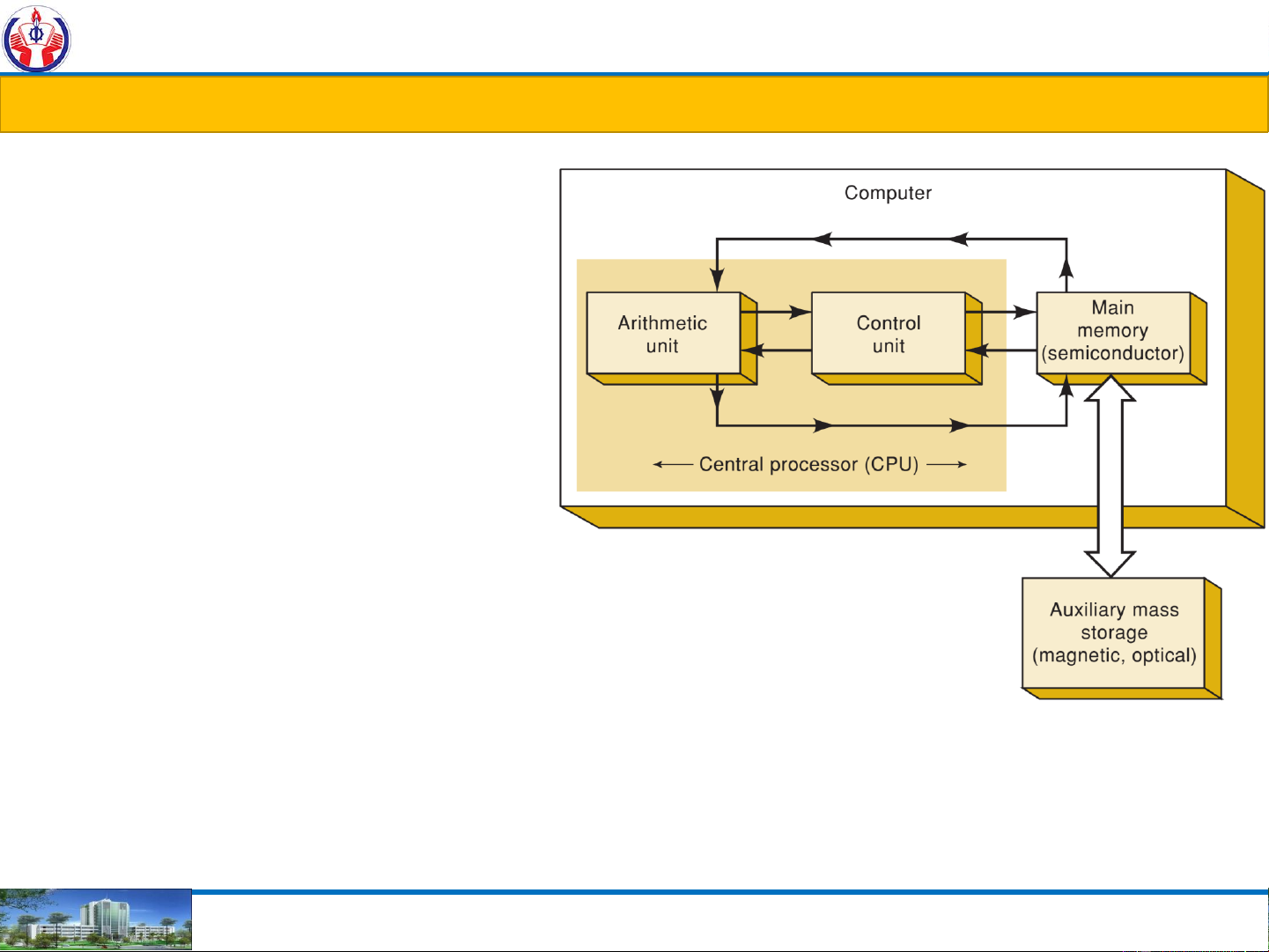
1. Introduction to Numerical Systems-Code and applications ❖ Semiconductor memories are used as the main memory of a computer. ❖ Another form of storage in a computer is performed by auxiliary memory. Auxiliary memory—also called mass storage—has the capacity to store massive amounts of data without the need for electrical power. NGUYEN THANH NGHIA 4
C7: MEMORY DEVICES 2. Memory terminology
❖ Memory Cell: A device or an electrical circuit used to
store a single bit (0 or 1). Examples of memory cells include
a flip-flop, a charged capacitor, and a single spot on magnetic tape or disk.
❖ Memory Word: A group of bits (cells) in a memory that
represents instructions or data of some type. For example, a
register consisting of eight FFs can be considered to be a
memory that is storing an eight-bit word. Word sizes in
modern computers typically range from 8 to 64 bits,
depending on the size of the computer. NGUYEN THANH NGHIA 5
C7: MEMORY DEVICES 2. Memory terminology
❖ Byte: A special term used for a group of eight bits. A byte always
consists of eight bits. Word sizes can be expressed in bytes as well
as in bits. For example, a word size of eight bits is also a word size
of one byte, a word size of 16 bits is two bytes, and so on.
❖ Capacity: A way of specifying how many bits can be stored in a
particular memory device or complete memory system. To
illustrate, suppose that we have a memory that can store 4096 20-
bit words. This represents a total capacity of 81,920 bits. We could
also express this memory’s capacity as When expressed this way,
the first number (4096) is the number of words, and the second
number (20) is the number of bits per word (word size). The
number of words in a memory is often a multiple of 1024. It is
common to use the designation “1K” to represent 1024=210 when
referring to memory capacity. Thus, a memory that has a storage
capacity of is actually a memory. NGUYEN THANH NGHIA 6
C7: MEMORY DEVICES 2. Memory terminology Example:
❖ A certain semiconductor memory chip is specified as How
many words can be stored on this chip? What is the word
size? How many total bits can this chip store? ❖ Solution:
2K = 2 * 1024 = 2048 words
Each word is eight bits (one byte). The total number of bits is therefore: 2048 * 8 = 16,384 bits NGUYEN THANH NGHIA 7
C7: MEMORY DEVICES 2. Memory terminology Example:
❖ Which memory stores the most bits: a 5M * 8 memory or
a memory that stores 1M words at a word size of 16 bits? ❖ Solution:
5M * 8 = 5 * 1,048,576 * 8 = 41,943,040 bits
1M * 16 = 1,048,576 * 16 = 16,777,216 bits
The 5M * 8 memory stores more bits. NGUYEN THANH NGHIA 8
C7: MEMORY DEVICES 2. Memory terminology
❖ Density: Another term for capacity. When we say that one
memory device has a greater density than another, we mean that it
can store more bits in the same amount of space.
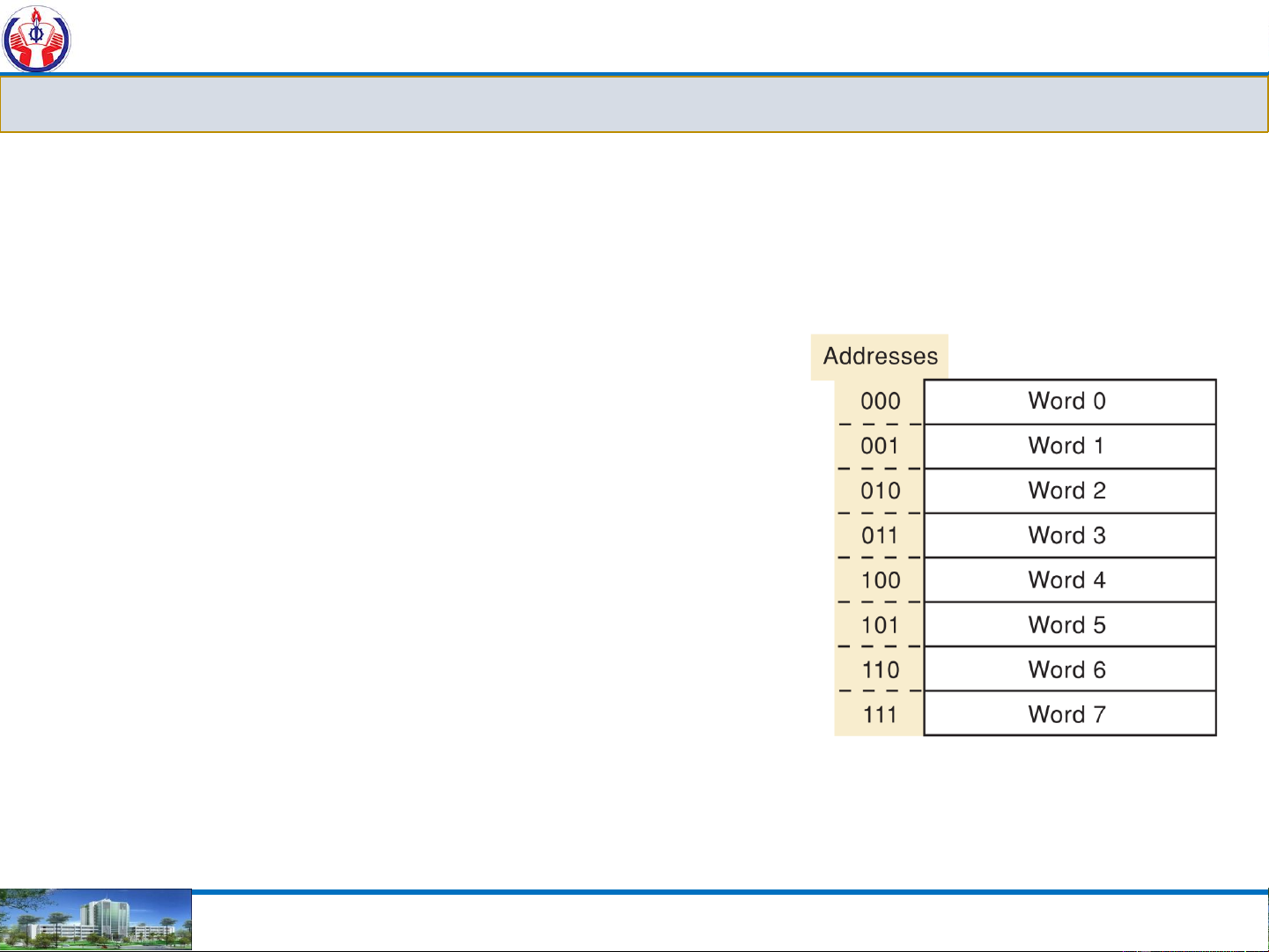
❖ Address: A number that identifies the
location of a word in memory. Each
word stored in a memory device or
system has a unique address. Addresses
always exist in a digital system as a binary number, although octal,
hexadecimal, and decimal numbers are
often used to represent the address for convenience. NGUYEN THANH NGHIA 9
C7: MEMORY DEVICES NGUYEN THANH NGHIA 10
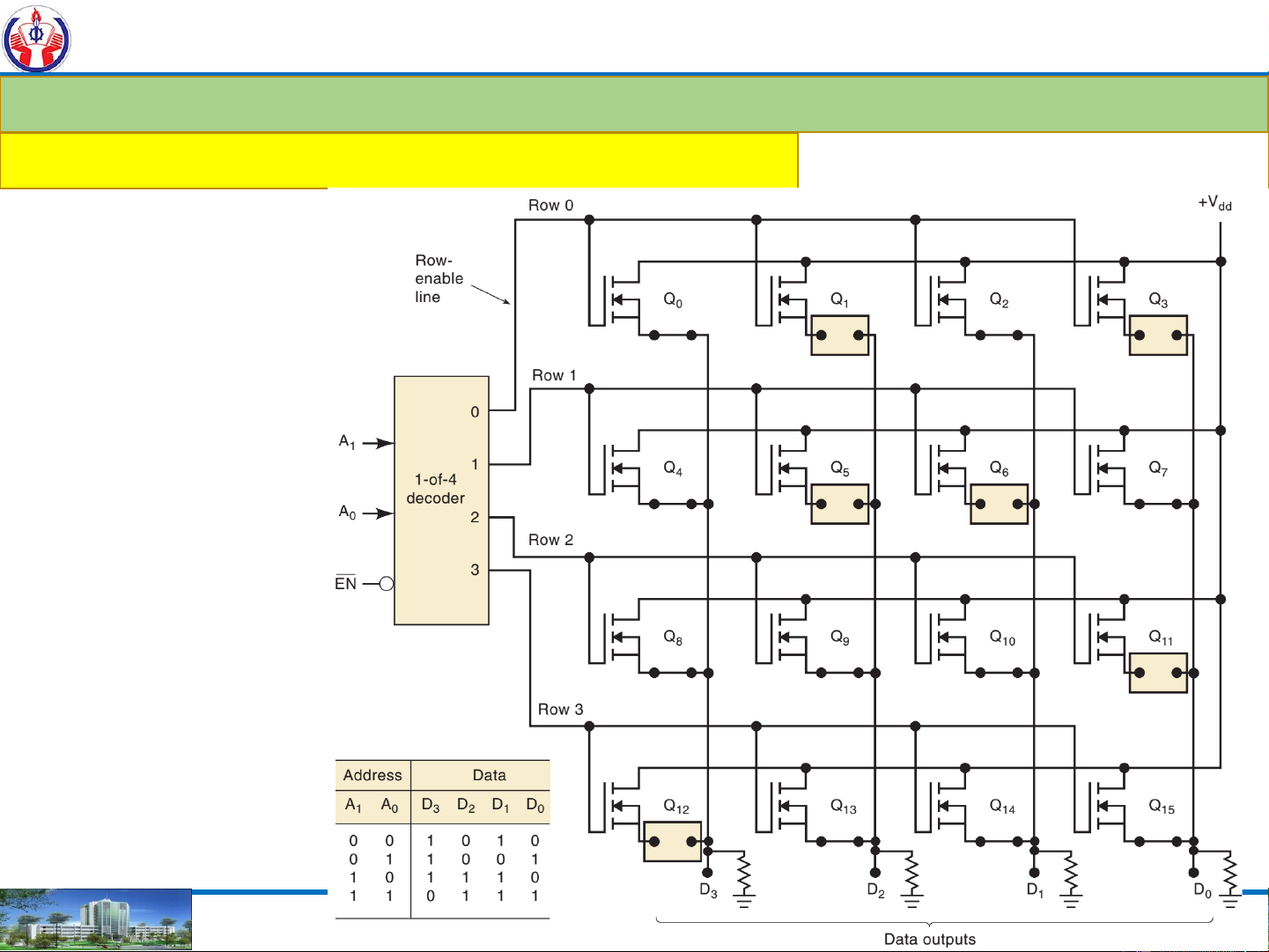
C7: MEMORY DEVICES 3. ROM Mask-Programmed ROM: ❖ The mask- programmed ROM (MROM) has its information stored at the time the integrated circuit is manufactured. NGUYEN THANH NGHIA 11
C7: MEMORY DEVICES 3. ROM Programmable ROMs (PROMs):
❖ A mask-programmable ROM is very expensive and would not be
used except in high-volume applications, where the cost would be
spread out over many units. For lower-volume applications,
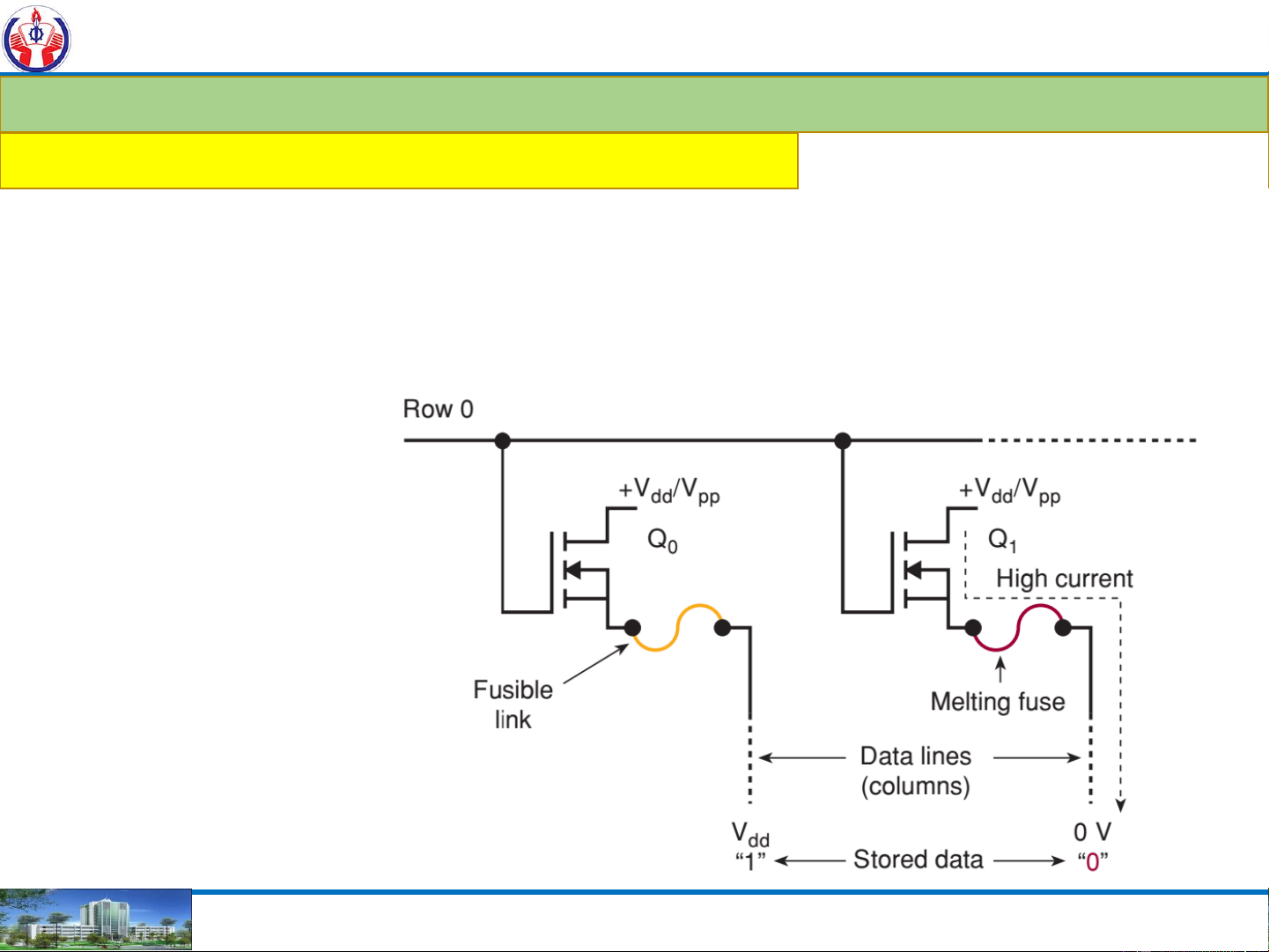
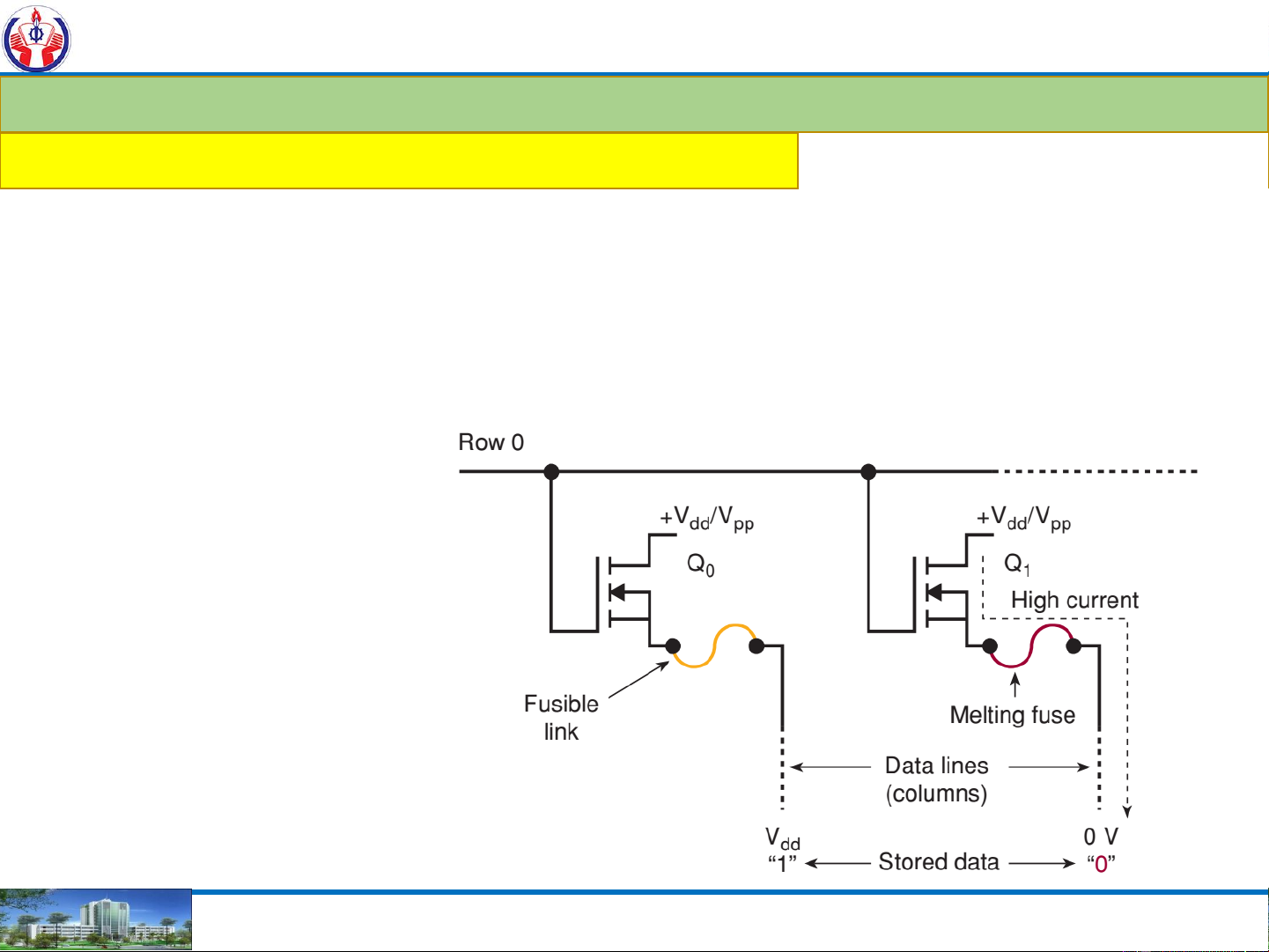
manufacturers have developed fusible-link PROMs that are user- programmable. NGUYEN THANH NGHIA 12
C7: MEMORY DEVICES 3. ROM Programmable ROMs (PROMs):
❖ Once programmed, however, a PROM is like an MROM because
it cannot be erased and reprogrammed. Thus, if the program in the
PROM is faulty or must be changed, the PROM must be thrown
away. For this reason, these devices are often referred to as “one-
time programmable” (OTP) ROMs. NGUYEN THANH NGHIA 13
C7: MEMORY DEVICES 3. ROM
Erasable Programmable ROM (EPROM):
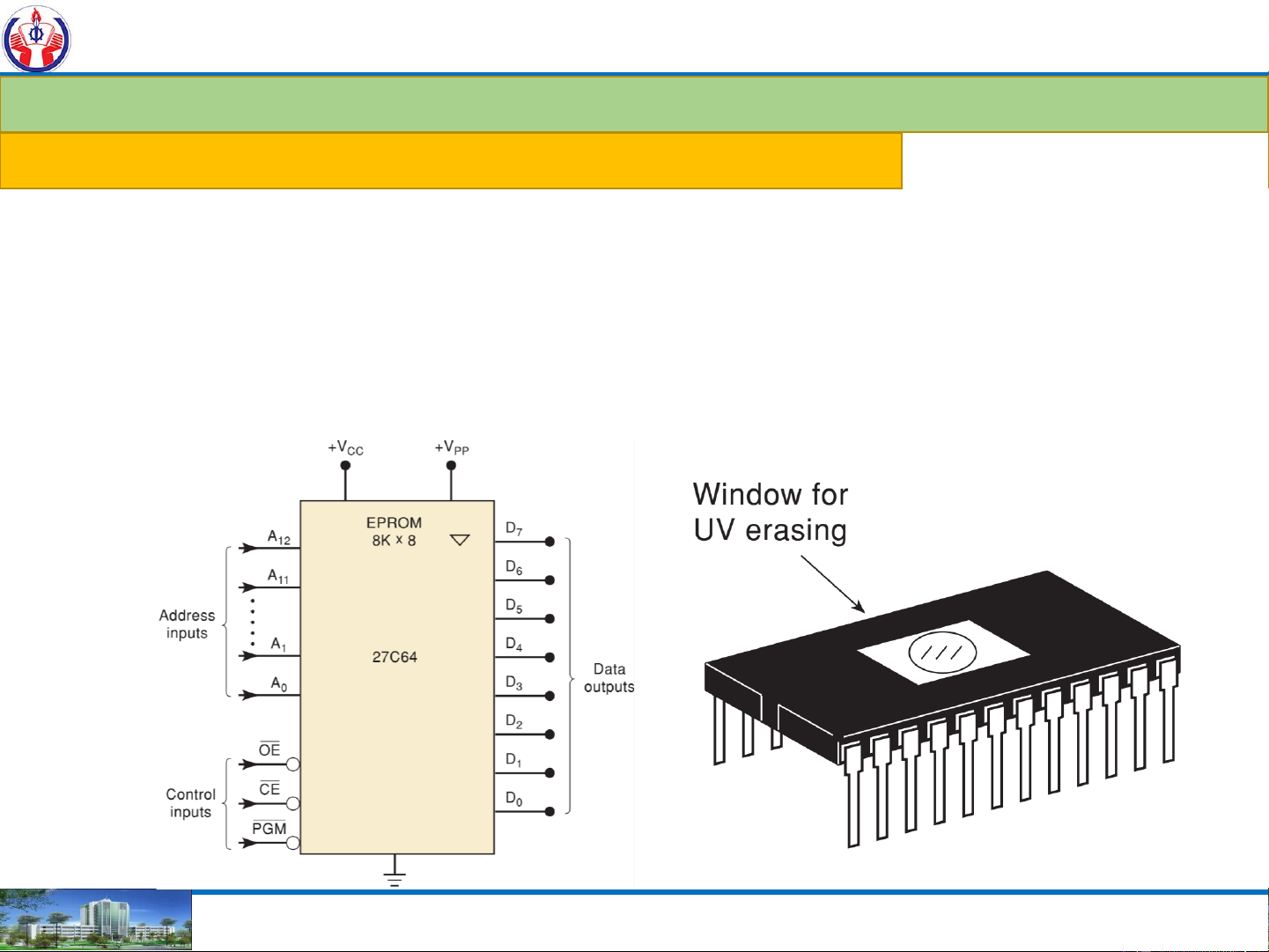
❖ An EPROM can be programmed by the user, and it can also be
erased and reprogrammed as often as desired.
❖ The 27C64 is an example of a small memory IC that is available
as a “one-time-programmable” (OTP) PROM or as an erasable UV EPROM. NGUYEN THANH NGHIA 14
C7: MEMORY DEVICES 3. ROM
Electrically Erasable PROM (EEPROM):
❖ The EEPROM retains the same floating-gate structure as the
EPROM, but with the addition of a very thin oxide region above
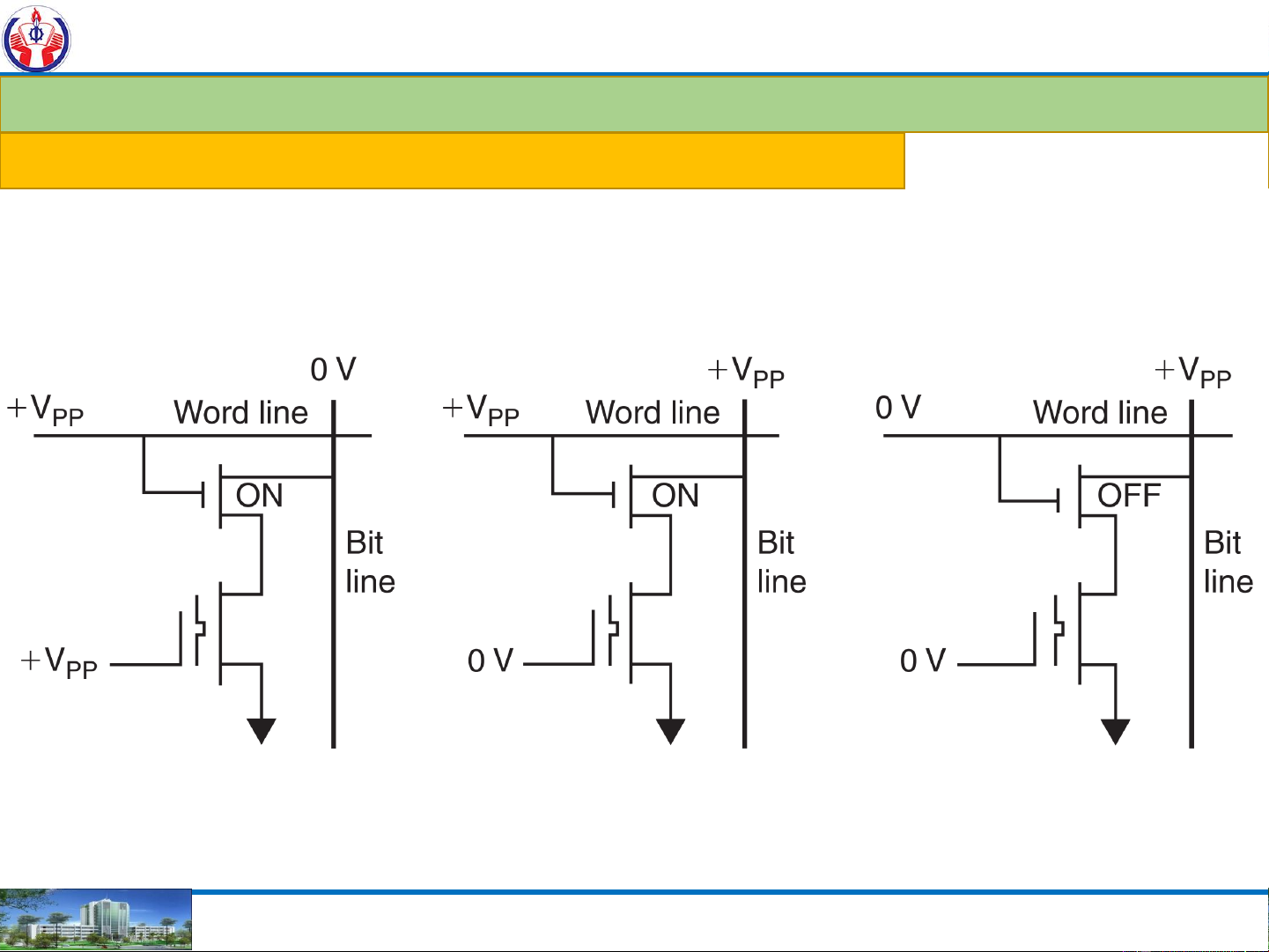
the drain of the MOSFET memory cell. Erasing/precharging writing a ‘0’ writing a ‘1’ a cell NGUYEN THANH NGHIA 15
C7: MEMORY DEVICES 4. RAM RAM architecture:
❖ RAMs typically come with word capacities of 1K, 4K, 8K, 16K,
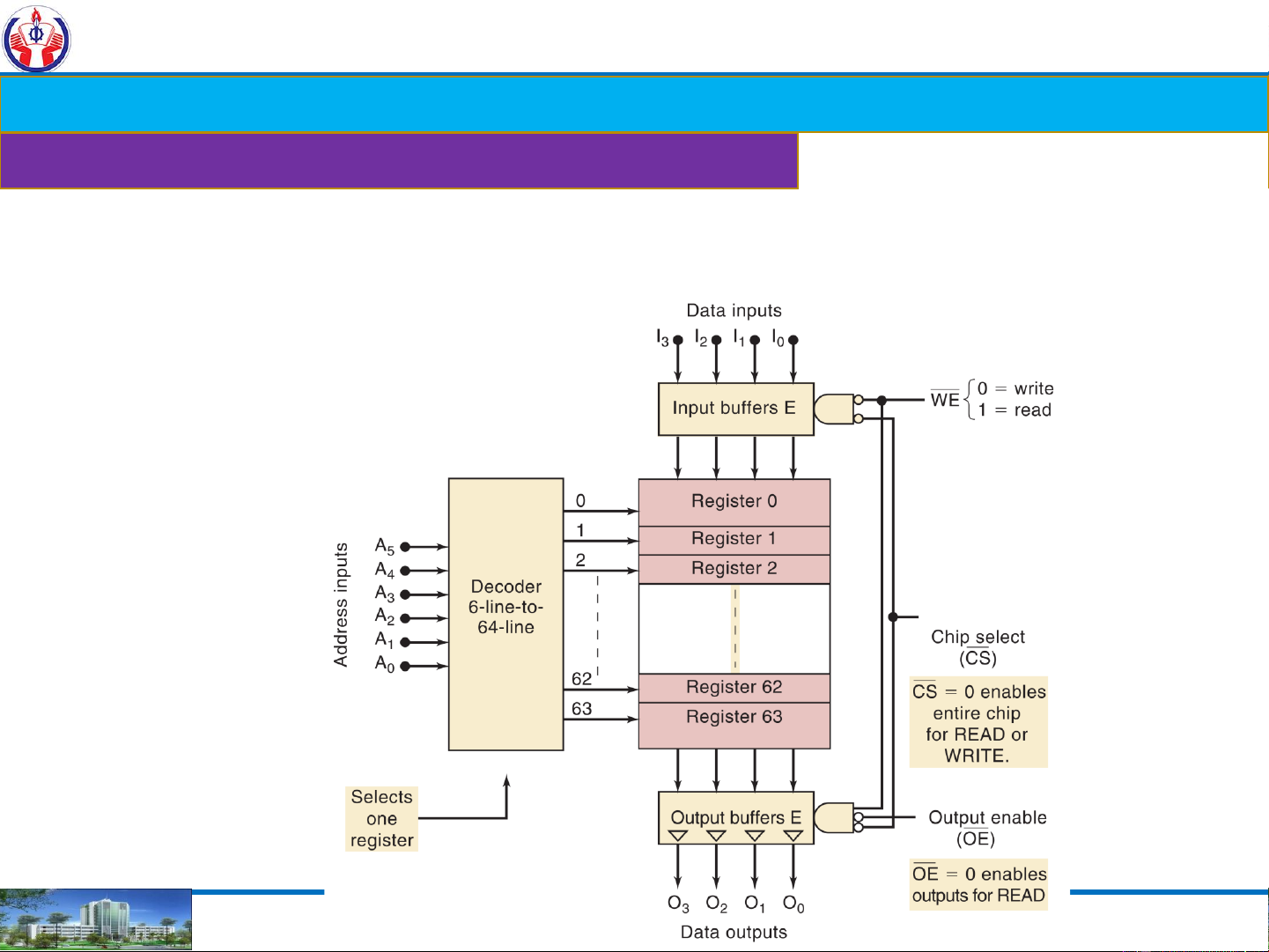
64K, 128K, 256K, and 1024K, and with word sizes of one, four, or eight bits. Internal organization of a 64 * 4 RAM. NGUYEN THANH NGHIA 16
C7: MEMORY DEVICES 4. RAM Static RAM (SRAM):
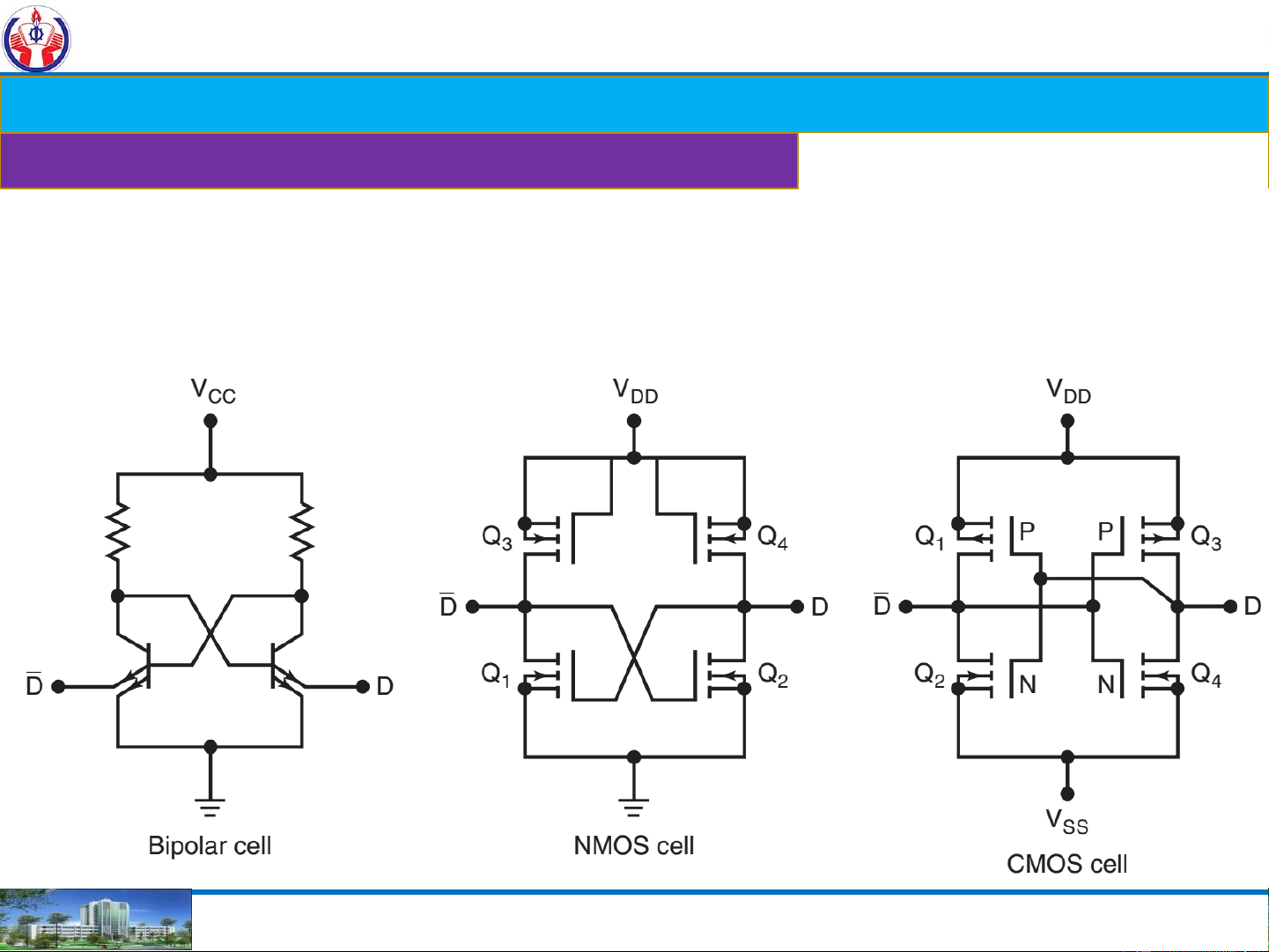
❖ Static RAMs (SRAMs) have been manufactured in bipolar, MOS,
and BiCMOS technologies; the majority of applications today use CMOS RAMs. NGUYEN THANH NGHIA 17
C7: MEMORY DEVICES 4. RAM Dynamic RAM (DRAM):
❖ Dynamic RAM has been around since the 1960s. Since then, the
technology has made huge improvements in capacity, density, and speed,
yet the fundamental principles of operation have remained essentially the same.
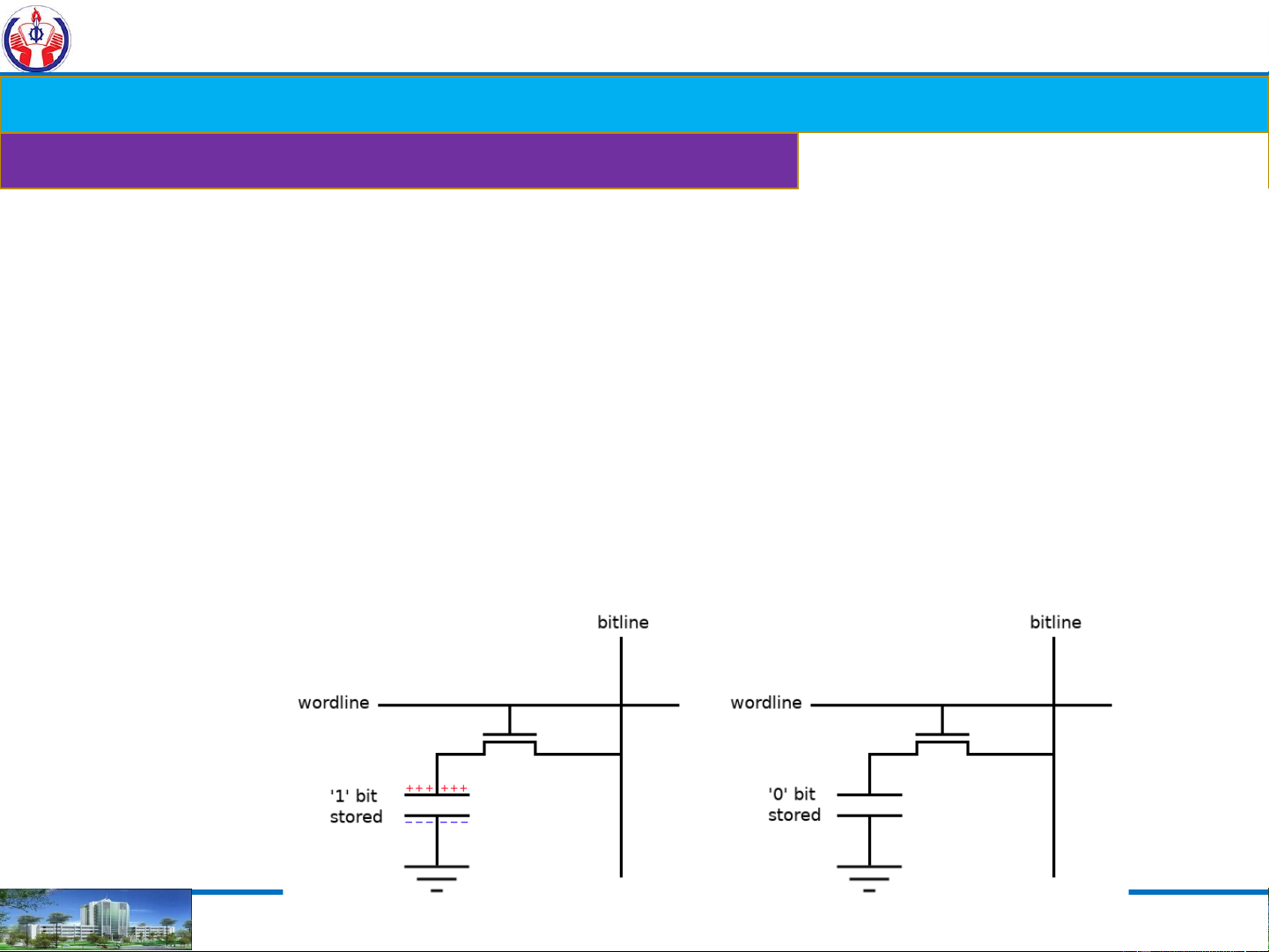
❖ Dynamic RAMs are fabricated using MOS technology and are noted for
their high capacity, low power requirement, and moderate operating
speed. As we stated earlier, unlike static RAMs, which store information
in FFs, dynamic RAMs store 1s and 0s as charges on a small MOS
capacitor (typically a few picofarads). NGUYEN THANH NGHIA 18
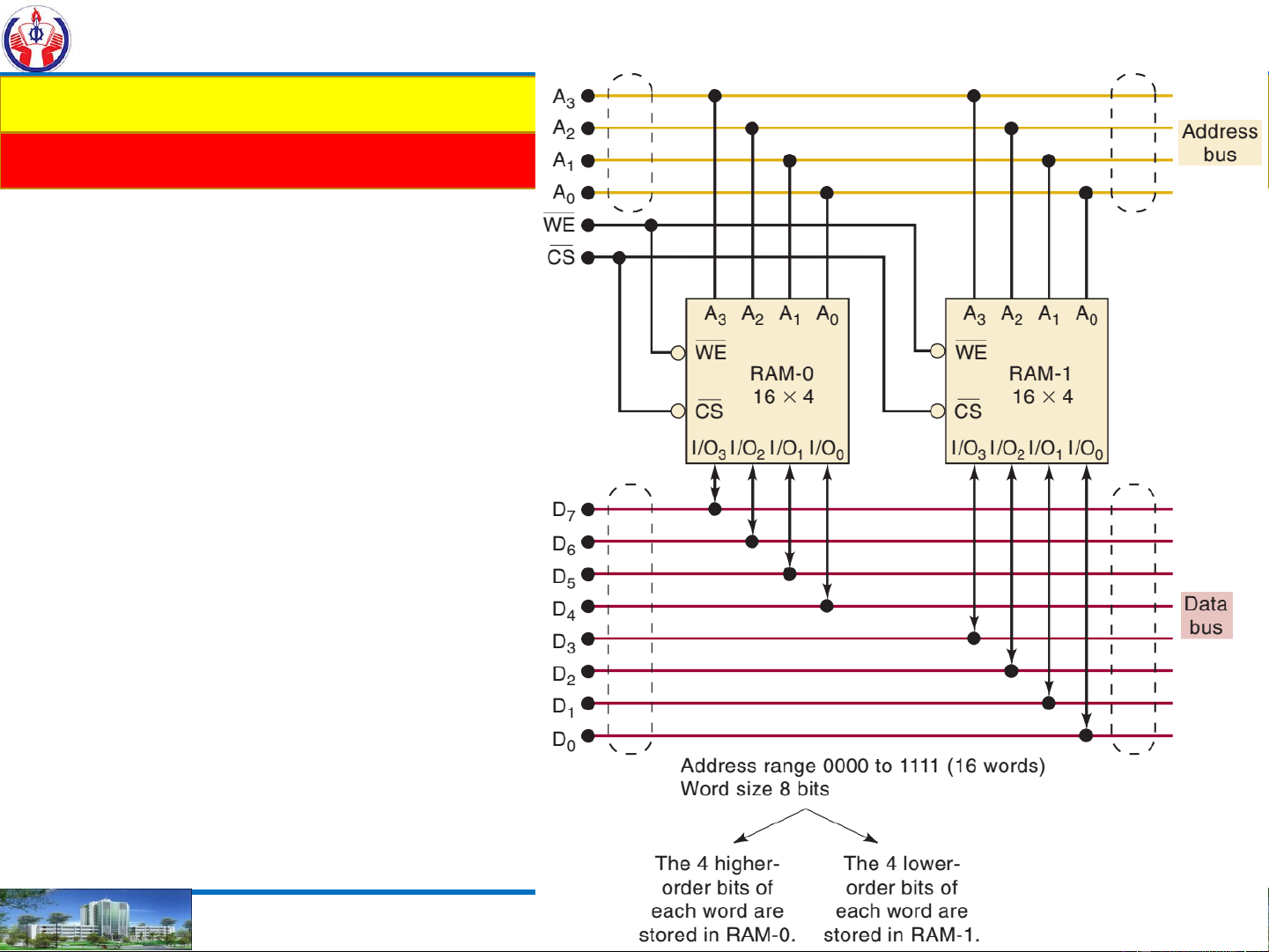
C7: MEMORY DEVICES 5. Memory Expansion Expanding word size: ❖ Suppose that we need a memory that can store 16 eight-bit words and all we have are RAM chips that are arranged as 16 * 4 memories with common I/O lines. We can combine two of these 16 * 4 chips to produce the desired memory. NGUYEN THANH NGHIA 19
C7: MEMORY DEVICES 5. Memory Expansion Example:
❖ The 2125A is a static-RAM IC that has a capacity of 1K *
1, one active-LOW chip select input, and separate data
input and output. Show how to combine several 2125A ICs to form a 1K * 8 module. ❖ Solution:
The eight 2125A chips are used for a 1K * 8 module. Each
chip stores one of the bits of each of the 1024 eight-bit words.
Note that all of the WE and CS inputs are wired together,
and the 10-line address bus is connected to the address
inputs of each chip. Also note that because the 2125A has
separate data in and data out pins, both of these pins of each
chip are tied to the same data bus line. NGUYEN THANH NGHIA 20
Tài liệu liên quan:
-
Bài giảng Chương 1: Các hệ thống số và mã số môn Kỹ thuật số | Trường Đại học Sư phạm Kỹ thuật Thành phố Hồ Chí Minh
46 23 -
Bài giảng Chương 1 - Concepts - Numerical Systems - Codes môn Kỹ thuật số | Trường Đại học Sư phạm Kỹ thuật Thành phố Hồ Chí Minh
21 11 -
Bài tập Đại số Boole môn Kỹ thuật số và các thiết bị hiển thị điện tử | Trường Đại học Sư phạm Kỹ thuật Thành phố Hồ Chí Minh
47 24 -
Báo cáo chương 4 Môn Kỹ thuật số | Đại học Sư phạm Kỹ thuật Thành phố Hồ Chí Minh
128 64