Competitive Market Analysis | Microeconomics | Trường Đại học Quốc tế, Đại học Quốc gia Thành phố Hồ Chí Minh
In the long run, firms will enter or exit the market until profit is driven to zero. As a result, price equals the minimum of average total cost, as shown in panel (a). The number of firms adjusts to ensure that all demand is satisfied at this price. The long-run market supply curve is horizontal at this price, as shown in panel. Tài liệu được sưu tầm và soạn thảo dưới dạng file PDF để gửi tới các bạn cùng tham khảo, ôn tập đầy đủ kiến thức, chuẩn bị cho các buổi học thật tốt. Mời bạn đọc đón xem!
Môn: Microeconomics 635 tài liệu
Trường: Trường Đại học Quốc tế, Đại học Quốc gia Thành phố Hồ Chí Minh 1.9 K tài liệu
Tác giả:

Preview text:
c. Why Do Competitive Firms Stay in Business If They Make Zero Profit?
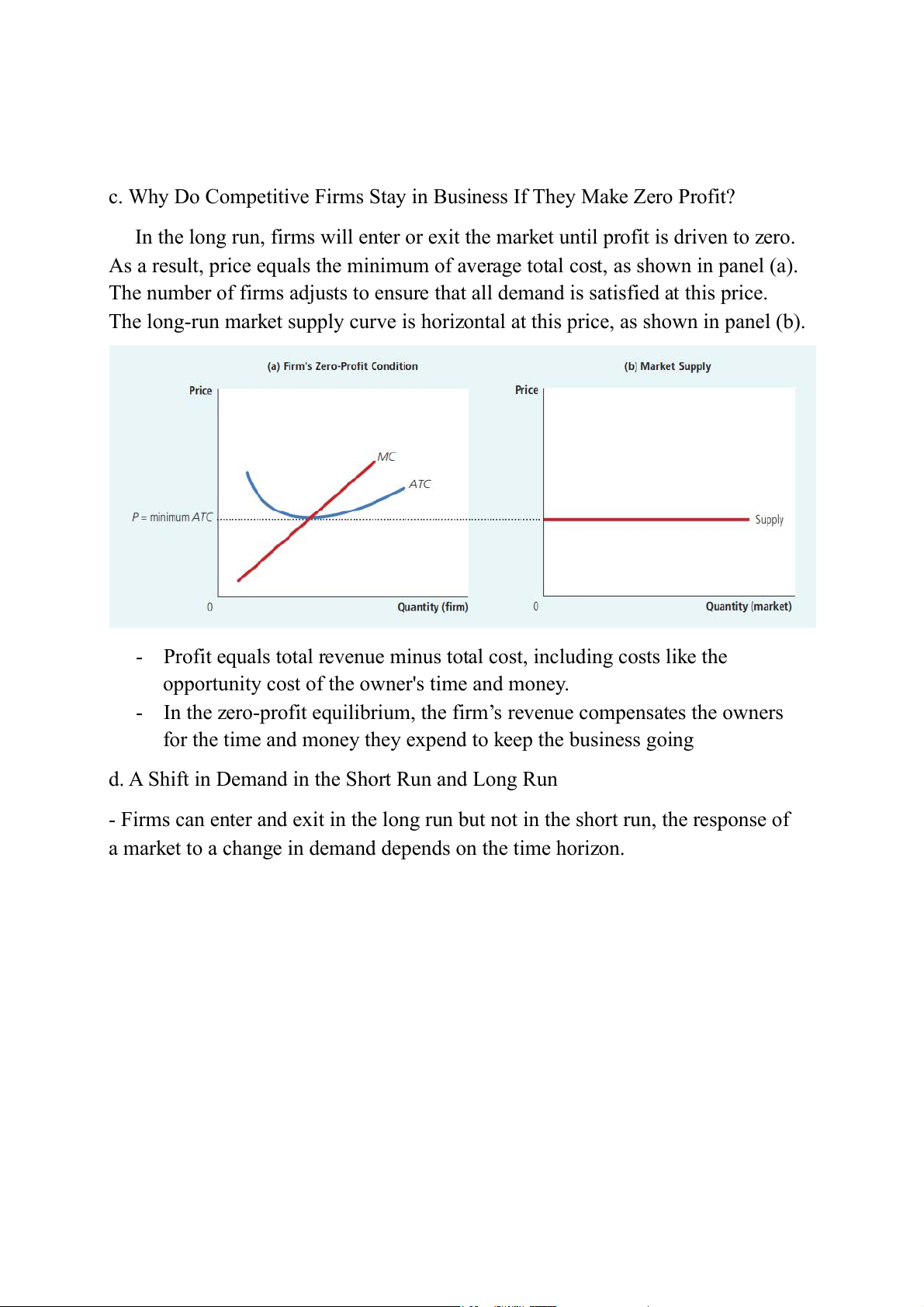
In the long run, firms will enter or exit the market until profit is driven to zero.
As a result, price equals the minimum of average total cost, as shown in panel (a).
The number of firms adjusts to ensure that all demand is satisfied at this price.
The long-run market supply curve is horizontal at this price, as shown in panel (b).
- Profit equals total revenue minus total cost, including costs like the
opportunity cost of the owner's time and money.
- In the zero-profit equilibrium, the firm’s revenue compensates the owners
for the time and money they expend to keep the business going
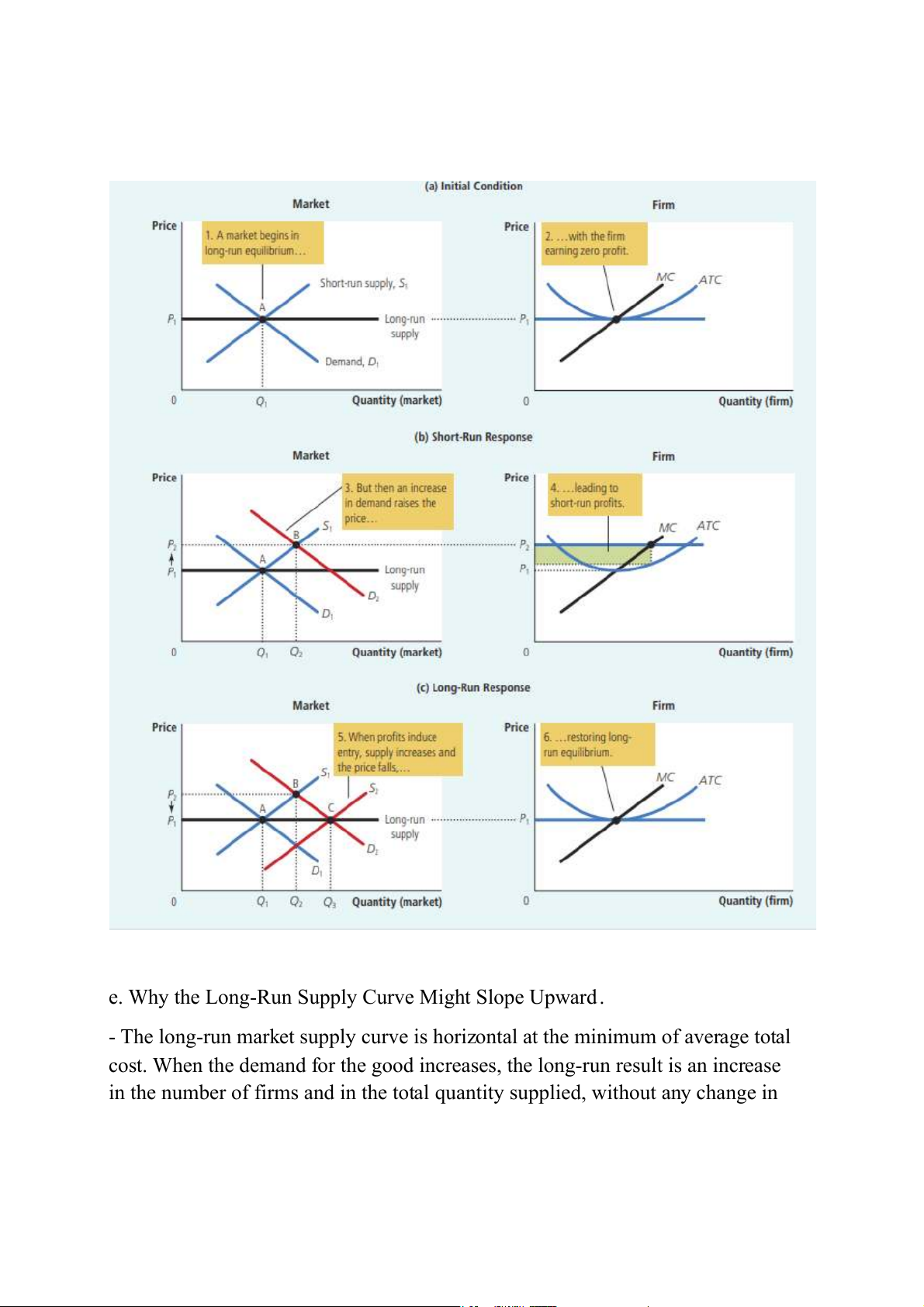
d. A Shift in Demand in the Short Run and Long Run
- Firms can enter and exit in the long run but not in the short run, the response of
a market to a change in demand depends on the time horizon.
e. Why the Long-Run Supply Curve Might Slope Upward.
- The long-run market supply curve is horizontal at the minimum of average total
cost. When the demand for the good increases, the long-run result is an increase
in the number of firms and in the total quantity supplied, without any change in
the price. There are, however, two reasons that the long-run market supply curve might slope upward
some resources used in production may be available only in limited quantities firms may have different costs
Tài liệu liên quan:
-
Chương 3: độ co giãn và các nhân tố ảnh hưởng | Microeconomics | Trường Đại học Quốc tế, Đại học Quốc gia Thành phố Hồ Chí Minh
5 3 -
Microeconomics Syllabus | Microeconomics | Trường Đại học Quốc tế, Đại học Quốc gia Thành phố Hồ Chí Minh
5 3 -
Microeconomics Course Syllabus & Assessment Details | Microeconomics | Trường Đại học Quốc tế, Đại học Quốc gia Thành phố Hồ Chí Minh
5 3 -
Assignment 3 - Elasticity MCQs and Key Concepts | Microeconomics | Trường Đại học Quốc tế, Đại học Quốc gia Thành phố Hồ Chí Minh
4 2 -
Assignment 2 - Economic Equilibrium Analysis of Fridges and Motorcycles | Microeconomics | Trường Đại học Quốc tế, Đại học Quốc gia Thành phố Hồ Chí Minh
4 2