Gasoline Market Analysis: Impact of Price Ceiling Regulations | Microeconomics | Trường Đại học Quốc tế, Đại học Quốc gia Thành phố Hồ Chí Minh
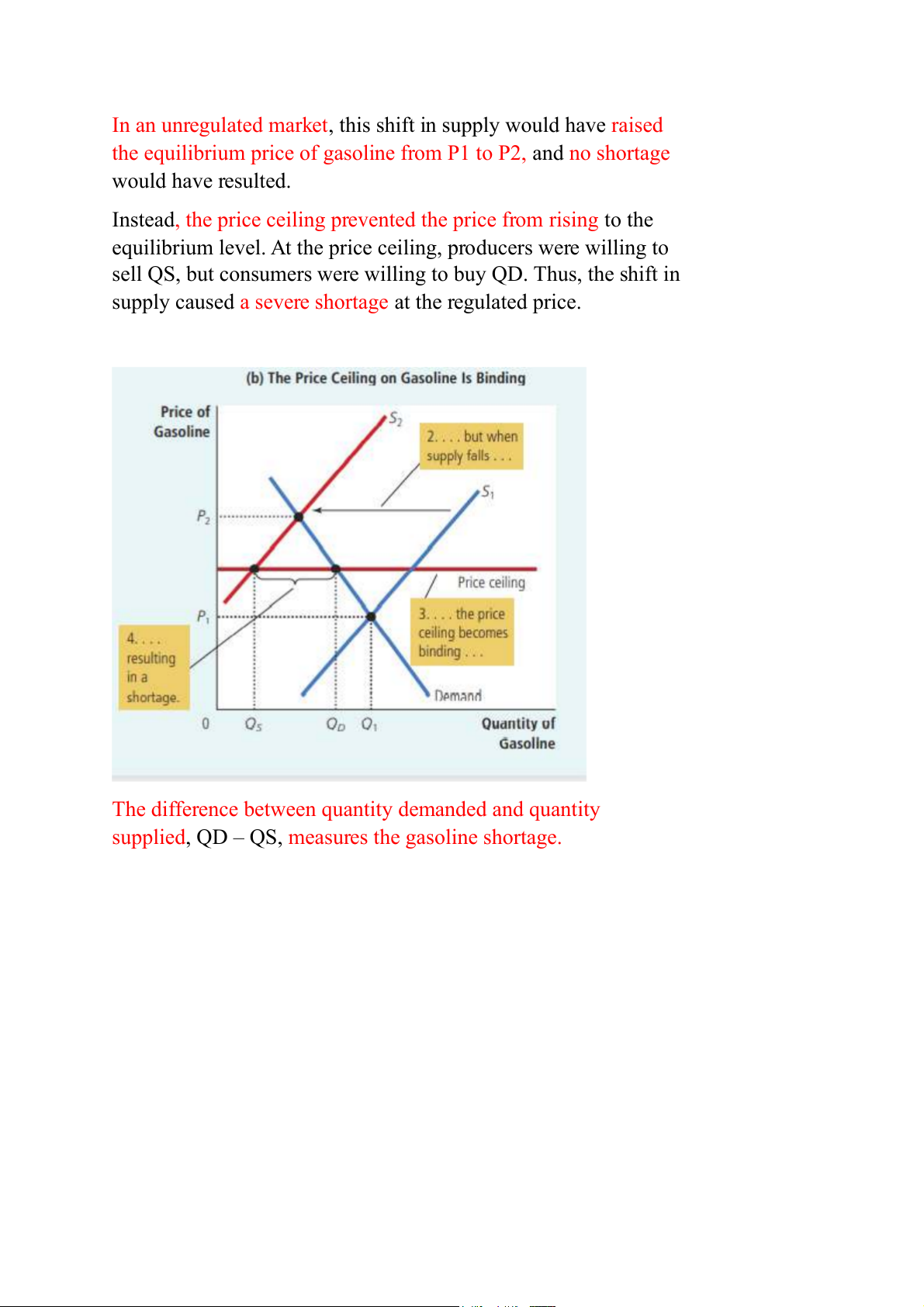
In an unregulated market, this shift in supply would have raised the equilibrium price of gasoline from P1 to P2, and no shortage would have resulted. Instead, the price ceiling prevented the price from rising to the equilibrium level. At the price ceiling, producers were willing to sell QS, but consumers were willing to buy QD. Thus, the shift in supply caused a severe shortage at the regulated. Tài liệu được sưu tầm và soạn thảo dưới dạng file PDF để gửi tới các bạn cùng tham khảo, ôn tập đầy đủ kiến thức, chuẩn bị cho các buổi học thật tốt. Mời bạn đọc đón xem!
Môn: Microeconomics 635 tài liệu
Trường: Trường Đại học Quốc tế, Đại học Quốc gia Thành phố Hồ Chí Minh 1.9 K tài liệu
Tác giả:

Preview text:
The Market for Gasoline with a Price Ceiling
As we discussed in Chapter 5, in 1973 the Organization of
Petroleum Exporting Countries (OPEC) reduced production of
crude oil, thereby increasing its price in world oil markets.
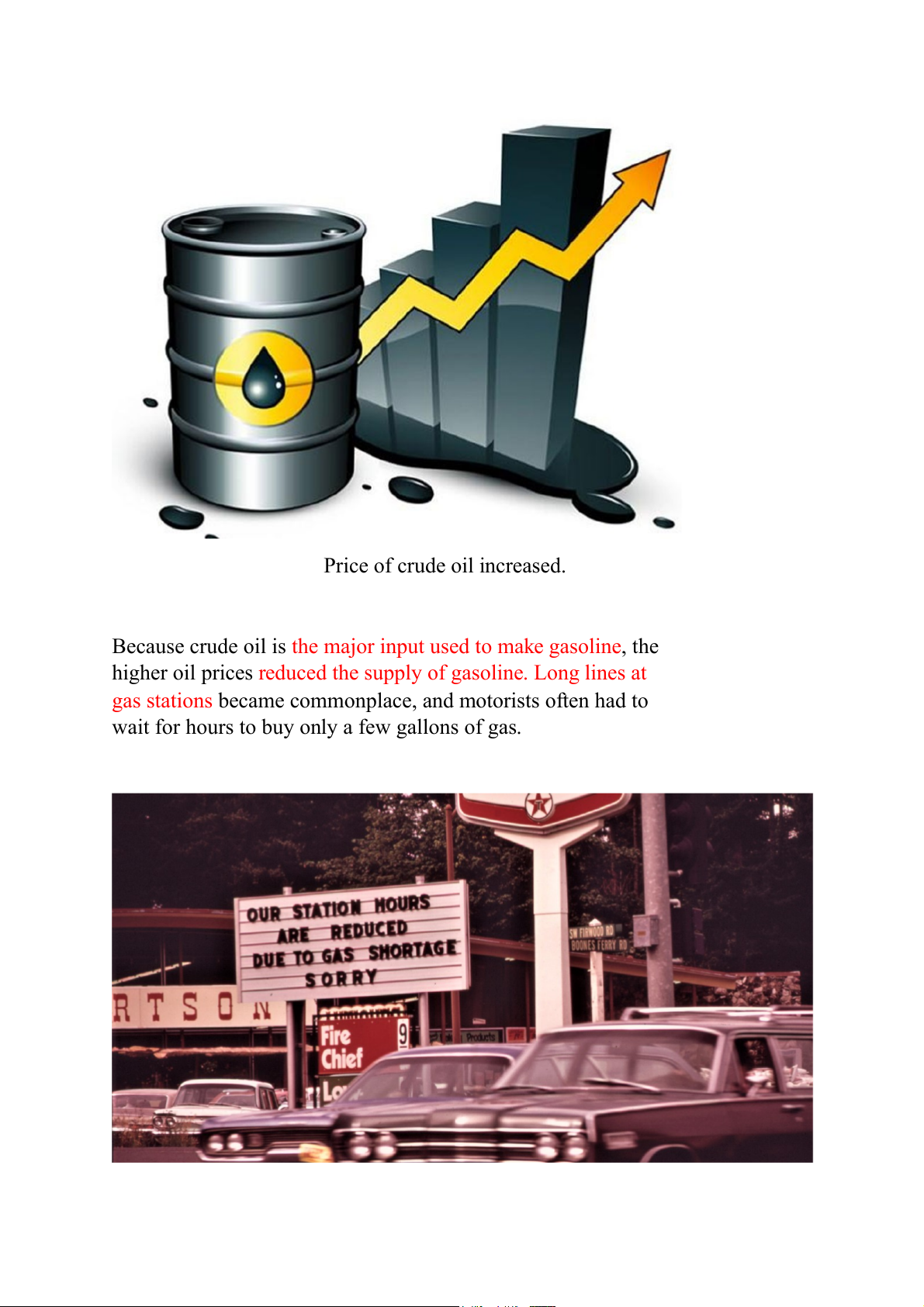
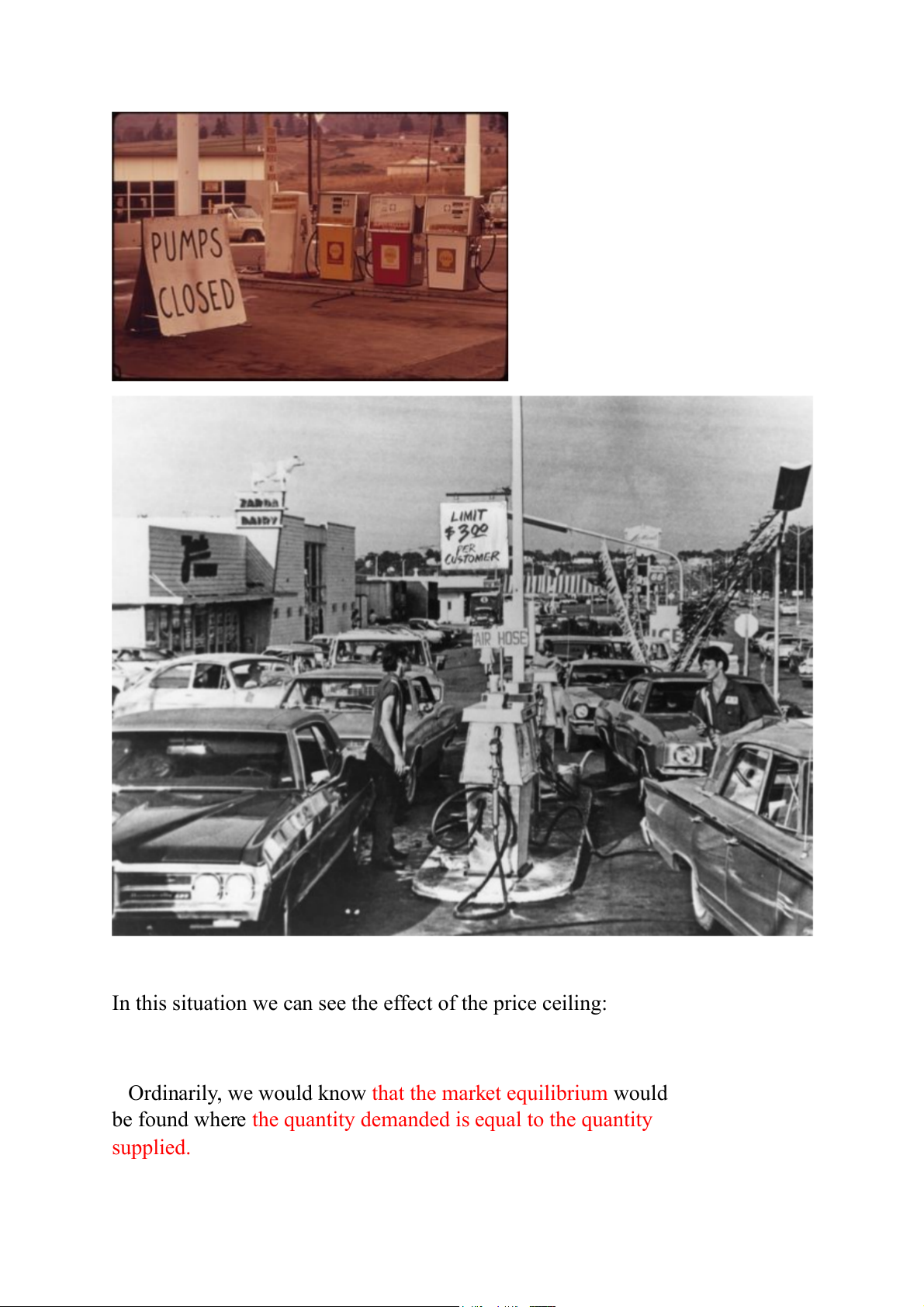
Production of crude oil was reduced. Price of crude oil increased.
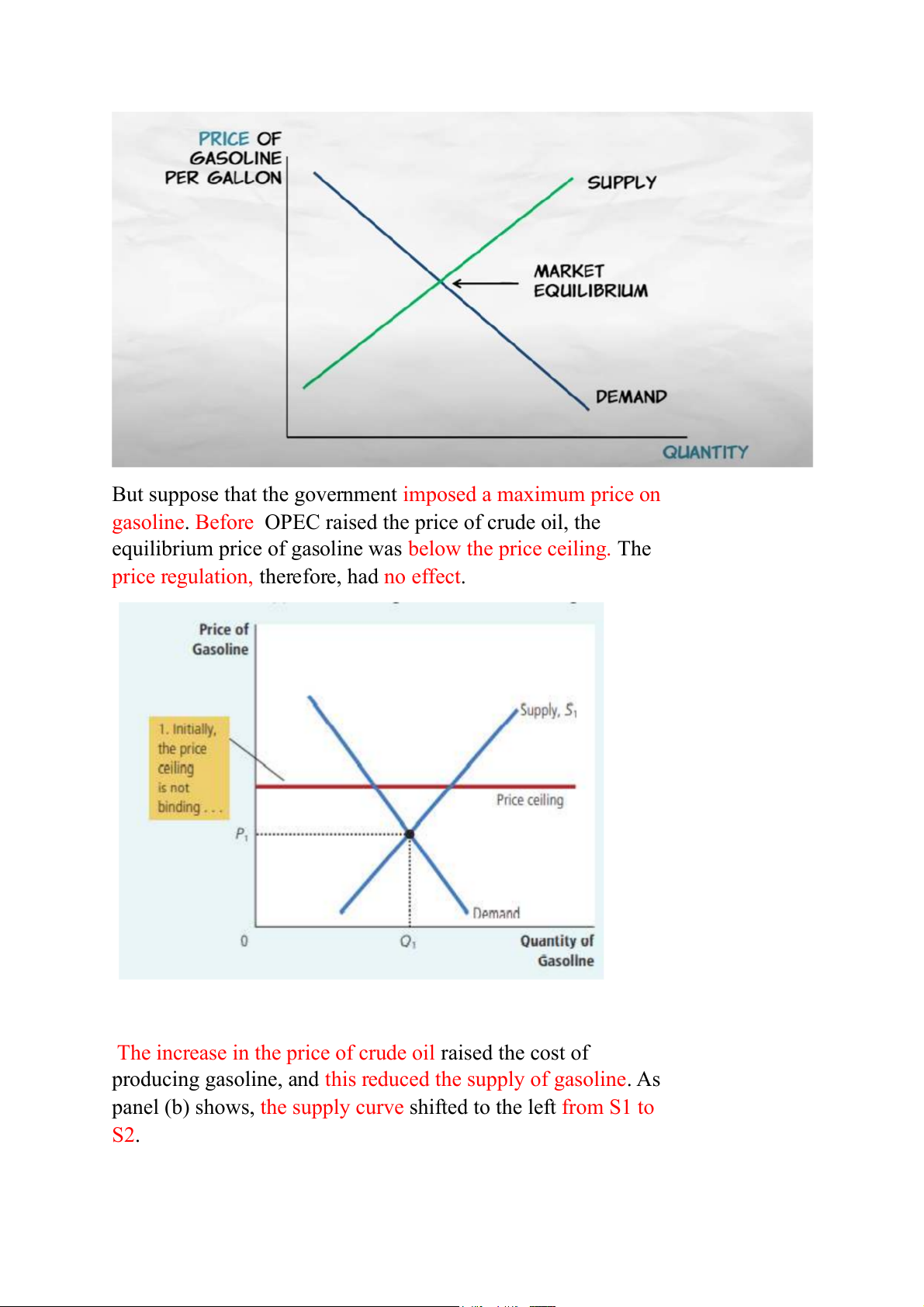
Because crude oil is the major input used to make gasoline, the
higher oil prices reduced the supply of gasoline. Long lines at
gas stations became commonplace, and motorists often had to
wait for hours to buy only a few gallons of gas.
In this situation we can see the effect of the price ceiling:
Ordinarily, we would know that the market equilibrium would
be found where the quantity demanded is equal to the quantity supplied.
But suppose that the government imposed a maximum price on
gasoline. Before OPEC raised the price of crude oil, the
equilibrium price of gasoline was below the price ceiling. The
price regulation, therefore, had no effect.
The increase in the price of crude oil raised the cost of
producing gasoline, and this reduced the supply of gasoline. As panel (b) shows, shif the supply curve ted to the left from S1 to S2.
In an unregulated market, this shift in supply would have raised
the equilibrium price of gasoline from P1 to P2, and no shortage would have resulted.
Instead, the price ceiling prevented the price from rising to the
equilibrium level. At the price ceiling, producers were willing to
sell QS, but consumers were willing to buy QD. Thus, the shift in
supply caused a severe shortage at the regulated price.
The difference between quantity demanded and quantity
supplied, QD – QS, measures the gasoline shortage.
Tài liệu liên quan:
-

Chương 3: độ co giãn và các nhân tố ảnh hưởng | Microeconomics | Trường Đại học Quốc tế, Đại học Quốc gia Thành phố Hồ Chí Minh
5 3 -
Microeconomics Syllabus | Microeconomics | Trường Đại học Quốc tế, Đại học Quốc gia Thành phố Hồ Chí Minh
5 3 -
Microeconomics Course Syllabus & Assessment Details | Microeconomics | Trường Đại học Quốc tế, Đại học Quốc gia Thành phố Hồ Chí Minh
5 3 -
Assignment 3 - Elasticity MCQs and Key Concepts | Microeconomics | Trường Đại học Quốc tế, Đại học Quốc gia Thành phố Hồ Chí Minh
5 3 -
Assignment 2 - Economic Equilibrium Analysis of Fridges and Motorcycles | Microeconomics | Trường Đại học Quốc tế, Đại học Quốc gia Thành phố Hồ Chí Minh
5 3