Marginal benefits | Microeconomics | Trường Đại học Quốc tế, Đại học Quốc gia Thành phố Hồ Chí Minh
NB ( net benefit ) = TB( total benefit) – TC ( total cost ) * MB(Q)>MC(Q): you are consuming the amount that the last unit generates higher benefit than its cost -> still have the way to increase NB by consuming more product -> increase Q it’s logical, therefore we should increase the quantity consumed o MB(Q)<MC(Q): the last unit generates the benefit smaller than its cost -> have a way to increase NB by do not consume it -> decrease Q, it is illogical, therefore we should decrease the quantity consume. Tài liệu được sưu tầm và soạn thảo dưới dạng file PDF để gửi tới các bạn cùng tham khảo, ôn tập đầy đủ kiến thức, chuẩn bị cho các buổi học thật tốt. Mời bạn đọc đón xem!
Môn: Microeconomics 635 tài liệu
Trường: Trường Đại học Quốc tế, Đại học Quốc gia Thành phố Hồ Chí Minh 1.9 K tài liệu
Tác giả:

Preview text:
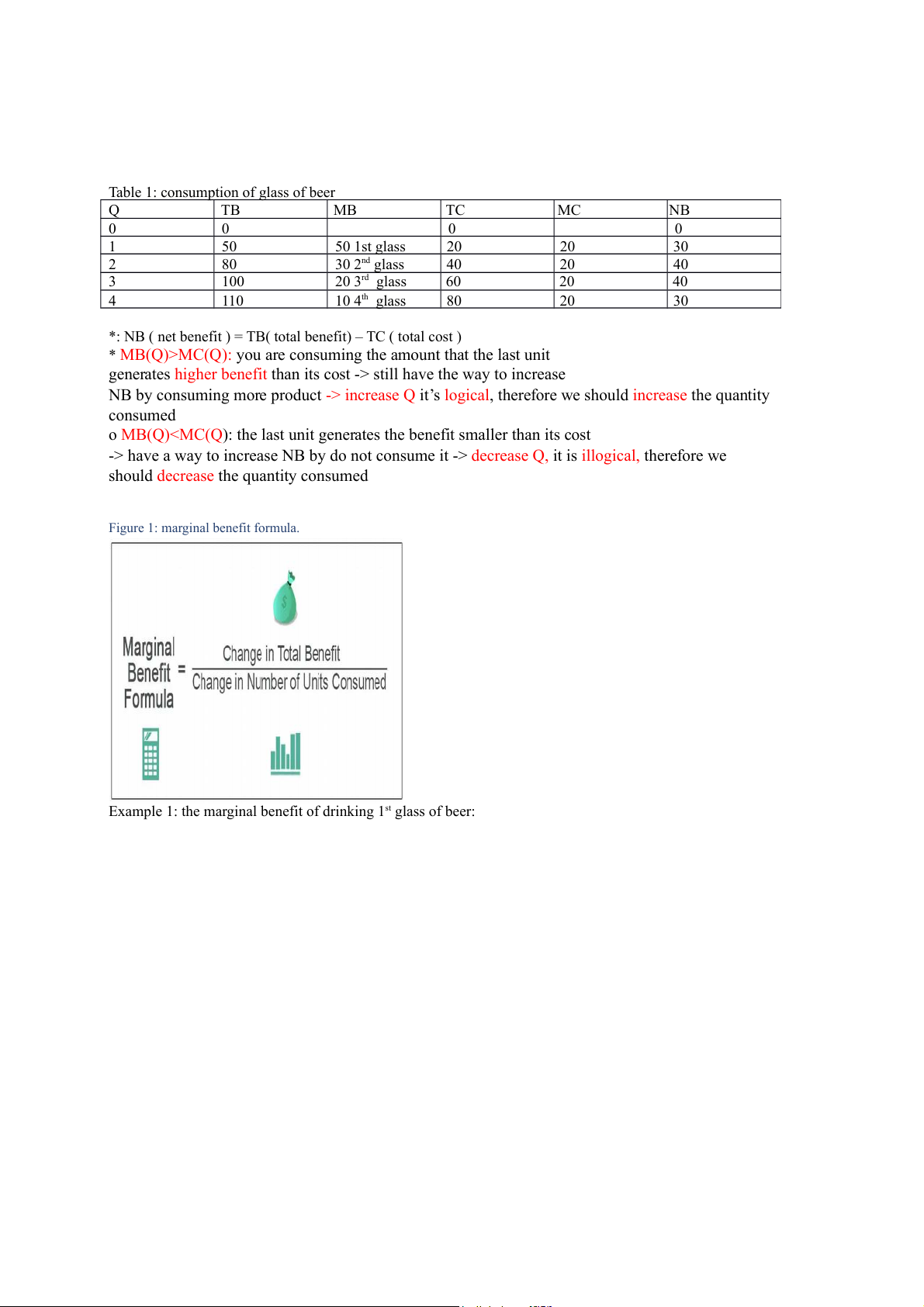
Table 1: consumption of glass of beer Q TB MB TC MC NB 0 0 0 0 1 50 50 1st glass 20 20 30 2 80 30 2nd glass 40 20 40 3 100 20 3rd glass 60 20 40 4 110 10 4th glass 80 20 30
*: NB ( net benefit ) = TB( total benefit) – TC ( total cost )
* MB(Q)>MC(Q): you are consuming the amount that the last unit
generates higher benefit than its cost -> still have the way to increase
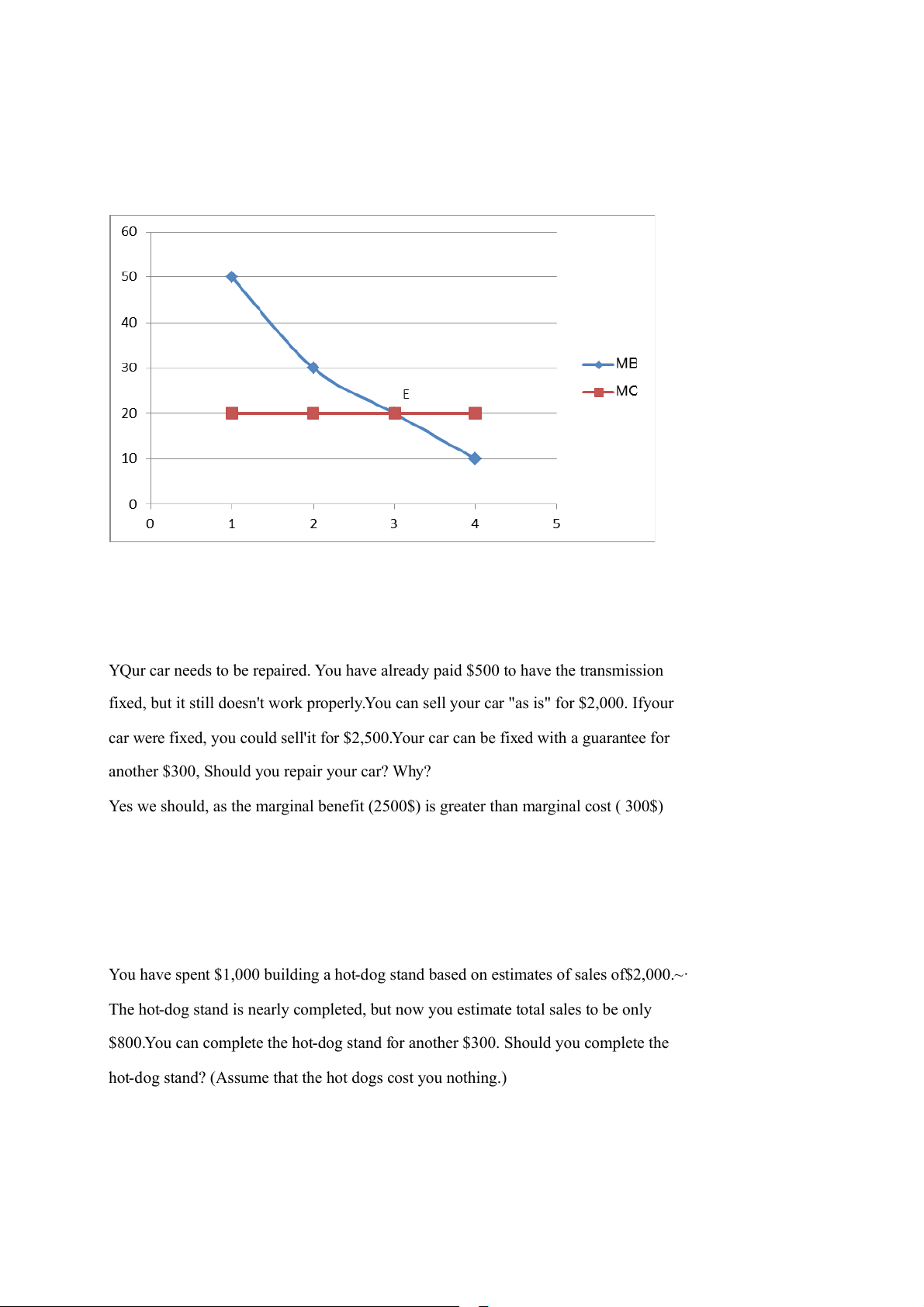
NB by consuming more product -> increase Q it’s logical, therefore we should increase the quantity consumed
o MB(Q)-> have a way to increase NB by do not consume it -> decrease Q, it is illogical, therefore we
should decrease the quantity consumed
Figure 1: marginal benefit formula.
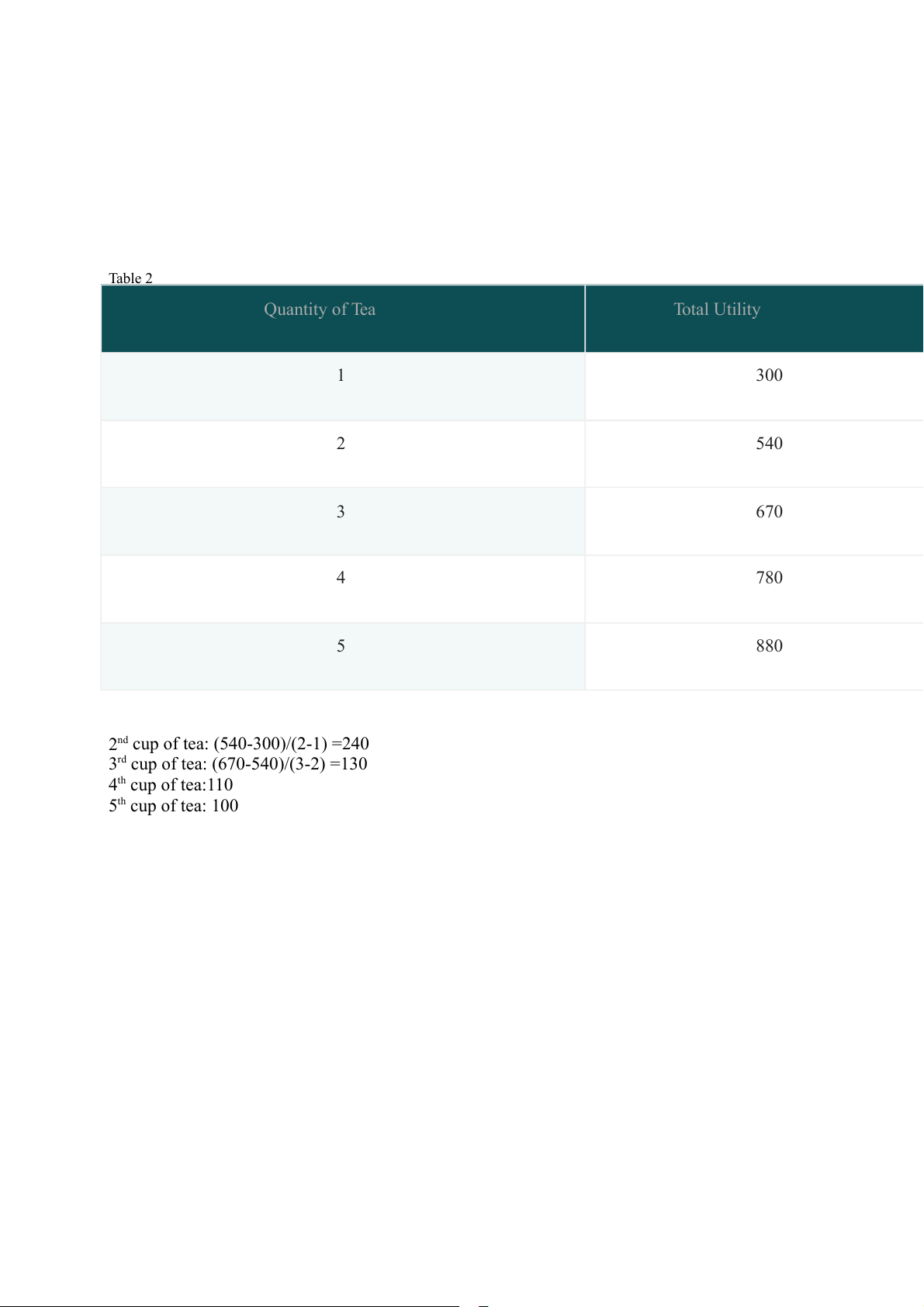
Example 1: the marginal benefit of drinking 1st glass of beer: Table 2 Quantity of Tea Total Utility 1 300 2 540 3 670 4 780 5 880
2nd cup of tea: (540-300)/(2-1) =240
3rd cup of tea: (670-540)/(3-2) =130 4th cup of tea:110 5th cup of tea: 100
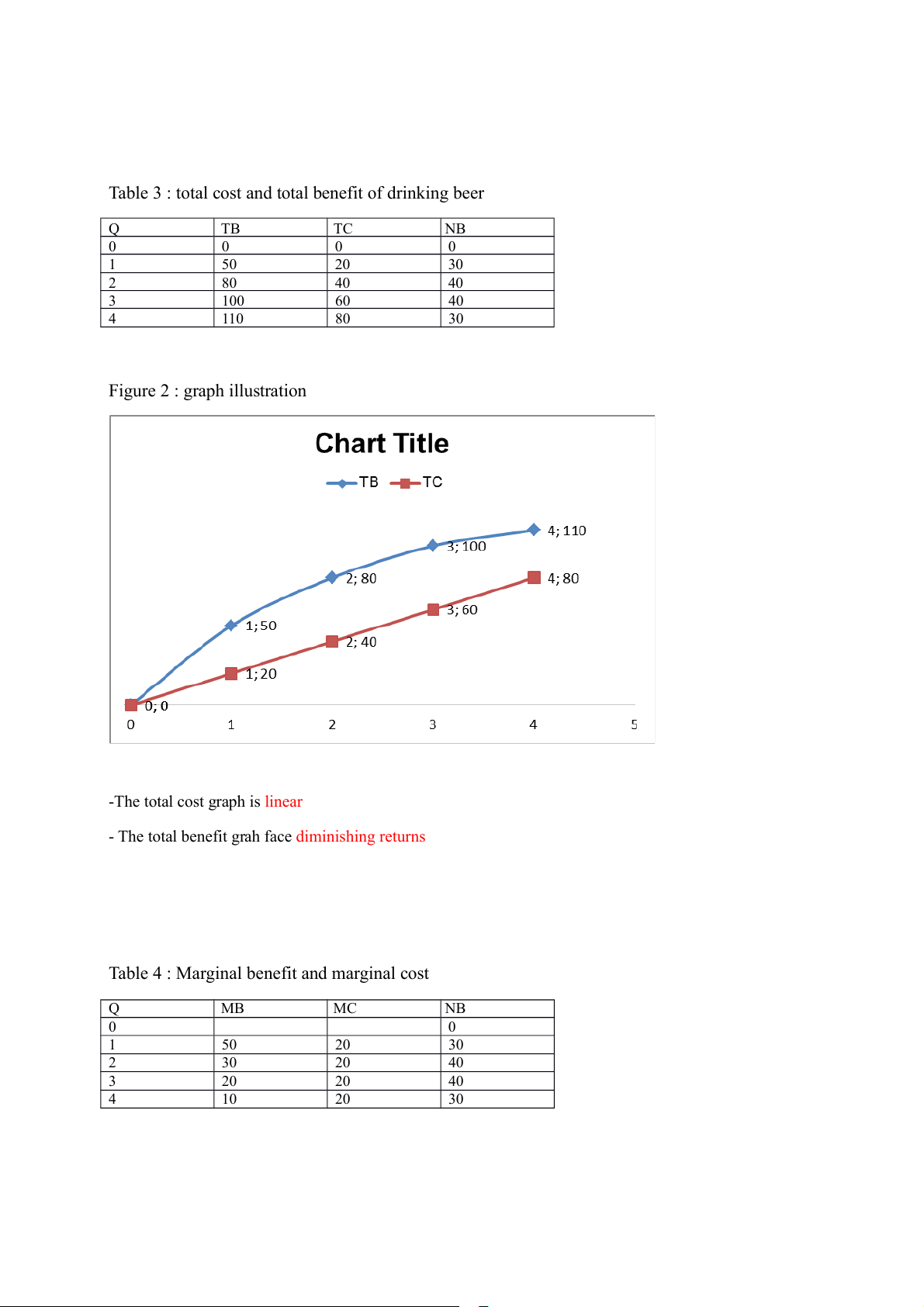
Table 3 : total cost and total benefit of drinking beer Q TB TC NB 0 0 0 0 1 50 20 30 2 80 40 40 3 100 60 40 4 110 80 30 Figure 2 : graph illustration
-The total cost graph is linear
- The total benefit grah face diminishing returns
Table 4 : Marginal benefit and marginal cost Q MB MC NB 0 0 1 50 20 30 2 30 20 40 3 20 20 40 4 10 20 30
YQur car needs to be repaired. You have already paid $500 to have the transmission
fixed, but it still doesn't work properly.You can sell your car "as is" for $2,000. Ifyour
car were fixed, you could sell'it for $2,500.Your car can be fixed with a guarantee for
another $300, Should you repair your car? Why?
Yes we should, as the marginal benefit (2500$) is greater than marginal cost ( 300$)
You have spent $1,000 building a hot-dog stand based on estimates of sales of$2,000.~·
The hot-dog stand is nearly completed, but now you estimate total sales to be only
$800.You can complete the hot-dog stand for another $300. Should you complete the
hot-dog stand? (Assume that the hot dogs cost you nothing.)
Tài liệu liên quan:
-
Chương 3: độ co giãn và các nhân tố ảnh hưởng | Microeconomics | Trường Đại học Quốc tế, Đại học Quốc gia Thành phố Hồ Chí Minh
4 2 -
Microeconomics Syllabus | Microeconomics | Trường Đại học Quốc tế, Đại học Quốc gia Thành phố Hồ Chí Minh
4 2 -
Microeconomics Course Syllabus & Assessment Details | Microeconomics | Trường Đại học Quốc tế, Đại học Quốc gia Thành phố Hồ Chí Minh
4 2 -
Assignment 3 - Elasticity MCQs and Key Concepts | Microeconomics | Trường Đại học Quốc tế, Đại học Quốc gia Thành phố Hồ Chí Minh
4 2 -
Assignment 2 - Economic Equilibrium Analysis of Fridges and Motorcycles | Microeconomics | Trường Đại học Quốc tế, Đại học Quốc gia Thành phố Hồ Chí Minh
4 2