Microecoimics Topic 4 | Microeconomics | Trường Đại học Quốc tế, Đại học Quốc gia Thành phố Hồ Chí Minh
What is implication for the Government in the tax policy? - Luxury taxes are an effective technique to collect money from the wealthy. The reality, however, shows that the demand elasticity assumption for these luxuries goods is incorrect. It also serves as evidence that the government's tax policy is flawed in several ways. - First, the Congress imposed a 10% “luxury tax” which is an inappropriate tax. This resulted in the government losing money and the quantity of supplies declining, harming the economy as a whole. Tài liệu được sưu tầm và soạn thảo dưới dạng file PDF để gửi tới các bạn cùng tham khảo, ôn tập đầy đủ kiến thức, chuẩn bị cho các buổi học thật tốt. Mời bạn đọc đón xem!
Môn: Microeconomics 635 tài liệu
Trường: Trường Đại học Quốc tế, Đại học Quốc gia Thành phố Hồ Chí Minh 1.9 K tài liệu
Tác giả:


Preview text:
Name: Tran Thi Thanh Hang ID: 11222129 Class: EBDB 4
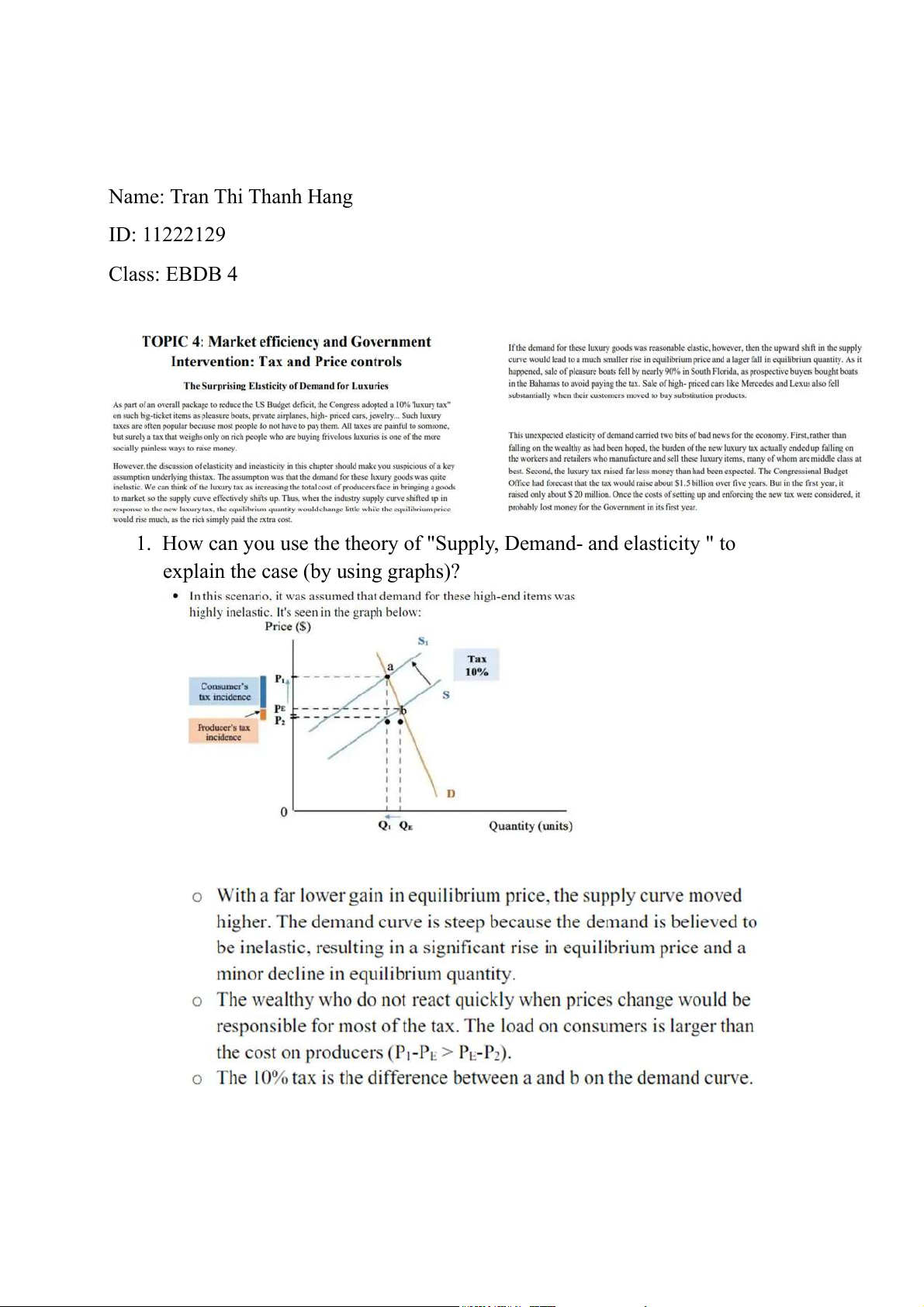
1. How can you use the theory of "Supply, Demand- and elasticity " to
explain the case (by using graphs)?
2. What is implication for the Government in the tax policy?
- Luxury taxes are an effective technique to collect money from the
wealthy. The reality, however, shows that the demand elasticity
assumption for these luxuries goods is incorrect. It also serves as
evidence that the government's tax policy is flawed in several ways.
- First, the Congress imposed a 10% “luxury tax” which is an inappropriate
tax. This resulted in the government losing money and the quantity of
supplies declining, harming the economy as a whole.
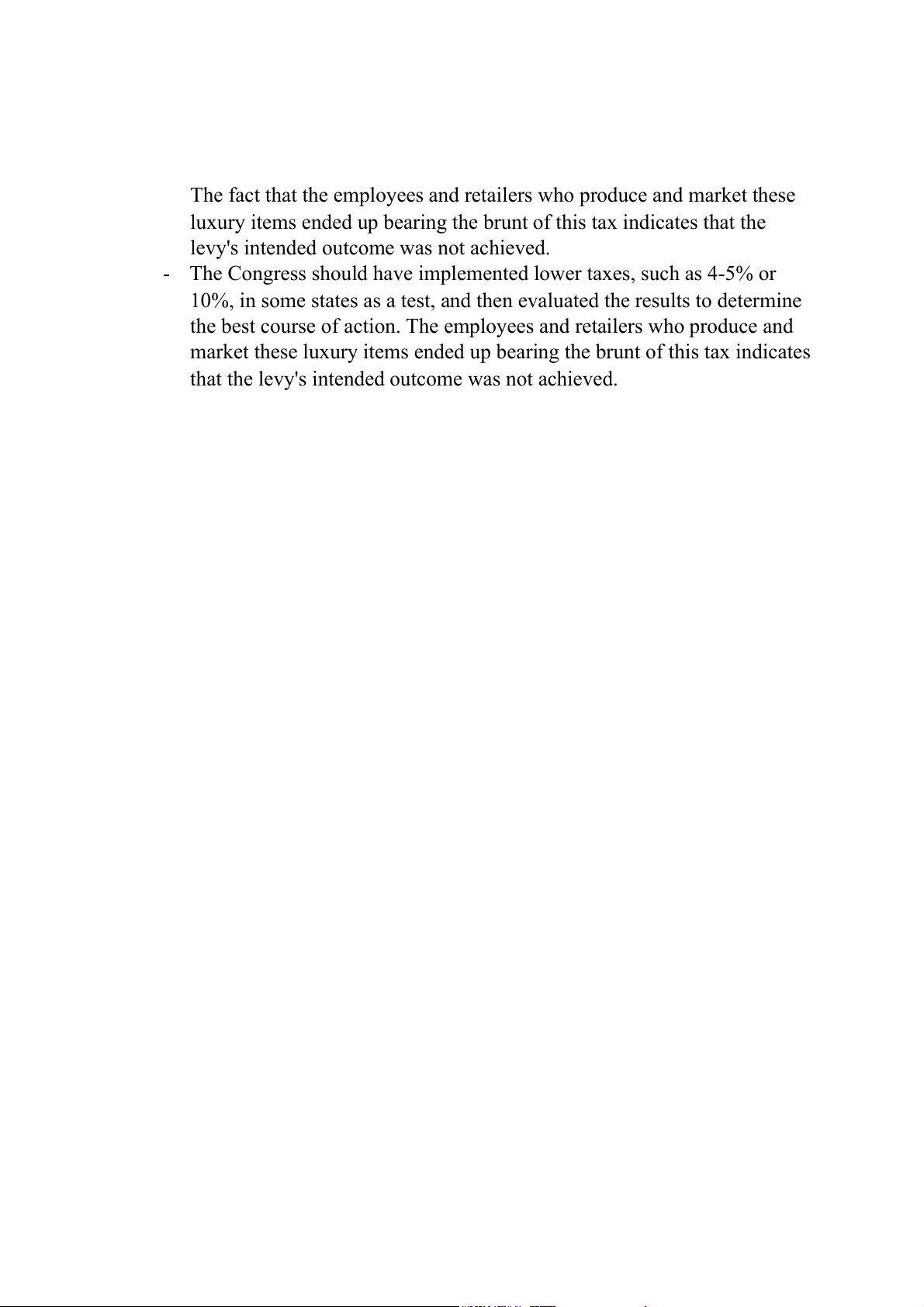
The fact that the employees and retailers who produce and market these
luxury items ended up bearing the brunt of this tax indicates that the
levy's intended outcome was not achieved.
- The Congress should have implemented lower taxes, such as 4-5% or
10%, in some states as a test, and then evaluated the results to determine
the best course of action. The employees and retailers who produce and
market these luxury items ended up bearing the brunt of this tax indicates
that the levy's intended outcome was not achieved.
Tài liệu liên quan:
-
Chương 3: độ co giãn và các nhân tố ảnh hưởng | Microeconomics | Trường Đại học Quốc tế, Đại học Quốc gia Thành phố Hồ Chí Minh
6 3 -
Microeconomics Syllabus | Microeconomics | Trường Đại học Quốc tế, Đại học Quốc gia Thành phố Hồ Chí Minh
5 3 -
Microeconomics Course Syllabus & Assessment Details | Microeconomics | Trường Đại học Quốc tế, Đại học Quốc gia Thành phố Hồ Chí Minh
5 3 -
Assignment 3 - Elasticity MCQs and Key Concepts | Microeconomics | Trường Đại học Quốc tế, Đại học Quốc gia Thành phố Hồ Chí Minh
5 3 -
Assignment 2 - Economic Equilibrium Analysis of Fridges and Motorcycles | Microeconomics | Trường Đại học Quốc tế, Đại học Quốc gia Thành phố Hồ Chí Minh
6 3