Microeconomics 5: Consumer Choice and Utility Maximization | Microeconomics | Trường Đại học Quốc tế, Đại học Quốc gia Thành phố Hồ Chí Minh
Given: Monthly budget = 1,000,000 VND. Meat 𝑋price 𝑝𝑋 = 20,000VND/kg. Potato 𝑌price 𝑝𝑌 = 5,000VND/kg. Utility 𝑈(𝑋, 𝑌) = (𝑋 − 2) 𝑌. a. Budget line Budget equation: 20,000 𝑋 + 5,000 𝑌 = 1,000,000. Divide by 5,000: 4𝑋 + 𝑌 = 200. So 𝑌 = 200 − 4𝑋. Intercepts: 𝑋 = 0 ⇒ 𝑌 = 200kg; 𝑌 = 0 ⇒ 𝑋 = 50kg. Tài liệu được sưu tầm và soạn thảo dưới dạng file PDF để gửi tới các bạn cùng tham khảo, ôn tập đầy đủ kiến thức, chuẩn bị cho các buổi học thật tốt. Mời bạn đọc đón xem!
Môn: Microeconomics 635 tài liệu
Trường: Trường Đại học Quốc tế, Đại học Quốc gia Thành phố Hồ Chí Minh 1.9 K tài liệu
Tác giả:

Preview text:
Problem 1:
Given: A consumer has $60 to spend on two goods 𝑋and 𝑌. Prices: 𝑝𝑋 = $3per
unit, 𝑝𝑌 = $1per unit. Utility function: 𝑈(𝑋, 𝑌) = 𝑋 ⋅ 𝑌. 1. Budget line
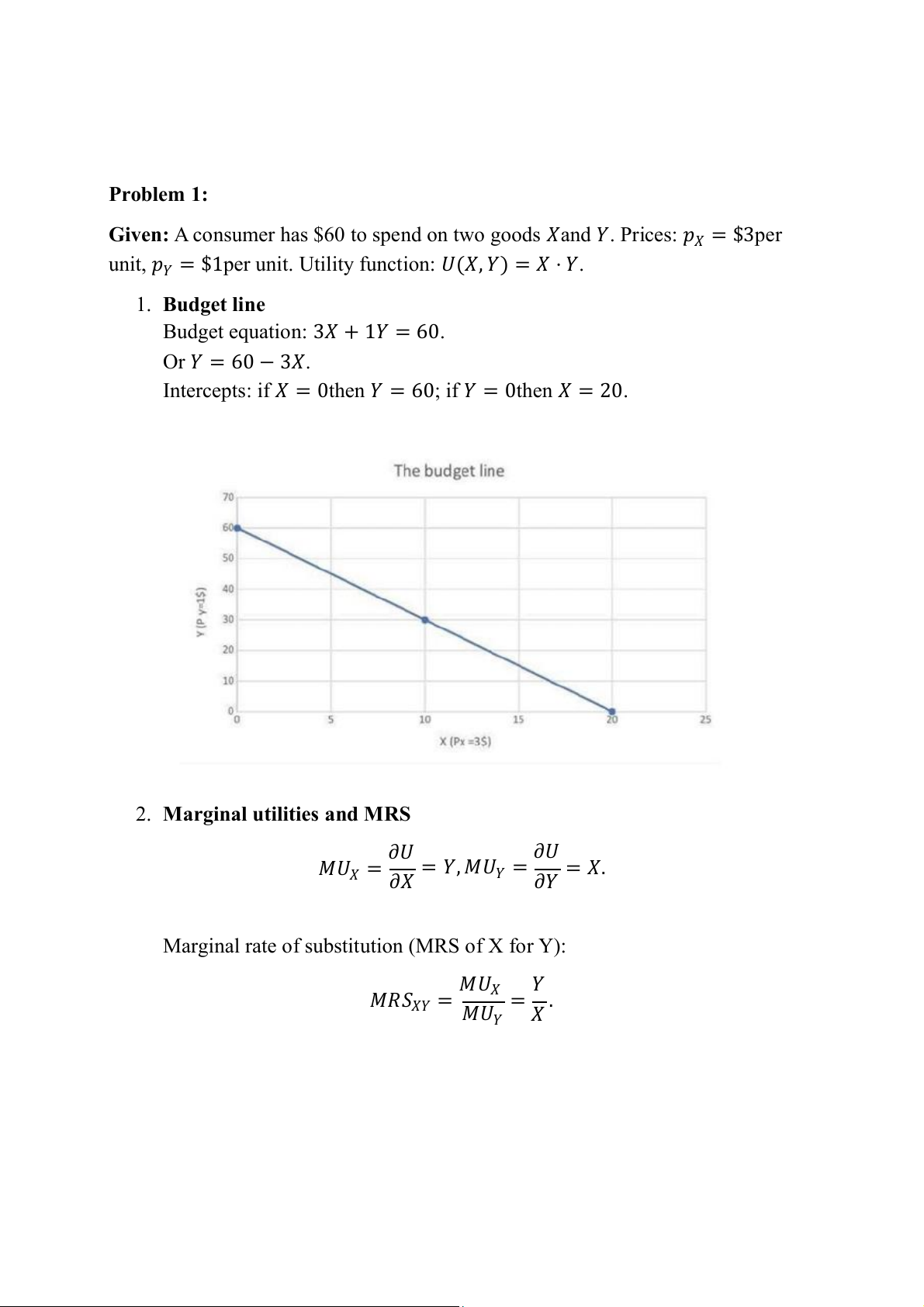
Budget equation: 3𝑋 + 1𝑌 = 60. Or 𝑌 = 60 − 3𝑋.
Intercepts: if 𝑋 = 0then 𝑌 = 6 ; 0 if 𝑌 = 0then 𝑋 = 20. 2. Marginal utilities and MRS ∂𝑈 ∂𝑈 𝑀𝑈 = 𝑌, 𝑀𝑈 𝑋 = = 𝑋. ∂𝑋 𝑌 = ∂𝑌
Marginal rate of substitution (MRS of X for Y): 𝑀𝑈𝑋 𝑌 𝑀𝑅𝑆𝑋𝑌 = = . 𝑀𝑈𝑌 𝑋 3. Utility maximization 𝑝 3
Interior first-order condition: 𝑀𝑅𝑆 𝑋 𝑋𝑌 = = = 3. 𝑝𝑌 1 𝑌
So = 3 ⇒ 𝑌 = 3𝑋. Substitute into budget: 𝑋
3𝑋 + 3𝑋 = 60 ⇒ 6𝑋 = 60 ⇒ 𝑋∗ = 10. Then 𝑌∗ = 3 ⋅ 10 = 30. Problem 2:
Given: Monthly budget = 1,000,000 VND. Meat 𝑋price 𝑝𝑋 = 20,000VND/kg.
Potato 𝑌price 𝑝𝑌 = 5,000VND/kg. Utility 𝑈(𝑋, 𝑌) = (𝑋 − 2) 𝑌. a. Budget line Budget equation:
20,000 𝑋 + 5,000 𝑌 = 1,000,000.
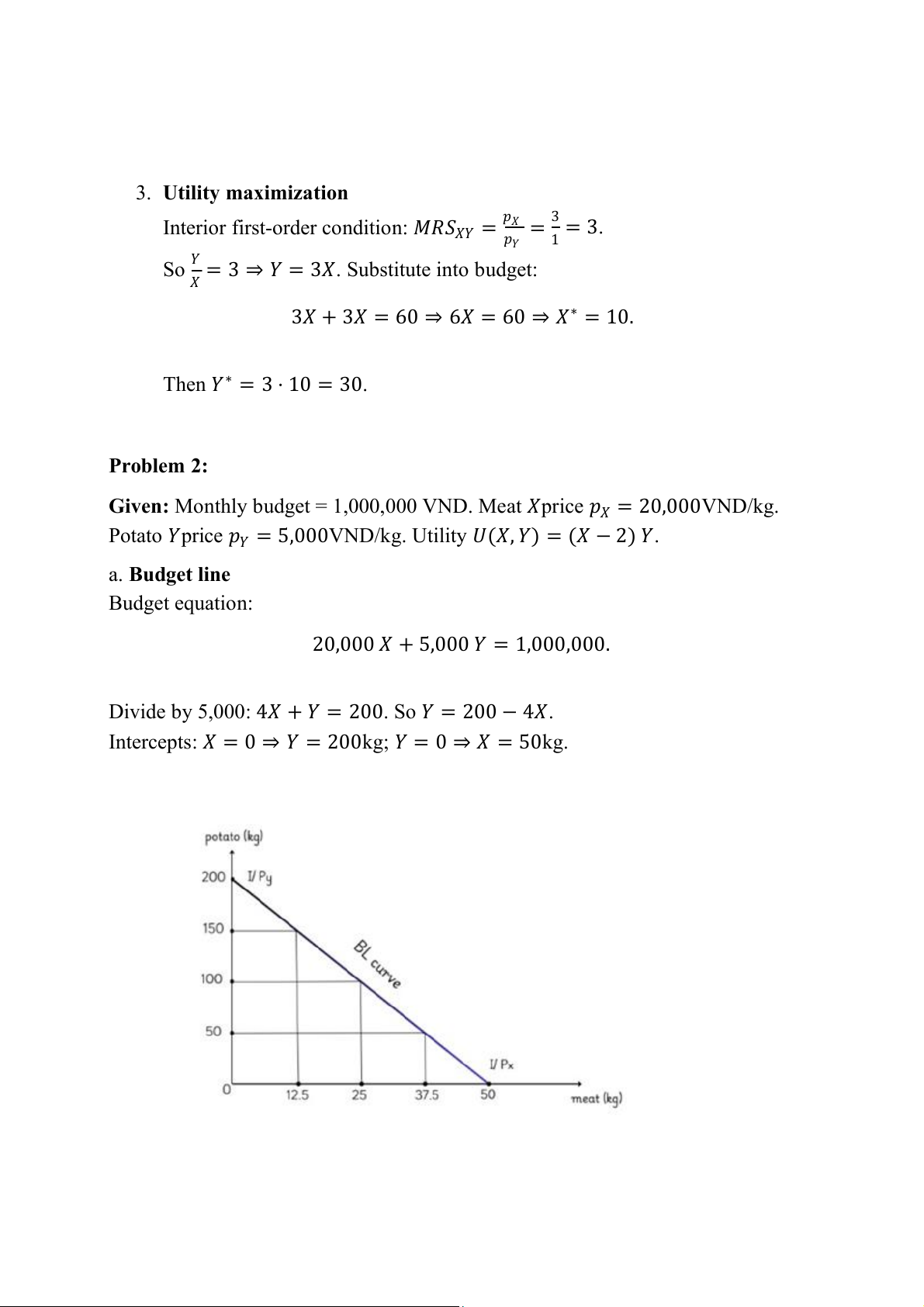
Divide by 5,000: 4𝑋 + 𝑌 = 20 . 0 So 𝑌 = 200 − 4𝑋.
Intercepts: 𝑋 = 0 ⇒ 𝑌 = 200kg; 𝑌 = 0 ⇒ 𝑋 = 50kg.
b. Marginal utilities, MRS and optimum ∂𝑈 ∂𝑈 𝑀𝑈𝑋 = = 𝑌, 𝑀𝑈 = 𝑋 − 2. ∂𝑋 𝑌 = ∂𝑌 𝑀𝑈𝑋 𝑌 𝑀𝑅𝑆𝑋𝑌 = = . 𝑀𝑈𝑌 𝑋 − 2 𝑝 20,000 Set 𝑀𝑅𝑆 = 𝑋 = = 4. So 𝑝𝑌 5,000 𝑌
= 4 ⇒ 𝑌 = 4(𝑋 − 2) = 4𝑋 − 8. 𝑋 − 2
Substitute into budget 4𝑋 + 𝑌 = 200:
4𝑋 + (4𝑋 − 8) = 200 ⇒ 8𝑋 − 8 = 200 ⇒ 8𝑋 = 208 ⇒ 𝑋∗ = 26.
Then 𝑌∗ = 4(26 − 2) = 4 ⋅ 24 = 96.
Tài liệu liên quan:
-
Chương 3: độ co giãn và các nhân tố ảnh hưởng | Microeconomics | Trường Đại học Quốc tế, Đại học Quốc gia Thành phố Hồ Chí Minh
3 2 -
Microeconomics Syllabus | Microeconomics | Trường Đại học Quốc tế, Đại học Quốc gia Thành phố Hồ Chí Minh
3 2 -
Microeconomics Course Syllabus & Assessment Details | Microeconomics | Trường Đại học Quốc tế, Đại học Quốc gia Thành phố Hồ Chí Minh
3 2 -
Assignment 3 - Elasticity MCQs and Key Concepts | Microeconomics | Trường Đại học Quốc tế, Đại học Quốc gia Thành phố Hồ Chí Minh
3 2 -
Assignment 2 - Economic Equilibrium Analysis of Fridges and Motorcycles | Microeconomics | Trường Đại học Quốc tế, Đại học Quốc gia Thành phố Hồ Chí Minh
3 2