Tổng hợp vĩ mô: Tăng trưởng kinh tế, lạm phát và cán cân thương mại môn Kinh tế vĩ mô | Học viện Ngân hàng
Economic growth refers to the increase in the output of final goods and services produced by an economy over a certain period, typically one year. Tài liệu được sưu tầm gồm 15 trang, giúp các bạn nắm vững kiến thức, rèn luyện kỹ năng và đạt được kết quả tốt trong học tập. Mời các bạn đón xem!
Môn: Kinh tế vĩ mô (ECO02A) 135 tài liệu
Trường: Học viện Ngân hàng 2.3 K tài liệu
Tác giả:







Preview text:
Chương I .Cơ sở lý luận. I.
Tăng trưởng kinh tế (Tăng trưởng GDP) 1. Khái niệm
Economic growth refers to the increase in the output of final goods and services
produced by an economy over a certain period, typically one year.
2. Vai trò, ý nghĩa của tăng trưởng kinh tế.
The economic growth index reflects the level of development and performance of
the economy, and is an important basis for assessing living standards and social
welfare. Economic growth contributes to job creation, unemployment reduction, and
improvement of people's income and quality of life. At the same time, it provides the
basis for policy making and demonstrates the country's position in the international arena.
3. Chỉ tiêu đo lường (GDP, GNP).
To evaluate how much an economy has grown, economists typically use two
main indicators: GDP (Gross Domestic Product) and GNP (Gross National Product).
GDP-Gross Domestic Product (Real GDP growth rate): is the total value of all
goods and services produced within a country in a given period of time (usually a year or a quarter)
GDP = C + I + G + NX
GDP∈currentyear−GDP∈previousyear
Economic Growth Rate =
GDP∈previousyear
GNP- Gross National Product: is the total value of all goods and services produced
by a country's citizens and businesses in a given period of time, regardless of where they are produced
GNP= GDP+Net income from abroad.
( Net income from abroad= income earned by nationals overseas-income earned by
foreigners domestically).
GNP∈current year−GNP∈previousyear
Economic Growth Rate =
GNP∈previousyear II. Lạm phát a) Khái niệm:
Inflation is the general increase in prices of goods and services in an economy over
a period of time, resulting in a decrease in the real value of money. b) Vai trò, ý nghĩa
The inflation index reflects the average increase in prices of goods and services in
the economy over time, thereby showing how much money has depreciated and how
people's purchasing power has changed. This is an important indicator to assess the
level of macroeconomic stability and the effectiveness of management policies such
as monetary and fiscal. Inflation at a reasonable level can promote growth, but if it is
too high or too low, it will pose risks to the economy. c) Thước đo:
Inflation is measured by the percentage increase in the price of a typical basket
of goods and services over a period of time. There are several popular indicators such as:
- CPI (Consumer Price Index): This is the most common measure of inflation. It
measures the average change in prices of consumer goods and services that households typically buy
- PPI (Producer Price Index): It measures the change in prices from the producer side,
which indirectly affects the CPI.
-GDP Deflator: It measures the general price level of all domestically produced goods
and services. It reflects inflation across the economy. 3. Cán cân thương mại: a) Khái niệm:
- Export: Goods and services produced domestically that are sold abroad
- Imports: Goods and services produced in foreign countries and sold domestically
- Trade balance (net exports): reflects the difference between the total export
value and total import value of a country's goods in a certain period of time b) vai trò, ý nghĩa:
This is one of the important components of the balance of payments and is used to
evaluate the economy's production capacity, level of integration and competitiveness in the international market.
A surplus trade balance shows that the country is exporting more, thereby
accumulating foreign currency, improving national reserves and supporting a stable
exchange rate; on the contrary, a prolonged trade deficit can lead to increased foreign
debt and pressure on the exchange rate. c) Chỉ tiêu đo lường
The trade balance is affected by many factors such as: exchange rate - domestic
currency depreciation increases exports and reduces imports; domestic and
international income – as domestic income increases, demand for imports may
increase, creating deficit pressure; prices and production costs – affecting the
competitiveness of domestic goods; and trade and tariff policies – tariff barriers, free
trade agreements can promote exports or restrict imports
-Formula: Net exports = exports - imports 4. Chính sách tiền tệ
a) Khái niệm và phân loại
Concept: Monetary Policy is a macroeconomic management tool used by the
central bank to control the money supply, interest rates and credit in the economy,
thereby achieving the goals of price stability, economic growth, and full employment.
Classification: including expansionary monetary policy and tight monetary policy
- Expansionary monetary policy (loosening): Increase money supply, lower
interest rates to stimulate economic demand
- Contractionary monetary policy: Reduce money supply, increase interest rates to control inflation b) Vai trò, mục tiêu
Monetary policy plays a central role in regulating the macro economy. Monetary
policy helps the central bank regulate interest rates, money supply and credit to
control inflation, promote growth and stabilize the economy. By adjusting borrowing
costs and liquidity, it affects consumption, investment, exchange rates and financial
markets. As a result, monetary policy contributes to stabilizing the economic cycle
and supporting sustainable development.
c) Công cụ hỗ trợ chính sách tiền tệ:
The central bank uses a number of main tools to implement monetary policy: Công cụ Tác động chính Open market operations (OMO)
Buying/selling bonds to adjust money supply
Discount rate charged on loans to banks
Adjusting credit costs, affecting investment Reserve requirements
Controlling the lending capacity of commercial banks 5. Chính sách tài khóa a) Khái niệm:
Fiscal policy refers to how the government uses spending and taxes to influence the economy
Fiscal policy includes 2 types: Expansionary fiscal policy and contractionary fiscal policy
- Expansionary fiscal policy: Increase spending, reduce taxes, stimulate the economy
- Constrictive fiscal policy: Reduce spending, increase taxes, control inflation, reduce public debt b) Vai trò, mục tiêu
Fiscal policy is a macroeconomic tool used by the government to regulate the
economy through taxes and public spending. The main goals of this policy are to
promote economic growth, stabilize prices, create jobs and ensure fair income
distribution. With an important role in controlling aggregate demand, fiscal policy
helps the government respond flexibly to economic fluctuations: stimulate demand
during recessions and control inflation when the economy is hot. At the same time,
through public investment and social spending, fiscal policy contributes to improving
the quality of infrastructure, social security and long-term competitiveness of the economy. c) Công cụ hỗ trợ
Fiscal policy is implemented through two main groups of tools: Group of tools Specific examples Public spending
Investment in infrastructure, health, education, social security Taxation
Income tax, VAT, corporate tax, tax exemptions
Chương II. Thực trạng I.
Tăng trưởng kinh tế (tăng trưởng GDP)
The chart illustrates Germany's Gross Domestic Product (GDP) in current
US dollars (in trillions) from 2012 to 2023, based on data from the World Bank and
the OECD. Over this period, Germany's GDP shows fluctuations, reflecting changes
in the national economy as well as global influences. Notably, the period from 2017 to
2018 saw a significant increase in GDP, rising from approximately $3.77 trillion to
over $4.06 trillion. This marked one of the strongest growth phases in over a decade,
highlighting Germany’s solid economic recovery and development following a slowdown in 2015.
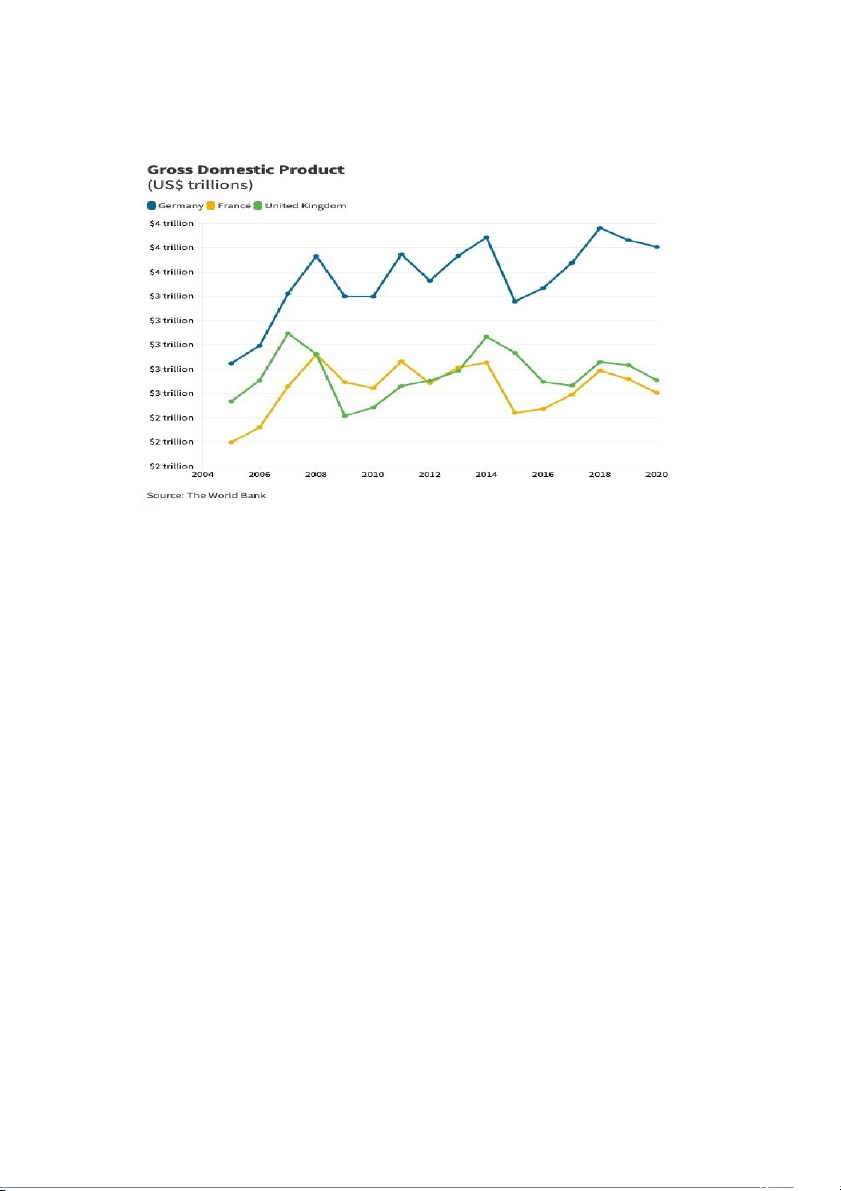
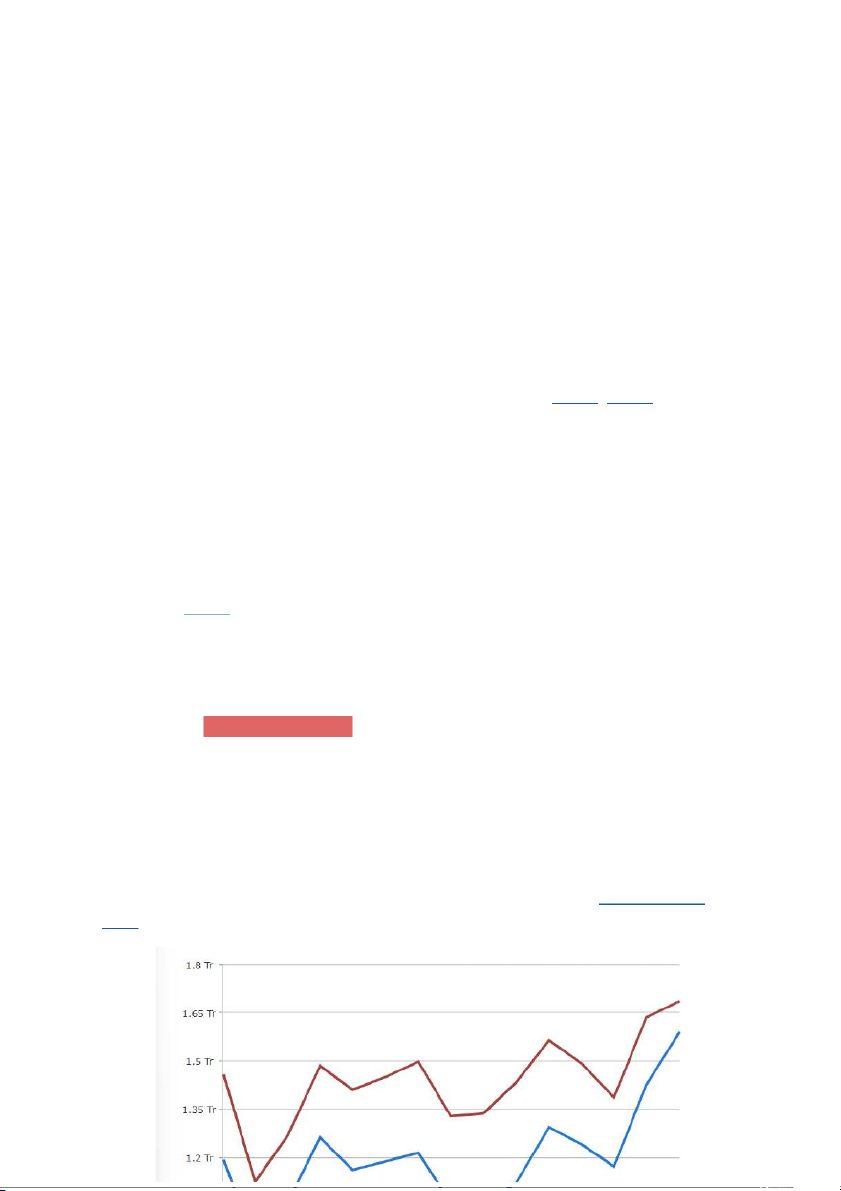
The line chart compares the GDP (in trillion USD) of Germany, France and the
United Kingdom between 2004 and 2020. During 2017-2018, Germany maintained its
clear lead over the other two major European economies. While France and the UK
exhibited more fluctuation and slower growth, Germany’s GDP remained above $4
trillion in both 2017 and 2018. This highlights Germany’s position as the dominant
economic force in the European Union, with a diversified economy and a strong
export-oriented industrial base.
This change reflects the combined impact of components of spending patterns, as
well as external factors such as global trade tensions and political uncertainty in Europe.
During the period 2017-2018, domestic consumption played a key role in
promoting the economic growth of the Federal Republic of Germany. According to
data from the German Federal Statistical Office, household consumption expenditure
increased by 1.9% in 2017 and 1.2% in 2018, respectively - a significant contribution
to the gross domestic product (GDP). The steady increase in disposable income and
low unemployment rate are fundamental factors that contribute to strengthening
domestic purchasing power. At the end of 2017, the average unemployment rate in
Germany continued to fall to a record low of 5.7% and by 2018 this figure was only
5.2%, with the total number of employed people reaching its highest level since the
period of national reunification with more than 44 million people participating in the
labor force. At the same time, real wages continued to increase slightly, accordingly,
the national minimum wage increased by 62 euros per month compared to the
previous year, i.e. 4.29%. This increase was larger than the CPI in 2016 of 1.5%, so
workers had more purchasing power over the past year, especially the demand for
buying houses, renovating, and interior decoration increased sharply during this
period. Thereby contributing to growth in the retail, construction materials, and furniture industries. ( ngu ồn)
Private investment, especially in the machinery, equipment, and construction
sectors, contributed significantly to Germany's economic growth during this period.
Specifically, in 2017, gross fixed capital in machinery and equipment increased by
3.5%, and gross fixed capital formation in construction increased by 2.6%. Compared
to 2016, gross fixed capital formation increased by 3.6%. In particular, private
investment continued to increase in 2018 with gross fixed capital formation in
machinery and equipment increasing by 4.5%, and gross fixed capital formation in
construction rising by 3.0%. The total value of gross fixed capital formation adjusted
by price increased by 4.8% compared to the same period in 2017. nguồn, nguồn
In addition, government spending was one of the stabilizing factors and
contributed positively to Germany's GDP growth in both years. In 2017, Germany's
government spending reached 1,676.5 billion EUR, an increase of about 4.3%
compared to the previous year, accounting for about 44.6% of GDP. In 2018, this
figure continued to increase to 1,811.6 billion EUR, accounting for about 44.7% of
GDP. This increase reflects the government's efforts to maintain stable aggregate
demand through expanding public investment, especially in areas such as social
security (accounting for ~43% of total expenditure), health (~17%) and education
(~10%). In addition, spending on infrastructure, immigration management and defense
was also increased to meet the needs of sustainable development and social stability. NGUỒN SỐ LIỆU
In the period 2017–2018, import and export activities had a clear impact on
Germany's economic growth. According to the German Federal Statistical Office
(Destatis), Germany's export turnover in 2017 reached about 1,279 billion euros, an
increase of 6.2% compared to the previous year, contributing to GDP growth of 2.5%,
the highest level in the past six years. However, in 2018, exports increased slightly by
3%, reaching about 1,317 billion euros, while imports increased faster, about 5.7%, to
1,090 billion euros, reducing the trade surplus - an important factor for Germany's
growth model. Therefore, in the same year, Germany's GDP growth decreased to 1.5%. Nguồn: II. Lạm phát:
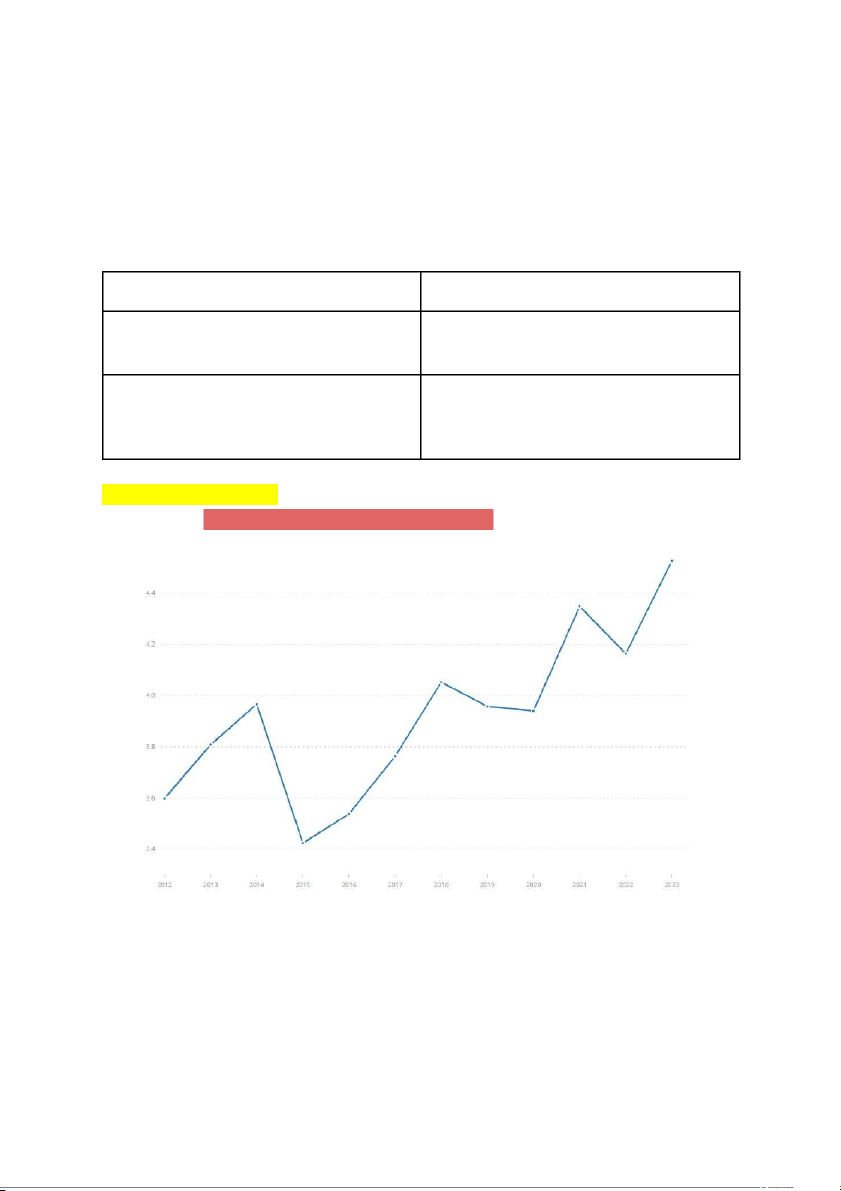
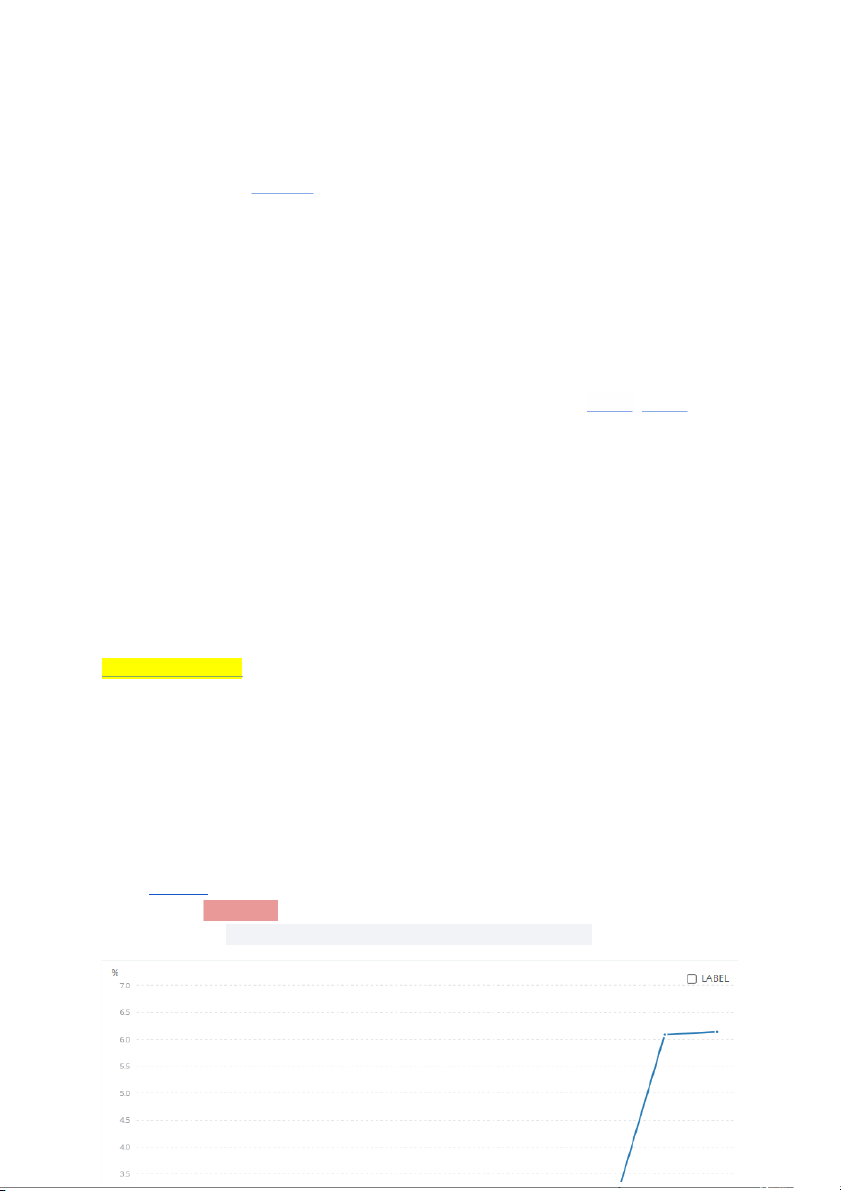
Inflation, GDP deflator (annual %) - Germany
In 2017 and 2018, the German economy witnessed remarkable fluctuations in
the consumer price index (CPI), clearly reflected in the annual inflation rate. From the
chart above, we can see that the inflation rate according to the German GDP deflator
in the period 2017-2018 remained low and stable. Specifically, the average inflation
rate in Germany in 2017 reached 1.5% and continued to increase slightly to 1.9% in 2018.
In 2017, inflation remained relatively stable, with the highest rate recorded in
April (2.0%) and the lowest in March (1.4%). However, starting from the second
quarter of 2018, inflation began to rise more sharply. Notably, in September 2018, the
inflation rate reached 2.3%—the highest level since November 2011. , nguồn nguồn
The main reason is the sharp increase in energy prices - "short-term
momentum". In the context of high world oil prices, Germany - a large industrial
country heavily dependent on energy imports - has been significantly affected.
According to Destatis, in 2018, energy prices increased by 4.9% compared to 2017, a
larger increase than a year earlier (2017: +3.1% compared to 2016) nguồn, with
September 2018 alone increasing by 7.7%, of which heating oil prices increased by
35.6% and fuel prices increased by 13.0%. The main reason is the recovery in global
oil prices and increased energy demand, causing production and living costs to
increase, contributing to the increase in inflation. This reflects cost-push inflation (ie
increased input costs (energy, transportation) increase the selling price of products and services).
In addition, the growth of domestic consumption also contributed to the
increase in the inflation rate. In the period 2017–2018, the German labor market
recorded a clear tightening, with the unemployment rate falling to a record low (as
mentioned in the GDP growth section), leading to upward pressure on wages. This
increase in income has boosted domestic consumption. According to the German
Federal Statistical Office (Destatis), household final consumption expenditure
increased by 3.6% in 2017, the highest increase since 1994. However, real wage nguồn
growth is still limited due to slow productivity growth and cautious collective
bargaining, so inflation does not explode strongly but only remains stable at around
1.5–1.9%. This makes domestic consumption demand not strong enough to create demand-pull inflation.
Food prices also made a substantial contribution to inflation, with an average
increase of 3.0% in 2017 and 2.8% in September 2018. Certain food items saw
particularly high price hikes, such as edible oils and fats (+21.4% in 2017; +14.9% in
March 2018), dairy products and eggs (+9.7% in 2017; +10.4% in March 2018),
vegetables (+12.3%), and potatoes (+14.6%) in September 2018.
In addition, housing rental costs—a component of service prices—rose steadily
by around 1.5–1.6% annually. Interestingly, in September 2018, education costs
decreased by 11.4% due to tuition-free policies implemented in several federal states,
which helped ease inflationary pressure in the service sector. nguồn, nguồn
During 2017–2018, the European Central Bank’s (ECB) loose monetary policy,
especially the asset purchase program (APP), contributed significantly to maintaining
stable inflation in Germany, close to the 2% target. The monetary policy was
extremely loose, but the spillover effect was uneven. The ECB maintained a 0%
interest rate and asset purchase program (QE) in both years, aiming to push Eurozone
inflation close to 2%. However, in Germany – where people tend to save a lot – the
stimulus to consumption from low interest rates was not as strong as in other countries in the bloc.nguồn
In summary, inflation in Germany during 2017–2018 showed a gradual upward
trend, peaking in late 2018. The increase in energy and food prices were the main
contributing factors, reflecting significant changes in household living costs and
posing challenges for the federal government's monetary and price control policies. III. Cán cân thương mại
During 2017–2018, Germany continued to assert its position as the largest
economy in Europe and one of the world's leading exporters. In 2017, the German
economy achieved an impressive growth rate of 2.5%, the highest since 2011, mainly
due to strong exports and steady growth in household consumption. However, in
2018, GDP growth slowed to 1.5%, due to external uncertainties. However,
international trade continues to play a central role in Germany's economic structure,
with exports accounting for approximately 42.6% of GDP in 2018 (World Bank, 2020). Specifically: link
According to data from the World Bank (WITS), in 2017, the trade surplus
reached approximately 310.9 billion USD, strong export growth coupled with
moderate imports created a significant difference between the two trading directions.
Specifically, Germany's export turnover reached approximately 1,430.5 billion USD
(FOB), while imports were at 1,119.6 billion USD (CIF). This shows a positive trade
balance, reflecting the superior competitiveness of German goods in the world market.
By 2018, exports increased to 1,562.4 billion USD, an increase of about 9.2% over the
previous year; imports also increased to 1,292.7 billion USD, corresponding to an
increase of about 15.5%. Although total exports continued to grow, the import growth
rate was even higher, reflecting a recovery in domestic consumption and increased
domestic investment, the trade surplus narrowed slightly to around $269.7 billion. In
addition, global uncertainties such as the US-China trade war and Brexit reduced
demand for exports; economic weakness in major trading partners such as Italy,
Greece and China also affected German exports. In addition, the strengthening of the
euro in the first half of 2018 made German exports more expensive, reducing their
price competitiveness in the international market. However, this surplus is still among
the highest in the world, demonstrating the superior competitiveness of German goods.
The United States was Germany's largest export partner in both years,
accounting for around 8.6–8.9% (USD 126.7 billion) of total turnover, emphasizing
the strategic importance of the US market in the country's trade orientation. In
addition, there are countries such as France (8.18–7.96%), and China (6.83–7.07%). In
addition, Germany also imports mainly from countries with traditional and strategic
trade relationships, reflecting the dependence of the German economy on global
supply chains. In 2017-2018, China was Germany's largest import partner, accounting
for about 8.9-10.24% of total imports, with a value of about 108.6 billion USD. This
was followed by the Netherlands (7.76-8.12%) and France (5.98-6.17%), two partners
in the European Union, emphasizing the important role of the EU's internal market for Germany's trade activities.
With a diverse import-export portfolio, including more than 4,400 items,
Germany shows a deeply industrialized economy and is highly integrated into the
global supply chain. The export structure focuses on high-value-added products such
as automobiles, industrial machinery, electrical equipment and chemicals such as
Automobiles with reciprocating piston engines d, Automobiles with diesel engines
displacing more, and Germany exported Other medicaments of mixed or unmixed
products. In contrast, Germany imports mainly in the fields of electronic components,
machinery, transport equipment and consumer goods such as Petroleum oils and oils
obtained from bituminous, Natural gas in gaseous state, Human and animal blood, microbial cultures; tox…
In summary, during 2017-2018, Germany continued to maintain a high trade
surplus but slightly decreased in 2018. The main export items include cars, machinery,
industrial equipment and chemicals. In contrast, Germany imports a lot of raw
materials, consumer goods and high-tech components from China, the Netherlands
and EU countries. Although the economy still maintains a large trade surplus, the
decline in growth rate and pressure from the international environment show signs of
adjustment in the development model that depends heavily on exports. IV.
Chính sách tiền tệ và tài khóa:
*Bối cảnh kinh tế và tài chính:
As analyzed above, in the period 2017-2018, the German economy recorded
stable growth, with GDP increasing by about 2.2% in 2017 and 1.5% in 2018, mainly
due to strong exports and increased domestic consumption. Inflation averaged about
1.7% in 2017 and 1.9% in 2018, putting pressure on the European Central Bank
(ECB) monetary policy to adjust interest rates. Germany maintained a budget surplus
and the public debt/GDP ratio fell below 60% (source), allowing the government to
invest in infrastructure and social programs. The global economic context recovered
strongly, but also faced political and trade uncertainties, especially the trade wars
between the US and China. These factors have influenced the ECB's loose monetary
policy and the German government's fiscal measures to promote sustainable growth in an uncertain global context. 1. Chính sách tiền tệ:
Since 1999, Germany has been a founding member of the Eurozone, which
uses the euro (EUR) as its common currency. This means that Germany no longer has
independent control over its monetary policy, having fully delegated it to the
European Central Bank (ECB). Thus, Germany cannot unilaterally adjust interest
rates, issue currency, or control inflation, and must follow the collective policy set by the ECB.
Các biện pháp chính sách
During 2017–2018, the European Central Bank (ECB) continued to maintain
an accommodative monetary policy to promote economic recovery and bring inflation
back close to the 2% target, in the context of uncertain growth in the euro area. Specifically:
The ECB kept the refinancing rate unchanged at 0.00%, the overnight lending
rate at 0.25% and the central bank deposit rate at -0.40%. This policy was applied
steadily from March 2016 to the end of 2018 (ECB, Press Release on December 14,
2017). This ultra-low interest rate is aimed at stimulating credit, reducing borrowing
costs for businesses and households, thereby promoting investment and domestic
consumption in countries in the region, including Germany.nguồn
The ECB also continued its asset purchase programme (APP), initially at a
monthly rate of €60 billion. From January 2018, the rate was reduced to €30 billion
and then to €15 billion from October. In December 2018, the ECB officially ended its
net asset purchases but continued to reinvest maturing funds to stabilize the bond
market (ECB, Monetary Policy Report, 2018). This large-scale injection of money
helped lower long-term interest rates, support financial markets and stabilize the
investment environment.nguồn
Tác động của chính sách tới nền kinh tế
During 2017–2018, the ECB’s loose monetary policy brought many
convenient benefits to the German economy. The operating base maintained at 0%
and the large-scale asset purchase program (QE) contributed to keeping the euro low,
thereby providing exporters – one of the main pillars of German economic growth. At
the same time, low borrowing costs facilitated business investment, especially in the
real estate and manufacturing sectors, as well as household consumption. In addition,
the ECB’s boom policy still helped stabilize the euro area’s financial system,
minimize the risk of crisis contagion from resource-poor countries, and indirectly
strengthen the stable macroeconomic environment for Germany. nguồn
However, the ultra-loose monetary policy also caused many consequences for
the German economy. Slow interest rates have led to a sharp decline in bond yields,
which has negatively affected the banking system, insurance companies and especially
pensions – which depend on long-term investment returns nguồn . Many German
financial institutions have struggled with low returns amid interest rates. Moreover,
the influx of cheap money into real estate and asset markets has fueled a surge in
house prices, especially in major cities such as Berlin and Munich, raising the risk of
asset bubbles nguồn. The IMF (2018) nguồn report warned that house prices in some
areas of Germany were overvalued. In addition, the ECB’s overall policy stance has
provided stability to Germany’s domestic situation, as the country is growing strongly
and does not need further stimulus, leading to domestic criticism that the ECB has
kept its policy accommodative for too long, endangering the detection and economic imbalances. 2. Chính sách tài khóa: Các biện pháp chính sách
During 2017–2018, the German government implemented a mildly expansionary
fiscal policy, focusing on increasing public spending to maintain stable growth and
improve the quality of life. Notably, the federal budget strongly prioritized education,
research and infrastructure. Specifically:
The government invested around 3.5 billion euros in digital education through
the "DigitalPakt Schule" program, in addition to 2 billion euros to expand the full-day
school system and nearly 3.5 billion euros to support preschool education to reduce
the financial burden on young families (European Commission, Education and
Training Monitor 2018 – Germany)nguồn .
In addition to education, the government also increased spending on
infrastructure such as transport and social housing – partly to cope with the influx of
immigrants and the housing shortage in major cities nguồn. The government has
taken steps to strengthen the social security system, including improving health
services and support for low-income earners. According to Caixabank Research
(2018), these public investments not only directly support the economy but also
contribute to long-term productivity growth through improvements in human capital and productive capacity.
Along with increased spending, Germany has also adjusted its tax policy to
stimulate domestic consumption and reduce the financial burden on households and
businesses. The 2018–2022 medium-term budget plan shows that the government
plans to reduce taxes and social security contributions by 2.8% of GDP over the
period, or about 0.6% of GDP per year (S&P Global, 2018). Measures include
increasing the personal income tax exemption, adjusting the tax schedule to avoid
“bracket creep,” and cutting unemployment insurance contributions. These reforms
help increase people's disposable income, thereby boosting consumption - the main
factor keeping Germany's GDP growth stable in the context of slowing exports. At the
same time, businesses have reduced social contribution costs, creating conditions for
investment and production expansion. The combined impact of tax policy is assessed
by the IMF as contributing to a better balance between the growth drivers of the
German economy, instead of being overly dependent on exports. nguồn
Tác động của chính sách
Germany's prudent but flexible fiscal policy in 2017–2018 contributed to
stable economic growth, with GDP increasing by 2.5% in 2017 and 1.5% in 2018.
Public spending was directed to key areas such as education, infrastructure and social
security, helping to improve productivity and support domestic consumption. At the
same time, maintaining a budget surplus (1.3% of GDP in 2017) nguồn and
effectively controlling public debt strengthened the country's financial position,
creating room to respond to future risks. This policy also contributed to a more stable
labor market, with the unemployment rate falling to its lowest level in decades
(around 3.4% in 2018 - as analyzed in the section "Economic growth"), reflecting
good labor absorption in the context of positive growth.
Despite its considerable fiscal space, Germany has been criticized for failing
to take advantage of opportunities to increase public investment to boost long-term
growth. Institutions such as the IMF and the European Commission have warned that
a lack of decisive spending on infrastructure, innovation and digitalization could limit
sustainable growth potential and leave the economy overly reliant on exports. In
addition, inflation remains below the ECB’s target, suggesting that domestic demand
is not being sufficiently stimulated.nguồn, nguồn
Chương III. Nhận định và khuyến nghị: 1. Tăng trưởng GDP:
Overall, the period from 2017-2018 saw a significant increase in Germany's
GDP, although there were signs of slowing down compared to the previous year. In
2017, the German economy grew by 2.5% – the highest rate in six years – driven by
strong domestic demand, stable exports, and a solid labor market. However, entering
2018, the growth rate slowed to around 1.5%, reflecting challenges from the
international environment such as global trade tensions, Brexit uncertainty, and the
impact of US protectionist policies. In addition, internal factors also played a role,
such as Germany's failure to fully exploit its long-term potential due to a lack of
investment in infrastructure, particularly digital technology (causing the economy to
lag somewhat in the Industry 4.0 revolution), and insufficient focus on innovation and
startups. Investment capital was largely concentrated in a few large-scale transactions,
making it difficult for small, innovative startup projects to access resources.
To support sustainable growth in the coming years, the German government
should focus on stimulating public investment, particularly in transport and digital
infrastructure. Simultaneously, improving conditions for the private sector – through
tax reforms and reducing administrative barriers – will provide further impetus for
growth. Given the volatile external landscape, Germany should also diversify export
markets and strengthen trade relations with partners outside Europe, aiming to reduce
dependence on traditional markets and enhance the economy's resilience. 2. Lạm phát
Inflation in Germany in 2017–2018, although stable, still has some potential
limitations. Inflation below 2% is considered by the ECB and Germany to be stable
and acceptable in the context of economic recovery after the Eurozone sovereign debt
crisis. However, persistently low inflation may be a sign of weak demand, and is not
enough to encourage investment or reduce real debt. In addition, inflation is mainly
driven by external factors such as energy prices, while core inflation (excluding
energy and food) remains low, reflecting the lack of sustainability in domestic price
pressures. In addition, the heavy reliance on the ECB's loose monetary policy also
shows that the domestic fiscal policy space has not been effectively utilized to create a
natural price increase momentum through consumption and investment.
To improve the quality and sustainability of future inflation, Germany should
strengthen the role of fiscal policy by promoting public investment, especially in
digital infrastructure and the energy transition. At the same time, it is necessary to
develop policies that support a more flexible labor market, encourage productivity and
wage growth, thereby boosting domestic demand. In the long term, reducing
dependence on the ECB's monetary policy through strengthening the domestic
economy will help Germany regulate inflation more effectively and be more proactive
in responding to external shocks. 3. Cán cân thương mại
In 2017–2018, the trade surplus continued to be the mainstay of German
economic growth, contributing to maintaining a stable GDP growth rate (2.5% in 2017
and 1.5% in 2018). Strong exports helped maintain production and create jobs in key
industries such as automobiles, machinery and chemicals. As a result, the
unemployment rate fell to its lowest level in many years (around 3.4% in 2018), while
increasing tax revenues, creating favorable conditions for fiscal policy and social security.
However, the heavy dependence on exports also makes the German economy
vulnerable to external fluctuations such as trade wars, Brexit or China's slow growth.
In addition, the consistently high trade surplus has led to criticism from major partners
such as the US and the EU, who believe that the country has not sufficiently promoted
domestic consumption and investment. This not only creates imbalances in the global
macro balance but also poses risks of trade tensions and future growth decline.
To address these constraints, Germany needs to move towards a more balanced
growth model by promoting public investment, especially in infrastructure and
technological innovation, to increase domestic productivity and reduce dependence on
exports. At the same time, it is necessary to expand export markets to regions less
affected by geopolitical risks, such as Southeast Asia or Africa. In addition,
developing domestic value chains and supporting small and medium-sized enterprises
to participate in the global market are also important directions to increase the
sustainable competitiveness of German goods.
4. Chính sách tài khóa và chính sách tiền tệ
During 2017-2018, Germany’s monetary and fiscal policies interacted closely,
supporting each other to achieve economic goals. The European Central Bank’s
(ECB) loose monetary policy, with low interest rates and an asset purchase program,
facilitated the German government’s implementation of expansionary fiscal measures.
Specifically, the budget surplus allowed the government to invest in infrastructure and
social programs, thereby boosting domestic consumption and investment. This
combination helped maintain stable economic growth while controlling inflation at a
reasonable level, creating a positive economic environment for businesses and
consumers (OECD, 2018).nguồn
However, this interaction also poses some challenges. Maintaining a loose
monetary policy for a long time may lead to inflation risks in the future, while
expansionary fiscal measures may increase public debt if not carefully managed.
Therefore, assessing the effectiveness of the combination of these two policies is
important to ensure the long-term sustainability of the German economy.
In summary, Germany's monetary and fiscal policies in 2017-2018 achieved
many successes, including stable economic growth and controlled inflation. However,
there are also challenges that need to be faced, such as inflation risks and rising public
debt. To ensure future sustainability, policy recommendations include adjusting
monetary policy more flexibly as the economy recovers, while maintaining
responsible fiscal measures to support growth without increasing public debt. Close
monitoring of economic indicators and timely policy adjustments will be key to
maintaining the stability and growth of the German economy.
Tài liệu liên quan:
-
Thực trạng tăng trưởng và chính sách tài khoá giai đoạn 2019-2022 của việt nam môn kinh tế vĩ mô| Học viện Ngân hàng
61 31 -
Bài tập lớn: Tác động chính sách tài khóa 2021-2024 môn Kinh tế vĩ mô | Học viện Ngân hàng
80 40 -
Bài tập lớn: Phân tích tình trạng lạm phát & chính sách tiền tệ 2020-2024 môn Kinh tế vĩ mô | Học viện Ngân hàng
69 35 -
Chương 2 - Dữ liệu Kinh tế Vĩ mô và đo lường GDP môn Kinh tế vĩ mô | Học viện Ngân hàng
52 26 -
Chương 4: Nền kinh tế mở - Khái niệm cơ bản và xuất nhập khẩu môn Kinh tế vĩ mô | Học viện Ngân hàng
48 24