Group 02 IStrawB Partnership Company Planning & Budgeting Report môn Sáp nhập, mua lại và tái cấu trúc doanh nghiệp | Trường Đại học Kinh tế Thành phố Hồ Chí Minh
In recent years, the focus on ESG and sustainable development has grown significantly across various research areas in economics and finance. Leveraging the principles of Managerial Accounting. Tài liệu giúp bạn tham khảo, ôn tập và đạt kết quả cao. Mời đọc đón xem!
Môn: Sáp nhập, mua lại và tái cấu trúc doanh nghiệp (MA) 313 tài liệu
Trường: Đại học Kinh tế Thành phố Hồ Chí Minh 2.8 K tài liệu
Tác giả:













Preview text:
R E P O R T IStrawB M A 0 2 | G R O U P 0 2 IStrawB Partnership Company 01 GroPlan up ni 0ng an 2
d Budgetting Report for 05/2024 EXECUTIVE SUMMARY
In recent years, the focus on ESG and sustainable development has grown significantly
across various research areas in economics and finance. Leveraging the principles of
Managerial Accounting, we have conducted a comprehensive master budget to
determine the cost and pricing structure for a pack of 10 rice drinking straws to be
marketed through our partnership company, IStrawB.
This report commences with an overview of the business, outlining our mission and
vision. Following this, we apply Porter's value chain model to elucidate the primary and
support activities involved in creating value for consumers. This includes a breakdown
of departments and their corresponding responsibilities within these activities.
The core section of this report centers on the operational plan, which is divided into
four sub-plans: Production, Labor, Sales & Administration, and Property, Plant, and
Equipment (PPE). Each sub-plan is meticulously detailed, presenting itemized
calculations along with underlying assumptions and legal considerations in Vietnam.
This thorough approach results in a product cost of 11,527 VND per pack of 10 rice
straws; in which direct material accounts for 9,480 VND for 1 pack while that of direct
labor and manufacturing overhead are 729 VND and 1,319 VND respectively.
We finance the entire operation by 3 main sources of capital. First, self-funded equity
is 300 million VND, unsecured borrowing is 500 million VND, and financial lease of
production line is 1,250 million VND.
The final P&L analysis shows that we would achieve a net profit of 957,158,611 VND after
tax under absorption costing and the break-even point was at the sales level of 473,914 packs. TABLE OF CONTENT INTRODUCTION 02 1. BUSINESS INTRODUCTION 02 2. PRODUCT ANALYSIS 02 3. MISSION 02 4. VISION 02 BUSINESS MODEL 03 1. PRIMARY ACTIVITIES 03 2. SUPPORT ACTIVITIES 03 OPERATIONAL PLAN 04 1. PRODUCTION 04 2. LABOR 06 3. S&A ACTIVITIES 08
4. PLANT, PROPERTY, AND EQUIPMENT 09 FINANCING PLAN 10 1. CAPITAL STRUCTURE 10 2. FINANCIAL LEASING 10 3. UNSECURED BORROWINGS 11 MASTER BUDGETING 13 IStrawB Partnership Company
Planning and Budgetting Report for 05/2024 02 Group 02 INTRODUCTION Business Introduction
IStrawB is a business that produces and provides eco-friendly drinking straws from
rice. The company resulted from the idea of manufacturing a product that contributes
less carbon footprint towards the environment while maintaining the customer
experience as high as possible. Product Analysis Mission
IStrawB’s rice drinking straws are no
IStrawB aims to promote eco-friendly
different from other plastic straws in
matters by providing drinking straws
length, width, color, and level of
generated from rice. Normal plastic
convenience. However, rice drinking
straws are only used, and on an average
straws are completely safe for the
day, if the population of Asia consumes a
environment, since they are edible, and
single plastic straw for each one, a total
when entering the waste system, they are
of 4.5 million plastic straws would enter biodegradable.
into the waste system (1). Imagine how
large the waste burden for a week, a
month, or a year would be when the
number above is on average on a single-
day basis only. Realizing the importance
of the environment in modern society
and our duty to protect it as a whole, we
plan to promote such actions through
the most basic need of people, which is
drinking. With the special feature of the
straws being edible, we hope that our
business could somehow emphasize the
importance of preventing the alteration
of nature around us, and therefore
directly affect the beverage-consuming habits of people. Vision
IStrawB’s is determined to move toward a
more sustainable future where plastic
pollution will be reduced in Ho Chi Minh
City. It is our goal where every single-
used plastic straw is replaced by a biodegradable rice drinking straw,
reducing plastic waste and protecting
our local ecosystems. By continuously
innovating and expanding our product
line, we aim to become the preferred
choice for environmentally conscious
consumers and businesses in our community, gradually setting the
standard for sustainable consuming solutions. IStrawB Partnership Company 03 Gr P o lan upn in 0 g an 2
d Budgetting Report for 05/2024 BUSINESS MODEL Primary Activities Infrastructure Human Resource Management
IStrawB’s office and production plant are
IStrawB’s team consists of 5 main
placed at the same facility of 400 square personnel focusing on operating
meters. The production line consists of 7
activities of the business. For the
machines which requires a space of 225
production and selling process, we hire 10
square meters. The rest of the facility is
workers and a supervisor to serve in the
dedicated for office space, with the
production plant, and 2 telesales to assist
equipment consisting of 1 laptop, 1 the selling process.
personal computer, and 1 printer. Technological Development Procurement
IStrawB’s factory adheres to international
All raw materials utilized by IStrawB,
standards becomes eligible for global
comprising both rice flour and tapioca
export, akin to a facility holding U.S. FDA
starch, are exclusively procured from certification. Additionally, production
Tam Trang Company Limited Liability
lines meeting ISO 22000 standards
Company. These ingredients undergo
ensure quality management systems for
stringent quality control measures,
food safety, while Hazard Analysis and
ensuring adherence to the ISO 22000 Critical Control Points (HACCP)
standards for food safety management certification ensures systematic systems.
preventive measures for food safety. Support Activities Inbound Logistics Operating
After selecting a reputable supplier and
The business operates based on 4
securing high-quality materials, we
departments, including financing, selling
initiate the quotation process with the
and marketing, manufacturing, and
supplier, discuss contract, and decide on customer service department.
a three-year partnership. The supplier
must deliver materials punctually and
periodically, and the materials will be
stored in the factory warehouse prior to production use. Marketing Outbound logistics
Our business targets at environmentally
After customers place orders on the conscious consumers, food and
Shopee platform, the sales department
beverage businesses, as well as event
will handle the orders. Subsequently, the
organizers. The main platform for our
requests will be sent to the inventory
advertisements would be TikTok due to its
management department to check and
popularity and our purpose to raise
package the items. Finally, the orders will
awareness about IStrawB’s sustainable
be dispatched through a delivery straw products and encourage company to the customers.
environmentally conscious consumption
among the target customer groups. IStrawB Partnership Company
Planning and Budgetting Report for 05/2024 04 Group 02 OPERATIONAL PLAN Production
The production of drinking straws from rice requires the main use of rice flour and
tapioca starch, which would be bought from legitimate sources. Generally, the
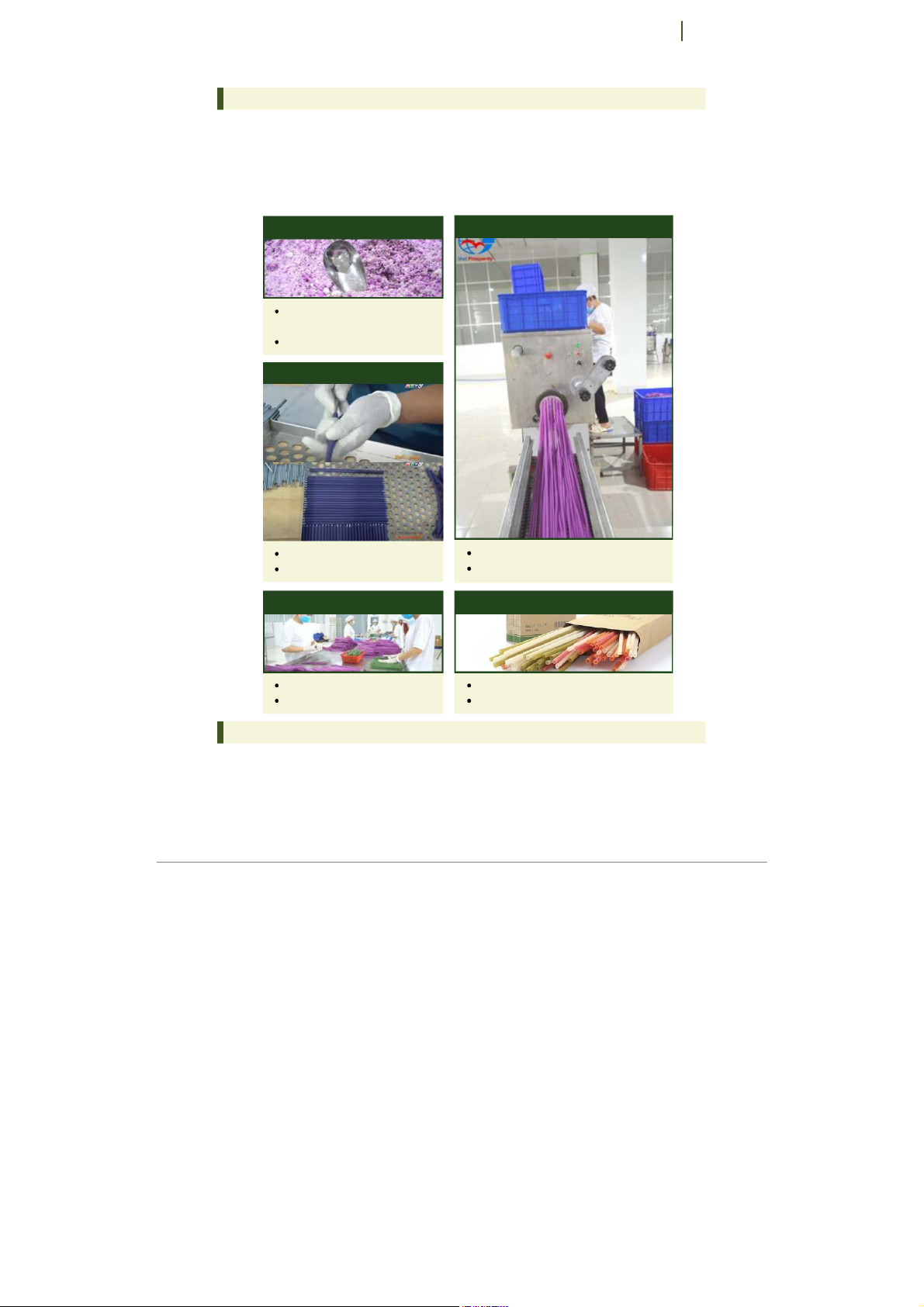
process for producing drinking straws from rice contains 5 main steps. However, a
reminder notice is that between the steps there would be no work in process, since
the work in process products between each step cannot be stored for long, for
example, the mixture of rice flour and tapioca starch, as their qualities can be altered. Step 1: Ingredient Mixing
Step 2: Steaming and Granulating Input: Rice flour, tapioca starch Output: Mixture Step 3: Shaping and Cutting Input: Dried Mixture Input: Mixture Output: Straws Output: Dried Mixture Step 4: Quality Cheking Step 5: Packaging Input: Straws Input: Qualified Straws Output: Qualified Straws Output: Pack of 10 Straws Step 1: Ingredient Mixing
After gathering the required raw materials, we create a mixture of rice flour and
tapioca starch with a ratio of 7:3. The specific ratio is chosen because, among other
ratios, this is the most common to be seen. With the consideration of the normal loss
ratio above, averagely 1.3 kg of rice flour can produce 100 straws. IStrawB Partnership Company 05 Gr P o lan upn in 0 g an 2
d Budgetting Report for 05/2024 OPERATIONAL PLAN
Step 2: Steaming and Granulating
Later on, the mixture gathered above would be cooked by a steamer to help the
mixture stick together, and then enter the granulation machine to form a uniform
mass that is easily stretched to form the length of the straws. Step 3: Shaping and Cutting
Next, the uniform mass of steamed rice flour and tapioca starch will enter the shaping
machine as well as the cutting machine to form a specific shape and length for the straw. Step 4: Quality Cheking
After this, the half-produced straws will enter the drying machine to dry, and then to
the quality checking department to check for the color, length, shape, and other qualities of the product. Step 5: Packaging
Lastly, the straws will be packed together into paper packaging bags, with a pack containing 10 straws. Value Chain
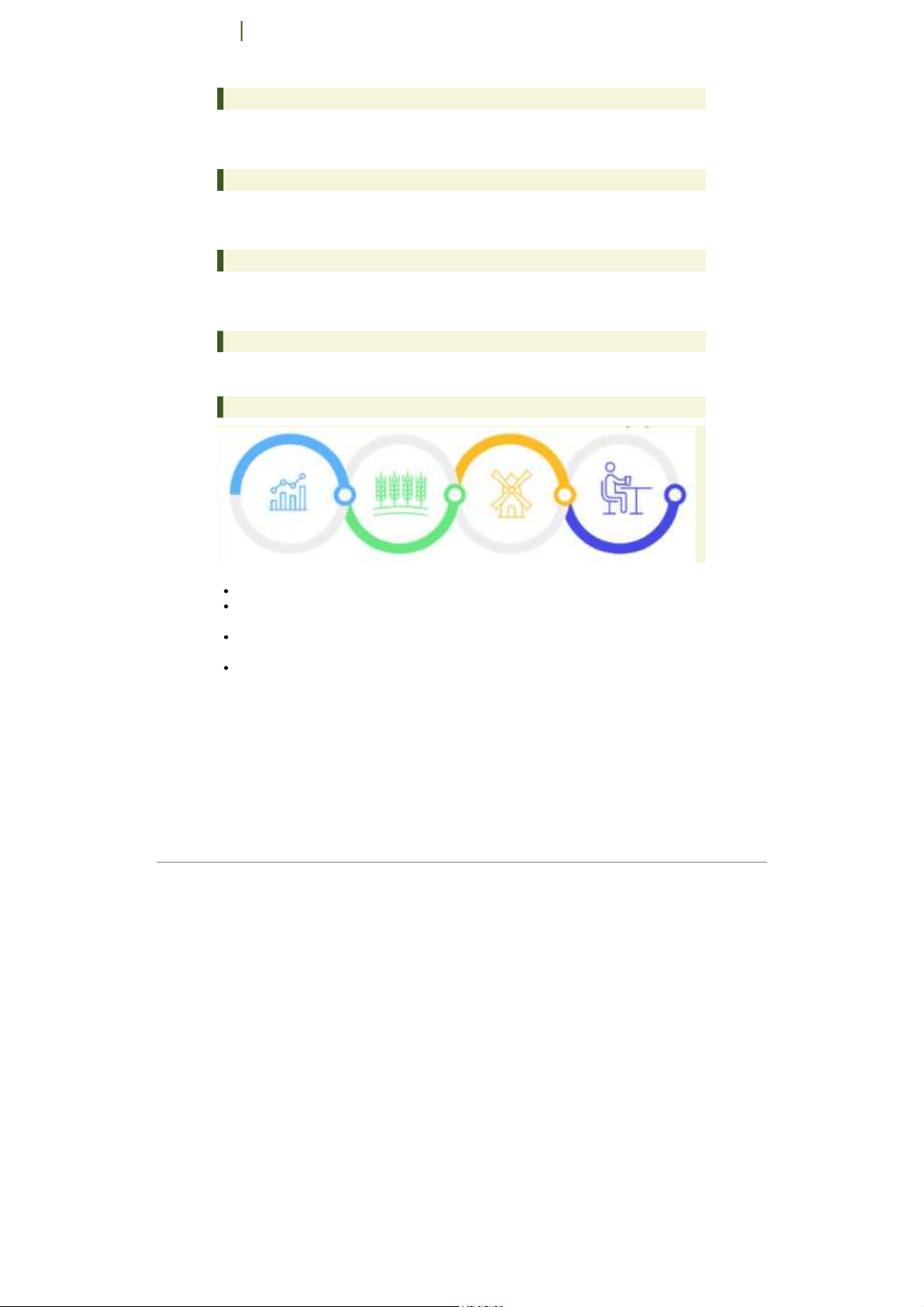
Rice straw value chains consist of 4 main functions:
Harvesting: the rice grains are harvested and collected from the fields.
Processing: The harvested rice undergoes processing, which may involve cleaning,
cutting, and grinding it into powder.
Rice straw production: Processed rice flour is then used to manufacture rice
straws, involving shaping, cutting, and packaging the straws.
Consumption in the F&B market: Consumers use rice straws for drinking
beverages, such as juice or coffee, as an alternative to plastic straws. Rice straws
may also be used for various other purposes, such as crafting or animal feed. IStrawB Partnership Company
Planning and Budgetting Report for 05/2024 06 Group 02 OPERATIONAL PLAN Labor
Another crucial aspect that needs to be considered when starting up a business is
Labor. Labor, as the backbone of any organization, plays a pivotal role in shaping a
company’s trajectory. From the assembly line to the boardroom, the efforts of
employees drive productivity, innovation, and overall performance. In this part, we will
cover working and resting hours, holiday and overtime policies wages policies,
insurance policies, and how we allocate workers to different departments and production stages. Working policy
(100% of workers agree with this term).
Normal working hours according to
According to Chapter VII: Working hours,
regulations are less than 48 hours/week, rest hours; Labor Law Code
and overtime working hours are less than
45/2019/QH14, there are clear regulations
50% of the total normal working hours
on the following three items: Working
per week. According to Chapter VI:
hours (including normal working hours
Salary; Labor Law Code 45/2019/QH14,
and overtime) and rest hours (including
the salary rate for normal working hours, holidays and mid-hour breaks).
overtime, and weekends are 100%, 150%,
According to the above law, normal
and 200% respectively (Insert image
working hours will not exceed 8
rates for different types). To ensure
hours/day, 48 hours/week and overtime
workers' rights, we need to specifically
is only allowed to account for 50% of the
calculate how many normal working
total normal working hours in a day. To
days per month, how many extra working
simplify the costs and time spent on
days on weekends, and how many days
calculating and estimating, every holiday
off. Finally, we calculate the "Net total
in the month, employees will be off. number of working days" of the
Each normal working day consists of 8
employee, and based on that, calculate
hours and is divided into 2 shifts, the employee's salary.
morning and afternoon. To ensure that
However, the hourly minimum wage and
employees can relax and not be too
the monthly minimum wage prescribed
stressed about work, each shift only lasts
by the government when converted into
for 4 hours. The morning shift starts early
the same unit of time has a certain
from 7 AM to 11 AM. After that, employees
difference between the two salaries.
have lunch, rest, and are free to do
Therefore, after determining the total
activities for 2 hours from 11 AM to 1 PM.
number of working hours, we will
The second shift starts after the lunch
calculate the employee's basic salary
break ends, and the second shift ends at
each month based on the hourly rate, 5 PM.
and compare it with the monthly Salary policy
minimum salary prescribed by the state
to decide the employee's basic salary
The estimate will be implemented for one
(Because there are cases where workers
year, starting on April 30, 2024, and
work fewer days than other months, and
ending on April 30, 2025 (fiscal year).
when calculating the hourly salary, it is
During the week, the normal working day
still less than the monthly salary
will start on Monday and end on Friday, prescribed by the government).
and workers will work extra on Saturday IStrawB Partnership Company 07
Planning and Budgetting Report for 05/2024 Group 02 OPERATIONAL PLAN Workforce structure
The employees are divided into two main categories: The group that participates in
the production process and the group that participates in S&A activities. Workforce Production activities S&A activities Workers (Quantity: 10) Salesperson (Quantity: Supervisor (Quantity: 1) 2) Security (Quantity: 1) Tax accountant (Quantity: 1) Production group
and tax accountant. The salesperson will
carry out sales work for individual online
The first group has 3 primary duties:
customers (B2C) and the tax accountant
carrying out production, supervising and
will assist the business in the amount of
managing production, and ultimately
value-added tax to be paid to the state
protecting goods and the production line.
every month and corporate tax every
The 3 roles are located for these
year. All the above employees are
responsibilities are: Workers, Supervisor,
entitled to full insurance and holiday
and Security. The group will consist of 10
benefits, but the tax accountant is not
workers who will alternatively start and
entitled to insurance because this
carry out the production process, 1
position is outsourced from outside of the
supervisor to oversee production, and 1 business.
security guard. Due to the specific
nature of the work, the monthly salary of Insurance policy
each role will vary. The monthly salary of
Under Decision No.595/QD-BHXH, both
workers will be calculated based on the
the employer and employee contribute
working hours mentioned above, the
to the government’s insurance fund. The
fixed salary of supervisors will be
employer contributes 17.5% to social
15,000,000 VND/month, and the fixed
insurance and 3% and 1% to health and
salary of security will be 10,000,000
unemployment insurance respectively.
VND/month. The main workplace of this
Employees contribute 10.5% of their basic
group will be in the production area.
salary to state insurance. The employer S&A group
can deduct this amount from the
employee’s salary for payment to the
On the other hand, the non-production state.
team will work in the office. This team
consists of 2 main roles: salesperson IStrawB Partnership Company
Planning and Budgetting Report for 05/2024 08 Group 02 OPERATIONAL PLAN S&A Activities
The S&A Expense includes variable and fixed expenses that are related to the selling,
general, and administrative activities. S&A Activities Variable Expense Fixed Expense Telesales commission Salary for 2 Transportation salespersons Shopee’s payment Salary for tax commission accountant Shopee’s fixed Advertising commission Others S&A Variable Expense S&A Fixed Expense
For variable expenses, the expenses are
For the fixed expenses, the expenses are
the transportation of goods to customers,
salaries for 2 telesales personnel, salary
Shopee’s payment commission, Shopee’s for a tax accountant, advertising fixed commission, and Telesales
expenses, utilities expenses, depreciation,
commission, since we plan to sell directly
and insurance. The salaries for 2 telesales
by ourselves and through Shopee, an e-
are based on the minimum wages set by
commerce platform. The percentage of
the law excluding the insurance paid by
commissions from Shopee are collected
the workers, whereas salaries for the tax
directly through the platform, resulting in
accountant are based on the fee they the same 4% for both types of
charge for the tax service performed
commission. The specific amount would (3,000,000 VND). Advertising is
be calculated based on the sales
estimated upon the bidding advertising
dedicated to e-commerce platforms, cost (5,600,000 VND) and the
which is 85% of the total sales. The rates
advertising cost of reach and frequency for telesales’ commission and
(1,200,000 VND), with the advertisements
transportation are estimated upon the
being placed mainly on TikTok. The
estimated sales per month, with both
insurance is calculated based on the rate
being 3%. The specific amount would be
paid by workers and by the owner from
calculated based on the sales dedicated
the Labor Information sheets. Lastly, the
to direct sales, which is 15% of the total
utilities and depreciation expenses are all sales.
office-oriented costs, with the utilities
being for office hours and depreciation
being for the office equipment. IStrawB Partnership Company 09
Planning and Budgetting Report for 05/2024 Group 02 OPERATIONAL PLAN Plant, Property, and Equipment
As mentioned before, the manufacturing process of rice straw contains five main
steps. In which, each step requires a type of machine. We plan to lease the entire
system, consisting of 7 machines, along with technology transfer rights from the supplier. Dough Mixer Machine Straw Cutting Automation
Function: The dough mixer machine
Function: Automatic Cross-Cutting
is a device used to blend ingredients
Device for segmenting long single or
to create a mixture for cooking rice
double straws into one or two straws, straws. The mixer is commonly
featuring integrated automatic and
employed in the rice straw production cross-cutting functionalities.
process to ensure the quality and Power consumption: 0.75 kWh
uniformity of the ingredient mixture.
Cutting speed: 1000 metres/minute Power consumption: 3 kWh
Capacity: 50kilograms/batch/minute Dryer System Powder Granulator Machine
Function: Dryer system is used to
remove moisture from products by
Function: Powder granulator machine
circulating hot air or another drying
is used to manufacture granular
medium.cross-cutting functionalities.
products as desired from wet powder Power consumption: 6.5 kWh raw materials. Capacity: 150 kilograms/hour Power consumption: 25 kWh Capacity: 200 kilograms/hour Preservation Equipment Straw Extrusion Machine
Function: The main function of the machine is to cool and quickly
Function: Straw Extrusion Machine is
package the rice straw to ensure
used to extrude and shape powdered product quality.
particles into long continuous straws. Power consumption: 2 kWh Power consumption: 50 kWh Airflow rate: 18,000 cubic Capacity: 700 sticks/minute meters/hour Straw Packaging Machine
Function: Packaging machine is used
to pack straws into bags with a quantity of 10 straws/bag. Power consumption: 1.2 kWh Capacity: 25 bags/minute
In addition to the machinery in the production system, we also purchased some
essential equipment for operating the company, including 1 desktop computer, 1
printer, and 4 80W light bulbs. All of these devices have a 10-year depreciation period. IStrawB Partnership Company
Planning and Budgetting Report for 05/2024 10 Group 02 FINANCING PLAN Capital Structure
It is widely admitted that financial resources play a critical role in providing startups
with the key to establishing, growing, and sustaining their businesses in ever-evolving
competitive markets. Therefore, choosing the right mix of financing options (i.e. capital
structure) and effectively managing these resources are key strategies for the success
of any startup. Acknowledging these unwritten norms, our company meticulously
prepares for the rice straw’s funding sources.
Our company’s capital structure includes two elements. First, the owner’s equity
will be formed by 300 million VND (60 million x 5) as charter capital from our
scholarship rewards. This amount of owners’ equity accounts for 15% of the entire
capital structure Second, the liabilities account for the remaining 85% which consists
of capital leases for PPE and unsecured borrowing to finance working capital.
At least four reasons can strongly support this decision. First, according to MM
proposition II in the world of corporate taxes, raising more debt to finance business
activities while efficiently managing its risk could enhance the firm’s value and the
required returns for the owners. Second, implementing the assigned tasks from
Directives 01 (2023) and 03 (2015) issued by the SBV, Vietnamese banks have been
launching many low-interest-rate credit packages to support businesses and green
startups to creatively recover and sustainably push up the economy. This concerted
and urgent effort aims to facilitate access to capital and stimulate the innovation of
eco-friendly startups in Vietnam. Third, inviting more owners to raise capital may lead
to dilution, which harms the current equity holders' benefits. Fourth, finally, we are five
university students facing significant budget constraints for startups and reputation to call for venture investors. Financial Leasing
The decision to lease the production line rather than entirely purchasing this
1,250,000,000 VND amount is due to two reasons.
First, by opting for a capital lease, we, as a startup, can avoid a significant upfront
cash outflow. This preserves our cash flow for other business needs such as operating
expenses, marketing, and expansion opportunities. Moreover, the ceiling amount that
we can borrow from the bank without collaterals is below 1 billion VND and we have to
use this amount to finance our working capital such as raw materials as well as repay
the upfront expense of rent. Second, the interest expenses portion of the lease
payment is considered as a financial expense and could be tax-deductible, thereby reducing our taxable income.
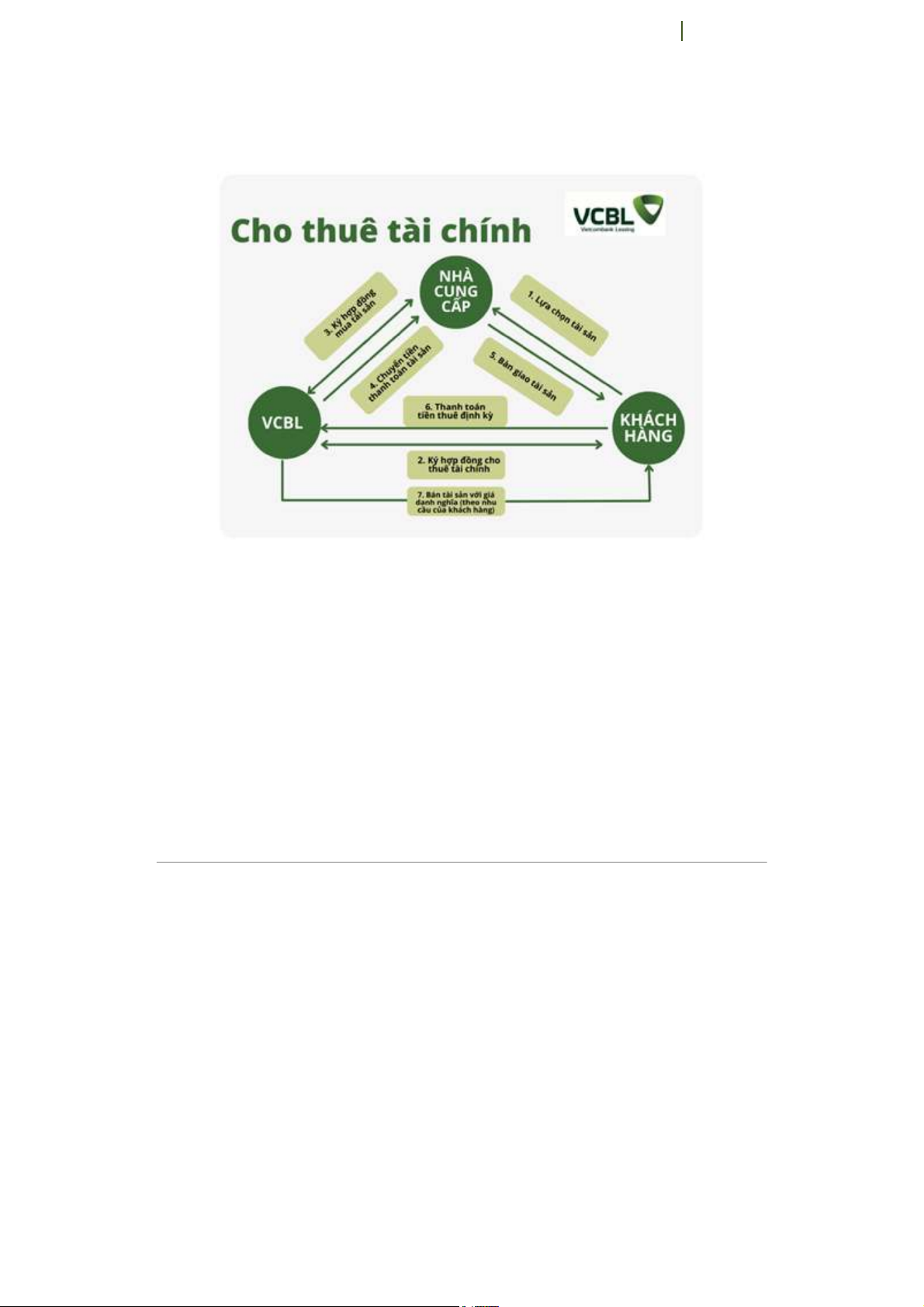
We chose VCBL (a subsidiary of VCB) to form a capital leasing contract. Reasons
for choosing VCBL include collateral-free, high financing rates of up to 100% of asset
value, fast-and-simple approval, and competitive lease payment.
Types of documents required by VCBL at the time of signing the contract include:
Business registration certificate, tax registration certificate, and company charter.
Notarized copies and originals of citizen identification cards, passports, and marital
status certificates of 5 owners.
Bank account statement and transaction history of the last 2 years of 5 owners.
Detailed supplier information profile, list of types, and prices of machines or equipment to be purchased. IStrawB Partnership Company 11 Gro P ulan p n 0 in
2 g and Budgetting Report for 05/2024 FINANCING PLAN
Our line of machines and equipment is priced at 1.25 billion VND and will be 100%
financially leased by VCBL to support our productions. After filling in some information
about our business mission and vision, they offer us a reasonable lease payment of
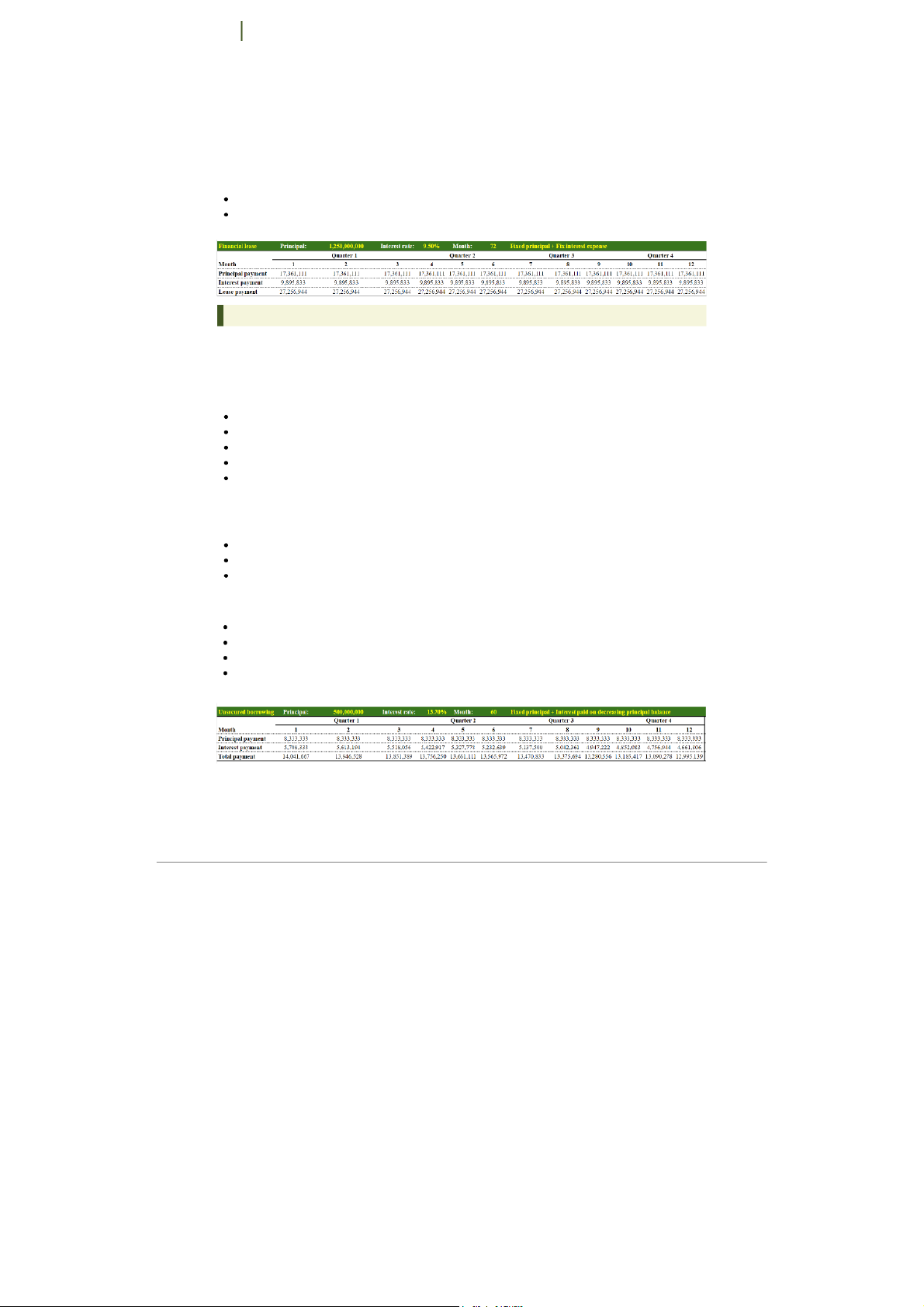
27,256,944 VND per month for 72 months. This amount includes a fixed principal
payment and fixed interest expense charged initially on the price of our production line
at 9.5% and will be repaid at the end of each month starting from 30/4/2024. Computations are as follows:
The monthly fixed principal amount to be repaid = 1,250,000,000/72 = 17,361,111 VND.
The monthly fixed interest expense to be repaid = 1,250,000,000 * (9.5%/12) = 9,895,833 VND. Unsecured Borrowings
Regarding the unsecured borrowings to finance our working capital, after analyzing
and asking for lending rates and requirements from many banks, our final decision is
to borrow from TCB. After filling in some information about our business mission and
vision, and specifying our financing needs for working capital, they offer us a
reasonable lending rate. Below are the terms of this borrowing contract:
Loan Type: Unsecured loan from TCB Interest rate: 13.7%/year Repayment term: 60 months No need for collateralizations
Repayment method: Fixed monthly principal payments, and interest payments are
calculated based on the decreasing principal balance
Initial requirements from TCB that are submitted and checked before signing contracts:
Vietnamese nationality, age 20-70 years old
Minimum income of 5 project owners from 10,000,000 VND/person/month
Credit history: No overdue debt within the past 01 years, no overdue debt of 91 days
or more within the past 2 years (at CIC).
Required documents from TCB before signing contracts:
ID cards/Passports, household registration books (original + notarized copy)
Documents proving marital status
Documents proving monthly income (salary statement)
Loan application form according to the Bank's form (clearly stating the loan purpose) IStrawB Partnership Company 12 Group 02
Planning and Budgetting Report for 05/2024 FINANCING PLAN
Finally, by calculations, we have to pay the borrowing expense including a fixed
amount of principal and decreasing interest payment each month for 60 months in
total. The amounts that we have to pay in the first year of operations range from
14,041,667 VND to 12,995,139 VND each month due to the fashion of charging interest
based on decreasing principal balances. IStrawB Partnership Company 13 GroPlan up ni
0n2g and Budgetting Report for 05/2024 MASTER BUDGETING Budgeted Sales
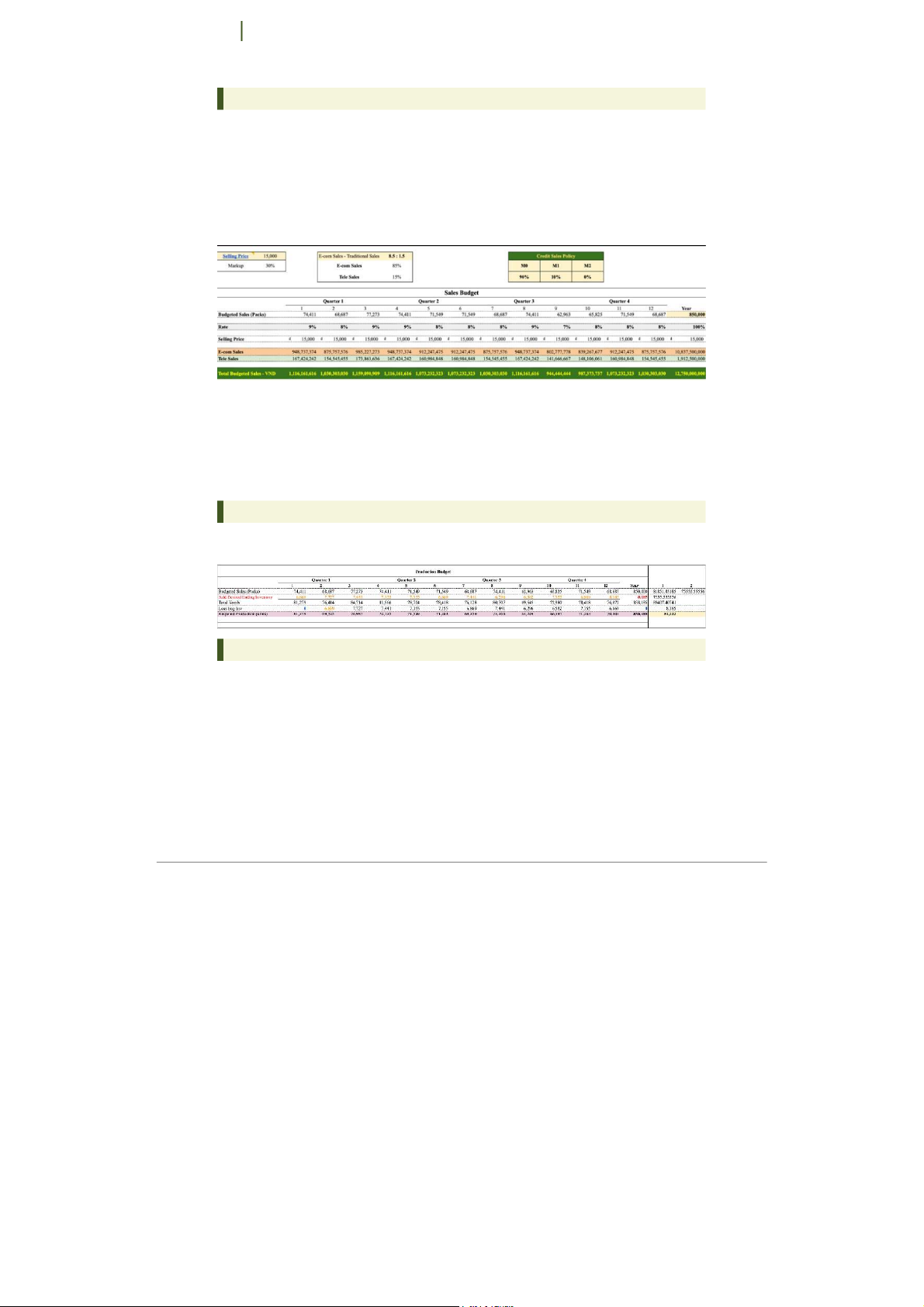
The Sales volume of our business is determined by two factors: The maximum
capacity of the business (950,400 packs per year) and the selling price of the
market. As shown in the Excel file, when the sales volume increases, the business may
enjoy the advantage of “Economies of Scale”, which helps minimize the Product Cost
per Pack. With the target of a 30% markup price and the identified market price of 1
pack of 10 rice straws, we can set our sales volume (at 850,000 packs per year) to
better match the market price. Hence, our budgeted sales, and selling prices are, as follows:
Regarding the quantity of packs sold in each month, we will need to calculate the Rate
- the percentage of the annual sales volume - for each month. The rate is computed
by dividing the minimum working hours each month by the total minimum working
hours per year. This helps match the expected revenue with the working hours needed
for production. As a result, the gap between the required working hours and the
minimum working hours of each month is reduced, which helps plant workers with fewer Overtime Hours. Production Budget
After the Sales Volumes are set, the required quantity for production is budgeted. The
desired ending for each month is equal to 10% of sales of the following month.
Cash Collection (Account Receivable)
The credit policy of our business includes the initial cash payments (90%) at the
month the sales occur, and the remaining 10% will be made in the following month.
This decision is made based on our business situation as we have the obligation to
make monthly interest/principal payments for our lease and borrowing. Therefore, a
90% cash payment can help shorten the cash conversion cycle, thereby, boosting the
short-term solvency of the business. IStrawB Partnership Company 14 Group 02
Planning and Budgetting Report for 05/2024 MASTER BUDGETING
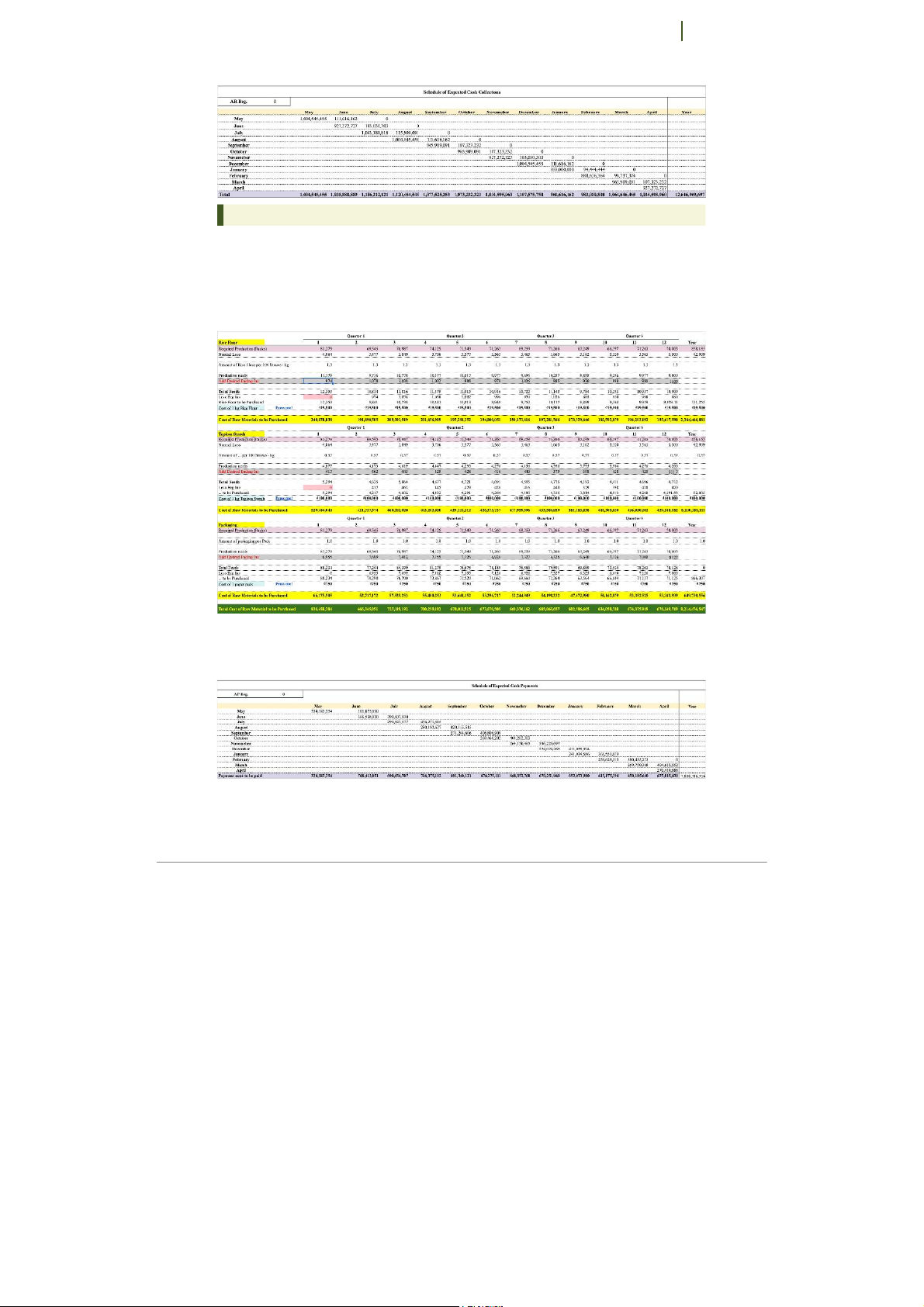
Direct Material (Account Payable)
Starting the fiscal year, we assume the beginning balances for the three types of
direct materials - Rice Flour, Tapioca Starch, and Package are 0. Notably, the
production is assumed to have a normal loss of 5% for Rice Flour and Tapioca Starch.
As a result, apart from the ideal required amount, an additional 5% should be made to
reach the targeted production quantity. The desired ending is equal to 10% of the
required amount for the next month's production.
Our suppliers' policy cannot be determined clearly without negotiation among parties.
Therefore, we assume that IStrawB is obligated to make 40% of the payments for
materials when purchasing, and 60% remaining will be paid in the next month. IStrawB Partnership Company 15 GroPlan up ni 0ng an 2
d Budgetting Report for 05/2024 MASTER BUDGETING Direct Labor
Based on the budget production level from the sheet Prod. and the minimum labor
hours per month that we need to pay the salary to the employees, we can easily
estimate the direct labor time needed per pack. From that, we can approximate the
practical direct labor hours needed to produce the required amount. As we have
mentioned above, the minimum hours (taken from Labor-info) are the amount of
possible working hours per month, which do not include overtime hours. Therefore, the
direct labor cost has to be based on that, and if the required production hours exceed
that amount, the redundancy needs to be considered as overtime hours, which will be
the fixed overhead of that month. The salary for overtime hours is not taxable.
Moreover, according to Decision No.595/QD-BHXH, employees need to take away
10.5% of the basic salary, which is the salary based on the minimum working hours.
Last but not least, the average wage per hour is recommended to calculate the
overtime working hours wages, as salary on the weekend does not have the same weight as working days. Manufacturing Overhead
There are two components in manufacturing overhead, including variable
manufacturing overhead and fixed manufacturing overhead. The variable overhead
includes electricity and water used for machinery consumption, while fixed overhead
includes electricity used for office equipment, indirect labor salary, rent payment,
direct labor that is considered as fixed overhead and depreciation of ROU. Mnfg. OH Variable mnfg. oh Fixed mnfg. oh IStrawB Partnership Company
Planning and Budgetting Report for 05/2024 16 Group 02 MASTER BUDGETING
Variable Manufacturing Overhead
According to Directives 2941-BCT [2] dated November 8, 2023, regarding the retail
electricity tariffs for manufacturing sectors, the rates are as follows: Electricity Price (VND/kWh) Peak Hours 2.973 Normal Hours 1.649 Off-peak Hours 1.044
As per the regulations of the Vietnam Electricity Group (EVN) [2], peak hours are
designated from 09:30 to 11:30 (2 hours) and from 17:00 to 20:00 (3 hours) from
Monday to Saturday. Consequently, following the working hour policy of IStrawB
company, 1 hour and 30 minutes will be allocated as peak hours daily (from 9:30 to
11:00). In the case of overtime, any additional hours worked each day, if below 3 hours,
will also be considered peak hours.
Subsequently, based on the total power consumption of the machine (88.45 kWh)
and the price of electricity, we calculate electricity cost depending on actual hours of
Direct Labour. We allocate the electricity expenses of the 7 machines in the process to
variable manufacturing overhead, while the electricity expenses of office equipment
(desktop computers, printers, lights) are allocated to Selling and Administrative (S&A).
Cho Lon Water Supply Joint Stock Company has released information regarding the
unit price of water usage for manufacturing businesses, which is 12,100 VND per cubic meter of water consumed [2].
The variable manufacturing overhead includes water consumed for both machinery
consumption and staff’s personal use. Among the production chain, only the Dough
mixer machine requires the use of water. With the usage of the machine, we assume
each batch of the mixer can blend 50 kilograms of flour with a maximum mixing time
of 6 minutes, in total requiring 0.015 cubic meters of water including the portion for
staff’s personal use. Consequently, we calculate that the water overhead for
production is 0.09 cubic meters of water per hour. From there, we can determine the daily water cost. IStrawB Partnership Company 17 Gro Pl uan p ni
0 n2g and Budgetting Report for 05/2024 MASTER BUDGETING Fixed Manufacturing Overhead
Regarding the production overhead expense for production, the part consists of 2
types of expenses, which are variable and fixed.
Considering the fixed expenses, we include the insurance-deducted wages of a
supervisor and a security guard, which are 13,425,000 VND and 8,950,000 VND
respectively. Furthermore, renting would also be considered as a fixed expense, with
the cost of 20,000,000 VND for each month. Another factor for fixed manufacturing
overhead expense is depreciation for Right of Use, which is computed monthly at the
amount of 17,361,111 VND. Lastly, the Direct Labour expense listed as fixed production
overhead is also counted. The specific amount for each month is extracted from the
Direct Labor sheet since the amount only accounts for 3 months.
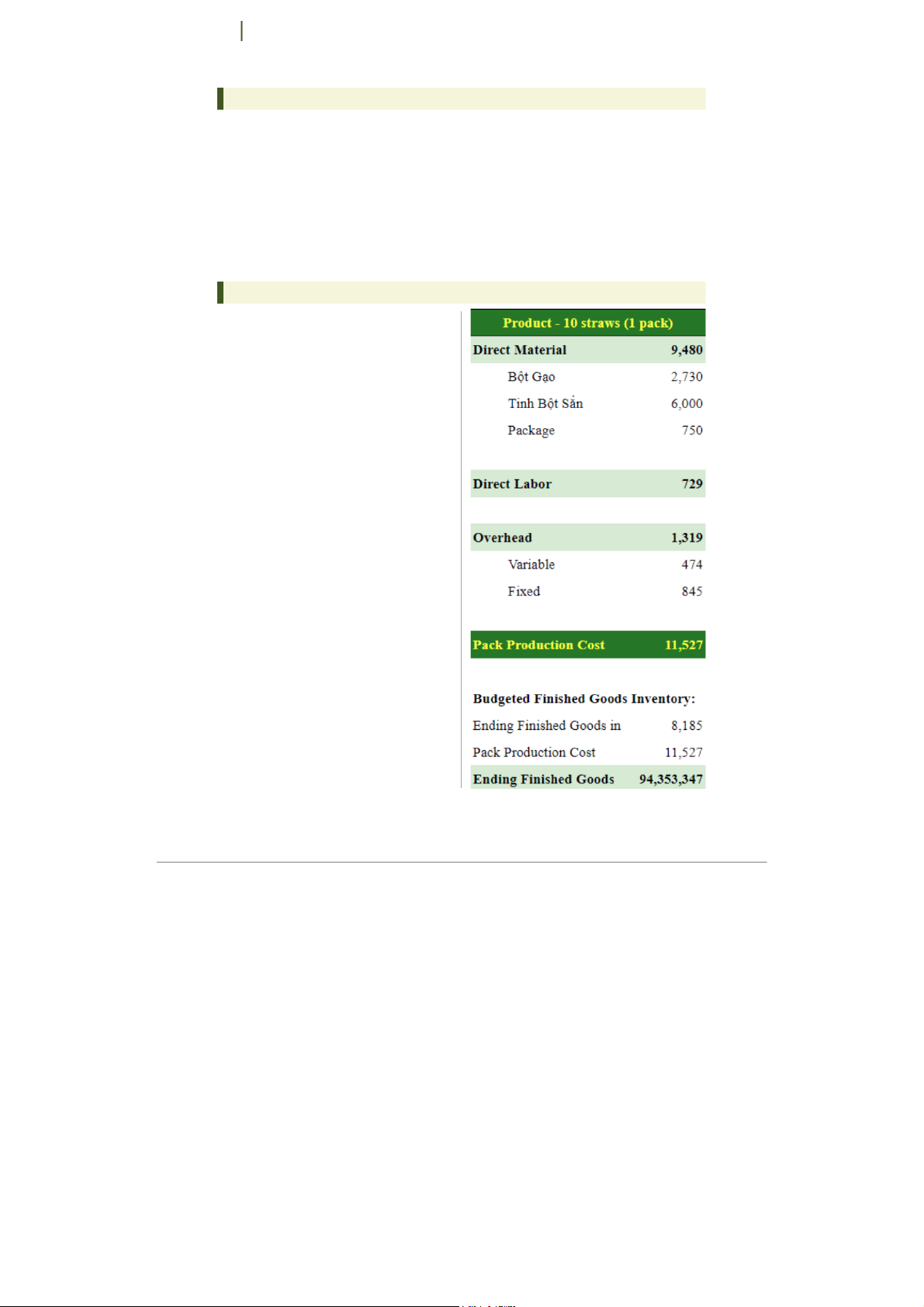
Ending Finished Goods Inventory
With each pack (including 10 rice straws)
produced, IStrawB needs a total of 9,480
VND for direct materials. Particularly, rice
flour, tapioca starch, and packages cost us 2,730; 6,000; and 750 VND
respectively. At the same time, IStrawB
also compensates our laborers for their
effort to work hard for many days, and
this amount that markup the product cost by 729 VND for each pack.
Regarding the manufacturing overhead
cost, the combination of fixed overhead
(845 VND) and variable overhead (474 VND) constitutes the entire
manufacturing overhead cost of 1,319
VND for each pack produced. Hence, the
final production cost for each pack was budgeted at 11,527 VND.
Additionally, the finished goods ending
inventory was reported to be 8,185
packs; therefore, the total amount of
ending inventory of finished goods listed
in the balance sheet is 94,353,347 VND (8,135 packs x 11,527 VND)
Tài liệu liên quan:
-
Essential Cheat Sheet for Mergers & Acquisitions Basics môn Sáp nhập, mua lại và tái cấu trúc doanh nghiệp | Trường Đại học Kinh tế Thành phố Hồ Chí Minh
8 4 -
Phân Tích Tình Hình Tài Chính và Chiến Lược CEC môn Sáp nhập, mua lại và tái cấu trúc doanh nghiệp | Trường Đại học Kinh tế Thành phố Hồ Chí Minh
10 5 -
Nghiên cứu Tình Huống M&A: Phân Tích Thương Vụ Sony-Columbia - BTTG môn Sáp nhập, mua lại và tái cấu trúc doanh nghiệp | Trường Đại học Kinh tế Thành phố Hồ Chí Minh
9 5 -
Đề cương chi tiết về Thoái Vốn và Bán Công Ty môn Sáp nhập, mua lại và tái cấu trúc doanh nghiệp | Trường Đại học Kinh tế Thành phố Hồ Chí Minh
10 5 -
Chương 11: Tái cấu trúc Doanh Nghiệp trong M&A | Tiểu luận môn Sáp nhập, mua lại và tái cấu trúc doanh nghiệp | Trường Đại học Kinh tế Thành phố Hồ Chí Minh
8 4